I’ve watched 200+ hours of BJJ instructionals across BJJ Fanatics, Submeta, and every other platform, then tested them all in sparring from purple belt through black belt. These are the instructionals that actually made a difference on the mat.
✓ Black belt reviewer • ✓ 200+ hours watched • ✓ Tested in live sparring

Guard Retention Anthology
The instructional that took me from purple to brown belt. Systematic layered defense that makes playing guard endless and fun.

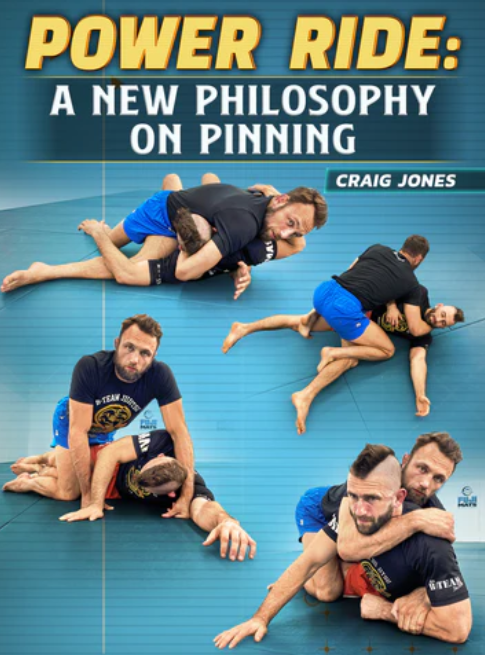
Power Ride
A completely new top control philosophy. This broke my brain in the best way and nobody at my gym could figure out what I was doing differently.

Attacking the Back
The highest percentage position, taught by the guy who finishes everyone from there. Every micro-battle of back control, broken down systematically.
How I Ranked These (Methodology)
I’ve watched instructionals from every major name – Danaher, Gordon, Craig, Lachlan, and dozens more. Started as a purple belt, now a black belt, and tested them all in sparring.
Important: There’s no single “best” instructional. It depends on your goals, experience level, and preferred learning style. That’s why I rank them overall but also break down which is best for specific situations.
Rankings are based on:
- Impact on my game and training partners’ development (40%)
- Teaching quality — systematic instruction vs. random technique dumps (20%)
- Community feedback from Reddit and BJJ forums to check blind spots (20%)
- Value for money — comprehensive systems vs. overpriced basics (20%)
Scope: Mostly no-gi focused but includes essential gi systems. Mix of comprehensive systems and specialized gems.
Even the “lower ranked” instructionals here could transform your game – I only include instruction I’d personally recommend. The bar is that high.
1. Guard Retention Anthology — Lachlan Giles & Ariel Tabak
The instructional that took me from purple to brown belt. Not exaggerating.
Quick Facts
- ⏱️ ≈16 hours across 8 volumes
- 📅 2020
- 🎯 All levels (especially purple belt development)
- 🥋 No-Gi (principles work in gi)
- 🎛️ Essential defensive infrastructure
What It Covers
This is Lachlan at his absolute best – systematic, layered, and immediately applicable. I spent three months working through this material, and my guard retention went from spazzy to predictable and effective. Almost nobody at my gym could pass me anymore, even during positional sparring my coach needed minutes to pass me. The way Lachlan breaks down how to layer your frames, use distance management, and hip movement is unmatched. The system covers: frame hierarchies (primary, secondary, tertiary frames), hip escaping mechanics with angle theory, leg pummeling and re-guarding sequences, distance management principles, and specific retention against bodylock passing, toreando, and leg drags.
What Makes It Stand Out
- You can’t have an attacking guard if it gets passed every 30 seconds – this fixes that
- Lachlan’s layered approach means you always have a backup plan when the first frame fails
- Works equally well in gi and no-gi with minimal adjustment
- Builds guard confidence so playing guard becomes fun instead of stressful
What the Community Says
"Lachlan Giles guard retention is one of the best instructionals on BJJ Fanatics, period. Made my guard almost impossible to pass at my gym."
u/december6 on r/bjj
"I went from getting my guard smashed every round to making purple and brown belts work for 5+ minutes to pass. Worth every cent."
r/bjj discussion thread
Weakness
At 16 hours, this is a serious time commitment. The information density is high even for Lachlan standards. Some practitioners report Priit Mihkelson’s Grilled Chicken system is simpler to implement initially, though less comprehensive. Also, this focuses exclusively on supine retention – if you want seated guard retention, you’ll need to look elsewhere (Lachlan covers that on Submeta).
My Recommendation
Best for: Anyone who wants to play guard, truly. If your guard gets passed constantly, start here before buying any attacking guard instructional.
Avoid if: You want to wrestle up. This focuses on supine guard retention (when you’re on your back, not seated).
Pairs with: Pillars of Defense: Pin Escapes (Gordon Ryan) When retention fails, you need escapes as your last line.
2. Power Ride — Craig Jones
The instructional that completely changed how I think about top control. This isn’t your grandfather’s side control.
Quick Facts
- ⏱️ ≈4 hours across 4 volumes
- 📅 2022
- 🎯 All levels (but you need to actually drill this)
- 🥋 No-Gi
- 🎛️ Top control revolution
What It Covers
Look, I’ve tested every top control system out there, and this one broke my brain in the best way. Craig shows you how to be “on the legs, not past the legs” – a concept that sounds simple but will change how you pin people. I immediately started hitting these rides in sparring, and my training partners couldn’t figure out what the hell I was doing differently. The positions feel genuinely new because they ARE new. Specific techniques include: the power ride position itself (chest-to-hip alignment), leg-based pinning vs. traditional chest-to-chest, transition chains from power ride to back takes, the “Khabib ride” hip control, and body triangle entries from power ride.
What Makes It Stand Out
- I went from getting reversed constantly to having sticky, unshakeable top control
- Works on everyone – big guys, flexible guys, guys who usually explode out of everything
- Finally gives you something to do when people turn away instead of just chasing them around
- Connects perfectly to back takes in a way that feels inevitable, not forced
What the Community Says
"Power Ride genuinely changed my top game more than any other single instructional. The leg-based pinning concept is so different from traditional side control."
u/tbd_1 on r/bjj
"Craig Jones has only been submitted 3 times since 2017. His defensive and positional knowledge is clearly elite-level, and this instructional shows why."
BJJ Beltchecker community
Weakness
At 4 hours it’s shorter than most premium instructionals – Gordon Ryan’s turtle attacks (9+ hours) and Danaher’s pin systems cover more ground. The positions require genuine drilling repetition to make work; you can’t just watch this and expect results. Also, the system is primarily no-gi; gi players will need to adapt the concepts around collar and sleeve grips.
My Recommendation
Best for: Anyone tired of losing scrambles from top position. If you’ve ever had someone just stand up out of your side control, you need this.
Avoid if: You’re obsessed with traditional mount/side control and refuse to adapt. Also skip if you don’t actually want to drill – these positions require repetition.
Pairs with: Just Stand Up (Craig Jones) Learn the escapes so you understand what you’re shutting down.
3. Systematically Attacking the Legs (2023) — Gordon Ryan
The definitive leg lock instructional. Yes, it’s 11 hours. Yes, it’s worth every minute.
Quick Facts
- ⏱️ 10+ hours across multiple volumes
- 📅 2023
- 🎯 Intermediate. Advanced
- 🥋 No-Gi
- 🎛️ Best overall leg lock system
What It Covers
This is Gordon’s magnum opus for leg attacks – every entry, every control position, every finishing detail you could possibly want. I’ve been through this twice now, and I’m still finding new details. The systematic approach means you’re not just learning random leg locks, you’re building an entire lower-body attacking ecosystem that integrates with your passing game. Covers: Ashi Garami families (straight, cross, outside), inside and outside heel hook finishing mechanics, the backside 50/50 system, kneebar and toe hold setups, entries from guard passing, entries from bottom guard (half guard, butterfly, De La Riva), the “dilemma” system where any defense opens a different attack, and extensive troubleshooting for common defensive reactions.
What Makes It Stand Out
- Covers every major leg entanglement and exactly what to do in each position
- Shows how to integrate leg attacks with your top game instead of abandoning position
- Gordon is the most successful leg lock competitor in history – this documents his actual system
- Completely current with the 2023-2026 competition meta
What the Community Says
"Gordon Ryan’s leg lock content is genuinely the best available. The way he connects entries to control to finishes in a systematic way is unmatched."
u/VeryStab1eGenius on r/bjj
"If you plan to study one leg lock course end-to-end, start here. The principles never expire and every newer course still fits into this framework."
GrappleDB community
Weakness
The price is significant at the premium Gordon Ryan tier. Lachlan Giles’ Leg Lock Anthology: 50/50 covers the 50/50-specific game in more accessible fashion for about half the price. Danaher’s Enter The System: Leg Locks is a better conceptual foundation if you’re brand new to leg locks. This is Gordon at his most detailed, which means information overload is real – expect to rewatch sections multiple times.
My Recommendation
Best for: Those who want to learn everything about leg locks, so they always know what to do in every entanglement.
Avoid if: You want quick wins – this instructional is long, methodical, and structured. You need to commit 10+ hours to watching this at minimum.
Pairs with: Best Ankle Lock Instructionals Build your straight ankle foundation before tackling this magnum opus.
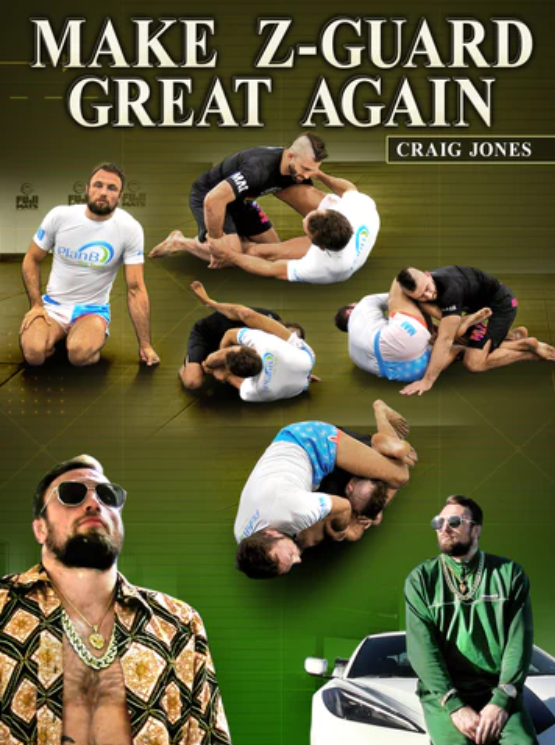
4. Make Z Guard Great Again — Craig Jones
The knee shield system I recommend to every beginner. Simple, effective, and immediately usable.
Quick Facts
- ⏱️ ≈6 hours 30 minutes
- 📅 2022
- 🎯 Beginner-friendly but scales up
- 🥋 No-Gi
- 🎛️ Your first bottom game specialty
What It Covers
This is exactly what knee shield half guard should be – a safe, systematic hub that beginners can actually use. Craig strips away the complicated stuff and focuses on what works consistently. I’ve probably recommended this to 30+ white and blue belts because it gives them something reliable to work from bottom. The entries are simple, the maintenance is clear, and the attacks actually work in sparring. Covers: knee shield frame mechanics, underhook recovery from knee shield, sweep chains (Dogfight to single leg, hip bump, hook sweep), back takes from knee shield, leg lock entries from bottom half guard, and standing up from knee shield using the Wrestle Up concept.
What Makes It Stand Out
- Knee shield is naturally defensive – hard to get submitted from here
- Connects to modern stand-ups and back takes that work at every level
- Doesn’t require crazy flexibility or athleticism
- Craig’s teaching style makes complex concepts feel simple and memorable
What the Community Says
"Z Guard is probably the single best position for a new grappler to specialize in. Safe, offensive, and Craig teaches it perfectly."
u/Darce_Knight on r/bjj
"Craig Jones instructionals are shorter than others without repetition or fluff. Straight to the point, high-percentage techniques that work immediately."
BJJ Beltchecker
Weakness
This is primarily a no-gi system – gi players who rely on collar ties and sleeve grips from half guard will find limited crossover. For a more comprehensive half guard system, Lachlan Giles’ Half Guard Anthology covers more ground in 10+ hours. Also, the Z guard game doesn’t address seated guard or open guard situations – it’s specifically for when someone is already in your half guard.
My Recommendation
Best for: Any beginner picking their first guard specialty. Also great for smaller players who get smashed in closed guard.
Avoid if: You’re committed to traditional gi-based half guard with collar ties and sleeve grips.
Pairs with: Half Guard Anthology (Lachlan Giles) Add depth and variations once you master Craig’s foundations.
5. Systematically Attacking the Back — Gordon Ryan
The highest percentage position in BJJ, taught by the guy who finishes everyone from there.
Quick Facts
- ⏱️ ≈8–9 hours across 8 volumes
- 📅 2021
- 🎯 All levels (technique-heavy but accessible)
- 🥋 No-Gi
- 🎛️ Best back attack system
What It Covers
Gordon breaks down every micro-battle of back control – from initial hooks to final squeeze. I’ve probably rewatched the hand-fighting sections five times because the details are so crucial. This isn’t just “get the hooks and squeeze”; it’s a complete system for maintaining control while systematically removing defensive options. Covers: seatbelt control mechanics, body triangle vs. hooks decision tree, the hand-fighting system (strangle hand vs. control hand), rear naked choke finishing details (palm-to-palm, Gable grip, figure four), armbar transitions when the choke is defended, and the crucifix back take system.
What Makes It Stand Out
- Back control has the highest finish rate of any position in competitive BJJ
- Gordon’s systematic approach eliminates guesswork – every defensive reaction has a counter
- Covers both gi and no-gi applications with clear distinctions
- Perfect for building finishing instincts that work under competition pressure
What the Community Says
"100% the biggest game changer instructional I purchased. My back attack finishing rate tripled."
hive.consultant on BJJ Fanatics reviews
"A cut above even good DVDs on the same technique area. The systematic framework makes every other back attack instructional feel random."
BJJ World review
Weakness
Focuses heavily on finishing from back control but spends less time on back TAKING than you might expect. Danaher’s Enter The System: Back Attacks covers the “straightjacket” control system with more conceptual depth and includes more back-taking entries. For pure back taking, consider pairing this with Gordon’s own turtle attacks instructional.
My Recommendation
Best for: Everyone. Seriously, if you only buy one submission instructional, make it this one.
Avoid if: You’re looking for escapes or defensive systems. This is pure attacking instruction.
Pairs with: Best Back Attack Instructionals See how Gordon’s system compares to other back attack approaches.
6. The Roger Gracie Closed Guard System
The fundamentals that dominated the world’s best grapplers. This is closed guard perfection.
Quick Facts
- ⏱️ ≈4 hours
- 📅 2019
- 🎯 All levels (essential for gi players)
- 🥋 Gi
- 🎛️ Best closed guard instructional
What It Covers
Roger shows you why fundamentals beat fancy techniques every single time. His cross-collar choke finished world champions, and here he breaks down exactly how he did it. The grip-fighting sequences, posture control, and transition timing are absolutely perfect. I reference this instructional constantly when teaching closed guard because Roger’s explanations are so clear and systematic. Covers: cross-collar choke setup chain (the move that submitted 8 black belts by submission at Worlds), armbar from closed guard with hip angle details, triangle setup from overhook, sweep-to-mount sequences, and posture breaking with sleeve and collar control.
What Makes It Stand Out
- Proven at the highest levels of competition for over a decade
- Works regardless of your physical attributes – Roger submitted everyone with fundamentals
- Builds patience and systematic thinking that transfers to every position
- Perfect blueprint for coaches teaching fundamentals classes
What the Community Says
"Roger Gracie’s closed guard is the purest expression of jiu-jitsu fundamentals. If you only learn one guard system for gi, this is it."
BJJ World
"His cross collar choke alone is worth the price. Nobody in history has finished more world-class black belts with fundamentals."
u/groggygirl on r/bjj
Weakness
This is gi-specific – the cross-collar choke and many grips don’t translate to no-gi. For no-gi closed guard, Ffion Davies’ system (further down this list) is the better choice. Also, at only 4 hours, the depth doesn’t match longer instructionals. Danaher’s Go Further Faster: Closed Guard covers more conceptual ground in 10+ hours.
My Recommendation
Best for: Gi players who want to understand closed guard at the deepest level. Essential for traditional jiu-jitsu enthusiasts.
Avoid if: You only train no-gi and don’t want to adapt collar-based concepts.
Pairs with: Best Closed Guard Instructionals See how Roger’s traditional approach fits into modern closed guard evolution.
7. Ageless Jiu-Jitsu Bundle — John Danaher
The instructional every hobbyist over 30 needs. Train smart, not just hard.
Quick Facts
- ⏱️ 12+ hours across multiple volumes
- 📅 2023
- 🎯 All levels (Masters division focus)
- 🥋 Gi and No-Gi
- 🎛️ Best instructional for older practitioners
What It Covers
Danaher addresses the elephant in the room – most BJJ instruction assumes you’re a 22-year-old athlete with infinite recovery time. This series is specifically designed for bodies that need to last decades, not just until the next competition. The risk-management principles alone have kept me training consistently without major injuries. Covers: position selection for longevity (which guards to play and avoid), grip strategies that protect wrists and fingers, energy-efficient passing, when to disengage vs. fight through, and specific modifications for common BJJ injuries (shoulders, knees, back).
What Makes It Stand Out
- Specific modifications for aging joints and slower recovery
- Teaches when to say “no” to risky positions – genuine risk management
- Emphasizes technique and timing over athleticism without becoming passive
- Still competitive – doesn’t turn your game into stalling
What the Community Says
"This should be required watching for everyone over 35. Danaher perfectly articulates the adjustments you need to make to train for decades."
r/bjj discussion
"Stephan Kesting’s BJJ for Old F***s is another option, but Danaher goes deeper on the strategic adjustments. This is the more comprehensive resource."
GrappleDB community
Weakness
Danaher’s pacing is slow even by his own standards – he spends significant time on philosophy before getting to technique. Stephan Kesting’s “BJJ for Old F***s” series covers similar ground in a more concise, practical format. Also, at 12+ hours, the time investment is ironic for an audience that presumably has limited training time.
My Recommendation
Best for: Anyone over 35, hobbyists prioritizing longevity, or athletes dealing with recurring injuries.
Avoid if: You’re a young competitor focused purely on cutting-edge meta techniques.
Pairs with: Best Danaher Instructionals Guide See how this fits into Danaher’s complete instructional catalog.
8. Systematically Attacking the Guard 1.0 — Gordon Ryan
Gordon’s masterpiece, but prepare for information overload. Worth it if you can handle the fire hose.
Quick Facts
- ⏱️ 10h 19m across 8 volumes, 85 chapters
- 📅 2019
- 🎯 Intermediate to Advanced
- 🥋 No-Gi
- 🎛️ Comprehensive passing architecture
What It Covers
This is Gordon giving you literally everything about guard passing – his complete system from outside range to chest-to-chest finishes. The level of detail is both the strength and weakness of this instructional. I’ve probably watched this 4-5 times because there’s so much information that you miss critical details on first viewing. The 3-phase structure (outside, mid-range, close contact) is brilliant conceptually. Covers: split squat position (foundational stance), J-point camping, toreando pass variations, high step pass, the toreando/high-step dilemma (trilemma concept), bodylock pass, over-under pass (distinct from Bernardo Faria’s version), kneebar from over-under, D’arce and guillotine from passing, leg drag, and flanking passes.
What Makes It Stand Out
- BJJ World called it “technically flawless” and “hands down the top source” for concept-based passing
- Includes actual sparring footage with Gordon narrating his real-time decisions
- The system specifically defeats modern guards (RDLR, half butterfly, seated guard) that older passing systems don’t address
- Best approached as a reference manual you return to repeatedly
What the Community Says
"In technical terms, this DVD is flawless. No issues with sound, video or content organization. Hands down the top source for concept-based passing."
BJJ World review (5/5)
"A must to elevate your jiu-jitsu while gaining a different outlook on passing."
Jiused Life review
Weakness
Information overload is real – 10+ hours with Gordon’s density level is exhausting. At $349, it’s the most expensive instructional on this list. Lucas Lepri’s Science of Guard Passing teaches fundamental passing in 4 hours for a fraction of the price. Beginners should start with Lepri. Also, Gordon has released V2.0 and V3.0 with updated material, making this the “original” version – still excellent but not the latest iteration.
My Recommendation
Best for: Serious competitors and anyone who wants to understand passing at the deepest level. Also perfect for coaches building systematic curricula.
Avoid if: You’re a beginner looking for quick wins. Start with Lepri or Faria for fundamentals first.
Pairs with: The Science of Guard Passing (Lucas Lepri) Learn fundamentals with Lepri, then add Gordon’s advanced concepts.
9. The Half Guard Anthology — Lachlan Giles
Lachlan’s systematic brilliance applied to half guard. This is how you turn defense into offense.
Quick Facts
- ⏱️ 10+ hours
- 📅 2021
- 🎯 All levels (especially valuable for smaller players)
- 🥋 No-Gi
- 🎛️ Best half guard system
What It Covers
Lachlan takes half guard from “survival position” to “attacking hub” with his trademark systematic approach. I love how he structures this – clear pathways from defensive frames to sweeps, back takes, and leg entries. The deep half and knee shield connections alone are worth the price. After working through this, I actually started hunting for half guard instead of just ending up there accidentally. Covers: knee shield retention and attacks, deep half guard entries and sweeps, coyote half guard, underhook battles and re-pummel sequences, back takes from half guard, and leg lock entries from bottom half guard (50/50 transitions).
What Makes It Stand Out
- Builds attacking sequences instead of just showing isolated techniques
- Perfect for older or smaller players who can’t rely on explosive movements
- Clear troubleshooting for when opponents defend common attacks
- Seamless transitions to modern leg entanglements from half guard
What the Community Says
"The Half Guard Anthology transformed my bottom game. Lachlan’s systematic approach makes half guard feel like a genuine attacking position."
r/bjj discussion
"Structure of the instructional is what sets it apart. Giles doesn’t waste any words."
jordos93 on FightingFit Jiujitsu blog
Weakness
At 10+ hours this is a serious commitment. Craig Jones’ Z Guard instructional covers the knee shield game in 6 hours with a simpler framework – better as a starting point. Also, Lachlan has since moved his most updated half guard content to Submeta ($25/month), making this BJJ Fanatics version slightly older material. For gi-specific half guard, consider Paul Schreiner’s Game Changer which is widely considered the best gi half guard resource.
My Recommendation
Best for: Anyone who finds themselves in half guard regularly. Essential if you’re smaller or less athletic than your training partners.
Avoid if: You never play guard and only want to work on top game.
Pairs with: Best Half Guard Instructionals See how this compares to other half guard systems.
10. Pillars of Defense: Pin Escapes — Gordon Ryan
Stop being a sitting duck under side control. Gordon shows you how to turn escapes into attacks.
Quick Facts
- ⏱️ ≈9–10 hours
- 📅 2022
- 🎯 All levels (essential for survival)
- 🥋 No-Gi
- 🎛️ Best pin escape system
What It Covers
This is the defensive instruction I wish I had as a white belt. Gordon doesn’t just show you how to escape – he shows you how to escape into advantageous positions. The systematic approach to frames, hip movement, and creating space has saved me countless times. Covers: side control escapes (hip escape chains, underhook recovery, guard recovery), mount escapes (elbow-knee, bridge and roll, kipping), north-south escapes, and the “defensive to offensive cycle” concept where every escape connects to guard recovery or counter-attacks.
What Makes It Stand Out
- Structured escape pathways instead of desperate scrambling
- Connects defense directly to offense – you’re never just surviving
- Works against pressure passers and athletic opponents
- Essential complement to guard retention systems
What the Community Says
"I can’t recommend his Pin and Turtle Escapes DVDs enough. It’s a must watch for every white and blue belt."
u/GreatTimerz on r/bjj
"This was probably the most influential instructional through my first year of BJJ."
u/BJJBean on r/bjj
Weakness
At 9-10 hours for escapes, the pacing can feel slow. Danaher’s Go Further Faster: Pin Escapes covers similar material with more conceptual depth but even slower pacing. For a more concise option, Craig Jones’ “Don’t Be Finished” positional escapes covers the core concepts in about 3 hours.
My Recommendation
Best for: Anyone who gets stuck under mount, side control, or north-south regularly. Essential for building defensive confidence.
Avoid if: You only want attacking systems. Though honestly, everyone needs solid escapes.
Pairs with: Best BJJ Submission Escape Instructionals Complete your defensive education with submission-specific escapes.
11. Edging Your Way Out of Danger — Craig Jones
Craig’s late-stage submission escapes that actually work under pressure. Possibly his most underrated instructional.
Quick Facts
- ⏱️ ≈3 hours (positional) / 8 volumes (submission)
- 📅 2021
- 🎯 All levels (especially valuable for risk-takers)
- 🥋 No-Gi
- 🎛️ Best submission escape system
What It Covers
Most escape instruction focuses on early prevention. Craig shows you what to do when you’re already in deep trouble – locked armbars, tight triangles, fully sunk chokes. I’ve used these techniques to escape situations where I thought I was 100% done. Craig’s philosophy is that “bad positions are not really that bad” with proper defensive knowledge. Covers: hitchhiker escape (armbars), elbow pummel techniques, arm triangle escapes, guillotine defense, body triangle dismantling, and the running man position for side control. He teaches killing opponent attacks BEFORE executing escapes – a different approach from standard step-by-step escape sequences.
What Makes It Stand Out
- Focuses on late-stage escapes when most instruction stops
- Honest about what’s genuinely dangerous and what’s actually escapable
- Craig has only been submitted 3 times since 2017, his defense is world-class
- The psychological confidence alone is worth the price, knowing you have options changes everything
What the Community Says
"Craig corrects many details that are usually taught incorrectly while sharing techniques that only he knows. His escape philosophy is genuinely unique."
BJJ World review (8.5/10)
"Shorter than other instructionals without repetition or fluff. Straight to solutions."
BJJ Beltchecker community
Weakness
Less conceptual depth compared to Danaher’s “New Wave Jiu-Jitsu: The Pins & Escapes” series, which offers a more systematic framework. The BDSM branding and humor (it’s Craig Jones, after all) may be distracting for some buyers. Strictly no-gi focused with limited crossover for gi-specific grips.
My Recommendation
Best for: Anyone who taps too early from submission attempts. Essential for building mental toughness and escape confidence.
Avoid if: You only want pure offensive instruction. Though these escapes often lead to counter-attacks.
Pairs with: Best Craig Jones Instructionals See where this fits in Craig’s complete catalog.
12. The Science of Guard Passing — Lucas Lepri
The fundamentals done perfectly. If you want to understand pressure passing, start here.
Quick Facts
- ⏱️ 6+ hours across 4 volumes
- 📅 2019
- 🎯 All levels (perfect for building foundations)
- 🥋 Gi
- 🎛️ Pressure passing fundamentals
What It Covers
Lepri shows you how world-class guard passing actually works – not flashy, just brutally effective pressure and angles. This is the instructional I wish I’d watched as a white belt. Every grip, every step, every pressure point is explained with championship-level precision. The knee cut and toreando sequences here are what I consider the gold standard for fundamental passing. Covers: knee cut pass (with tripod variation), toreando pass, reverse De La Riva pass, folding pass, punch pass (spider lasso counter), hip lock pass, Kimura trap system from passing, single leg X-guard counters, worm guard counters, and direct back takes from passing positions.
What Makes It Stand Out
- 7x IBJJF World Champion, Lepri didn’t lose a match at Worlds for 6 years straight
- His attention to grip details is unmatched, every finger placement matters
- BJJ World called it “a real masterpiece you simply have to own as a modern BJJ competitor”
- Works equally well for hobbyists and competitors
What the Community Says
"Lepri goes deeper into the art of passing, offering concepts that even black belts will find effective."
BJJ World review (5/5)
"Clear explanations with a systematic knee slide approach that translated well to sparring. Best fundamental passing instructional available."
Sherdog Forums reviewer
Weakness
Lepri teaches positions without a flowchart-driven gameplan – Gordon Ryan’s Systematically Attacking the Guard offers more “if X then Y” decision trees. Also, this is gi-focused, which limits no-gi applicability. Beginners may struggle to “read between the lines” without the explicit decision frameworks that Danaher or Gordon provide.
My Recommendation
Best for: Anyone who wants to understand pressure passing correctly. Perfect foundation before tackling Gordon’s advanced concepts.
Avoid if: You only train no-gi and refuse to adapt gi concepts. Though honestly, most of this translates beautifully.
Pairs with: Systematically Attacking the Guard (Gordon Ryan) Master Lepri’s fundamentals, then add Gordon’s systematic approach.
13. Leg Lock Anthology: 50/50 — Lachlan Giles
The 50/50 specialist course that made Lachlan famous at ADCC. This is how you control the knee line.
Quick Facts
- ⏱️ 12h 18m across 8 volumes
- 📅 2019
- 🎯 Intermediate. Advanced (leg lock foundation required)
- 🥋 No-Gi
- 🎛️ Best 50/50 specific system
What It Covers
Lachlan breaks down the position that defined his ADCC performance – 50/50 heel hook control. This isn’t just about the finish; it’s about understanding the entire ecosystem of the position. The way he explains knee line control and backside transitions has completely changed how I approach 50/50. I spent two months drilling just the entry sequences, and now 50/50 feels like home instead of a scramble. Covers: inside heel hook mechanics, outside Senkaku/Ashi Garami, double trouble position, K Guard entries, De La Riva and Reverse DLR entries to leg locks, backside 50/50 transitions, counter leg-locking, and back takes from 50/50. Volume 8 includes narrated ADCC competition footage.
What Makes It Stand Out
- At ADCC 2019, Lachlan heel hooked Kaynan Duarte, Patrick Gaudio, and Mahamad Aly, all outweighing him by 50-100 lbs, using this system
- Lachlan’s systematic approach eliminates guesswork in 50/50
- Backside 50/50 transitions that are still cutting-edge in 2026
- Safety protocols that protect your own legs while attacking
What the Community Says
"Superb detail and explanations with great structure and editing. Easy to navigate and review. The best 50/50 instructional I own."
r/bjj community consensus
"The structure of the instructional is what sets it apart. Giles doesn’t waste any words. 12 hours 18 minutes of pure content."
jordos93 on FightingFit Jiujitsu blog
Weakness
Not ideal as a FIRST leg lock program. Mikey Musumeci’s leg lock system or Craig Jones’ “Battle Tested Leg Attacks” are more accessible entry points. Very information-dense – beginners without existing leg lock reps may feel lost by Volume 2. Also, Lachlan has moved his most updated leg lock content to Submeta, making this the “classic” version.
My Recommendation
Best for: Athletes who already understand basic leg locks and want 50/50 specialization. Essential for competitors in the leg lock meta.
Avoid if: You’re brand new to leg locks – build your Ashi Garami foundation first with Danaher’s Enter The System.
Pairs with: Best Ankle Lock Instructionals Master straight ankle locks before advancing to heel hook systems.
14. Systematically Attacking the Turtle — Gordon Ryan
Stop letting people escape through turtle. Gordon systematically breaks it down.
Quick Facts
- ⏱️ ≈9–10 hours
- 📅 2021
- 🎯 Intermediate
- 🥋 No-Gi
- 🎛️ Best turtle attack system
What It Covers
Turtle is where a lot of guard passers lose their advantage – opponent turtles up, you lose control, they escape or re-guard. Gordon systematically shows you how to maintain dominance from turtle to back control or submissions. The hand-fighting details and hook mechanics are incredibly precise. Since studying this, turtle has become one of my favorite positions to attack. Covers: seat belt control from turtle, hook insertion mechanics, spiral rides, front headlock from turtle, clock choke entries, and crucifix setups.
What Makes It Stand Out
- Turtle appears constantly in modern no-gi scrambles – you need a system for it
- Direct pathway to back control and high-percentage finishes
- Essential for wrestlers transitioning to submission grappling
What the Community Says
"Gordon’s turtle content is probably the most underrated part of his system. Once you add this to your guard passing, the pass-to-finish sequence becomes seamless."
r/bjj discussion
Weakness
Niche position – if you rarely encounter turtle in your training, the 9+ hour investment may not pay off. Craig Jones’ Power Ride (above) offers a more efficient path from top control to back takes without the turtle specialization.
My Recommendation
Best for: Guard passers who routinely create turtle situations but struggle to capitalize. Essential for wrestling-heavy games.
Avoid if: You never see turtle positions in your training.
Pairs with: Best Back Attack Instructionals Complete the turtle-to-back finishing sequence.
15. Foundations of Brazilian Jiu-Jitsu — Bernardo Faria
The friendliest, most encouraging fundamental instruction you’ll find. Bernardo makes everyone feel welcome.
Quick Facts
- ⏱️ ≈6–7 hours
- 📅 2019
- 🎯 Beginner (perfect for white belts)
- 🥋 Gi
- 🎛️ Best beginner fundamentals
What It Covers
Bernardo’s approach to fundamentals feels like getting instruction from your most encouraging training partner. He breaks down every basic position with patience and clarity, always emphasizing that everyone can learn these techniques regardless of athleticism. I recommend this to every new student because Bernardo’s positive energy makes the learning process enjoyable instead of intimidating. Covers: closed guard basics, mount attacks and escapes, side control attacks, guard passing fundamentals (including his signature over-under pass), and basic submission chains.
What Makes It Stand Out
- 5x World Champion who teaches with the patience of a saint
- Clear progression from basic movements to complete game plans
- Emphasizes patience and technique over athleticism
What the Community Says
"Bernardo Faria is the master of fundamentals. If you’re a white belt, his Foundations instructional is the single best place to start."
r/bjj consensus
Weakness
Gi-focused and genuinely basic – blue belts and above will outgrow this quickly. For no-gi fundamentals, Danaher’s Go Further Faster series or Gordon Ryan’s Pillars series cover more ground with more detail.
My Recommendation
Best for: Brand new students or anyone wanting to revisit fundamentals with fresh eyes. Essential for coaches teaching beginners.
Avoid if: You’re looking for advanced meta techniques or competition-specific instruction.
Pairs with: Best Bernardo Faria Instructionals Explore Bernardo’s complete catalog.
16. Butterfly Guard Rediscovered 3.0 — Adam Wardziński
Modern butterfly guard with championship-level details. Adam shows you the evolution of this classic position.
Quick Facts
- ⏱️ ≈7–8 hours
- 📅 2023
- 🎯 All levels
- 🥋 No-Gi & Gi
- 🎛️ Best modern butterfly guard
What It Covers
Adam takes Marcelo’s classical butterfly guard and updates it for the modern game. The grip-fighting details and angle adjustments are incredibly precise – stuff that only becomes clear when demonstrated by someone competing at the highest level. I’ve been implementing his underhook variations for months, and they’ve made my butterfly sweeps much more reliable against defensive opponents. Covers: butterfly hook mechanics, two-on-one grip sweeps, arm drag to back take, elevation sweeps, and modern butterfly entries against standing opponents.
What Makes It Stand Out
- Championship-level details from an active ADCC competitor
- Modern solutions to contemporary defensive reactions
- Bridges classical butterfly with the current no-gi meta
What the Community Says
"Adam Wardzinski has done for butterfly guard what Danaher did for leg locks — systematized it into something teachable."
r/bjj discussion
Weakness
If you’re completely new to butterfly guard, start with Marcelo Garcia’s Complete Butterfly Guard (below) for the fundamentals first. Adam assumes some baseline knowledge of the position.
My Recommendation
Best for: Players who understand basic butterfly and want modern refinements. Perfect for competitive players.
Avoid if: You’re completely new to butterfly guard – start with Marcelo’s fundamentals first.
Pairs with: Best Butterfly Guard Instructionals Compare approaches.
17. The Complete Butterfly Guard — Marcelo Garcia
Learn from the master. Marcelo’s butterfly guard is poetry in motion.
Quick Facts
- ⏱️ 3h 21m across 4 volumes, 38 chapters
- 📅 2020
- 🎯 All levels
- 🥋 No-Gi
- 🎛️ Best butterfly guard foundation
What It Covers
This is arguably the greatest grappler of all time teaching his signature position. Every sweep, every back take, every detail has been tested at the highest levels. What I love is how Marcelo shows the “why” behind every movement. Covers: butterfly hook control, two-on-one grip, arm drag to back, shoulder clamp sweep, Marcelotine (arm-in guillotine facing away), reverse armlock, X guard entry from butterfly, tilt sweep, overhook series, and double leg from butterfly.
What Makes It Stand Out
- BJJ World called it the best butterfly guard instructional ever released
- Emphasizes leverage and timing over strength and speed
- Direct pathway to back control that works on everyone
What the Community Says
"Nobody has ever issued a better instructional on the butterfly guard."
BJJ World review
Weakness
Short runtime (3h 21m) for $149 is $44/hr at full price – wait for a sale. No flowchart-driven decision trees like Gordon Ryan provides. Some entries designed against older passing styles that have evolved since 2020.
My Recommendation
Best for: Smaller grapplers looking for a reliable guard system. Essential before exploring Adam Wardzinski’s modern variations.
Avoid if: You only want cutting-edge modern techniques. This is classic, proven butterfly guard.
Pairs with: Best Butterfly Guard Instructionals Compare Marcelo’s classic approach with modern innovations.
18. No-Gi Closed Guard — Ffion Davies
Finally, a no-gi closed guard that actually works. Ffion shows you how to make it aggressive.
Quick Facts
- ⏱️ ≈2–2.5 hours
- 📅 2024
- 🎯 Beginner. Intermediate
- 🥋 No-Gi
- 🎛️ Best no-gi closed guard
What It Covers
Most people think closed guard doesn’t work in no-gi. Ffion proves them wrong. She shows how to create genuine attacking threats without gi grips – overhooks, wrist control, collar ties that actually control posture. I’ve been using her clamp control system for months, and it’s completely changed how I approach no-gi closed guard. No more just holding and hoping. Covers: clamp control (her signature grip system), overhook attacks, wrist-based posture control, armbar and triangle setups without collar grips, and competition footage breakdowns.
What Makes It Stand Out
- Designed specifically for smaller/lighter athletes who can’t muscle opponents down
- Aggressive posture-breaking that actually works without gi grips
- Competition footage breakdowns show real application at ADCC level
What the Community Says
"Ffion’s closed guard content fills a gap that nobody else has addressed. Most closed guard instructionals are gi-based, and this actually works in no-gi."
r/bjj discussion
Weakness
Very short at 2-2.5 hours – Roger Gracie’s Closed Guard System offers more depth for gi, and Danaher’s closed guard GFF set offers 10+ hours of systematic content. This is a focused, efficient system rather than a comprehensive encyclopedia.
My Recommendation
Best for: Anyone who struggles with no-gi closed guard, especially smaller players.
Avoid if: You only train gi and aren’t interested in no-gi applications.
Pairs with: Best Closed Guard Instructionals Compare no-gi vs. gi approaches.
19. Feet-To-Floor Bundle — John Danaher
The takedown system for BJJ players who hate takedowns. Finally, standing skills that make sense.
Quick Facts
- ⏱️ ≈40 hours across multiple volumes
- 📅 2022
- 🎯 All levels
- 🥋 No-Gi
- 🎛️ Best takedown system for BJJ
What It Covers
Danaher designed this specifically for BJJ players, not wrestlers or judoka. The techniques prioritize safety over spectacular throws, and everything connects directly to your ground game. I used to pull guard by default because I was terrified of takedowns. After working through this system, I actually have confidence on the feet. Covers: grip-fighting fundamentals, single leg variants, double leg setups, hip throws adapted for BJJ, snap downs, front headlock entries, and post-takedown transitions to passing.
What Makes It Stand Out
- Built around BJJ rules and reactions, not pure wrestling
- Low-risk techniques that won’t expose your back
- Connects directly to guard-passing after the takedown
What the Community Says
"Danaher’s Feet to Floor is the only takedown instructional that made sense for my BJJ game. Everything else felt like it was designed for wrestlers, not guard players."
r/bjj discussion
Weakness
At 40 hours, this is MASSIVE – potentially too much for most practitioners. Andrew Wiltse’s wrestling content or Firas Zahabi’s “Wrestling Made Easy” cover the essentials in 2-4 hours. Also, Danaher’s pacing means lots of conceptual explanation before technique.
My Recommendation
Best for: Anyone who pulls guard by default but wants takedown competence. Essential for competitors who can’t afford to give up takedown points.
Avoid if: You want pure wrestling or judo curriculum. This is specifically adapted for BJJ.
Pairs with: Best BJJ Takedown Instructionals Compare Danaher’s approach with other systems.
20. Wrestling Made Easy — Firas Zahabi
MMA-ready clinch and takedown blueprint: pummeling to underhooks, doubles, knee taps, body locks, and sprawls that land you safely on top.
Quick Facts
- ⏱️ ≈1.5–2 hours
- 📅
- 🎯 All levels
- 🥋 No-Gi
- 🎛️ Takedowns / MMA grappling
What It Covers
A step-by-step stand-up system for BJJ/MMA: build underhooks with pummeling, set up double-leg variants (including kosoto-style finishes), knee taps and body locks, and use the sprawl to chase the back. Emphasis on simple progressions and finishes that keep you safe while getting the fight to the mat on your terms.
What Makes It Stand Out
- Clinch-first, BJJ-friendly wrestling that reduces risky shots and bad scrambles
- Directly maps to MMA and no-gi rounds
- “Made Easy” progressions make it approachable for non-wrestlers
What the Community Says
"Firas Zahabi is one of the best MMA coaches alive. His wrestling content is practical, not theoretical."
r/MMA discussion
Weakness
Very short at 1.5-2 hours – Danaher’s Feet to Floor is 20x longer with correspondingly more depth. This is a starter course, not a comprehensive wrestling system.
My Recommendation
Best for: BJJ athletes crossing into MMA who want reliable takedowns and safe landings.
Avoid if: You only train gi and don’t plan to work on stand-up.
Pairs with: Control Freak: Side Control (Firas Zahabi) Lock down top after the takedown.
21. Ultimate Submissions (FREE Anthology)
Your zero-risk entry point into instructionals. I tell everyone to start here.
Quick Facts
- ⏱️ ≈3–4 hours (updated regularly)
- 📅 Ongoing
- 🎯 Perfect for beginners
- 🥋 Gi & No-Gi
- 🎛️ Submission sampler
What It Covers
This is how you dip your toe in the instructional world without spending money. It’s a rotating collection of high-percentage submissions from various instructors. I’ve recommended this to probably 50+ people as their first instructional. Smart way to figure out which teaching styles and submission families click with your body type and preferences before spending real money.
What Makes It Stand Out
- Zero financial risk – if you hate video instruction, you’ve lost nothing
- Exposes you to different teaching styles so you can find your preferred instructors
- Perfect for testing if you actually learn well from video instruction before investing
What the Community Says
"Start with the free stuff on BJJ Fanatics before spending $200. If you learn well from video, then invest in a full system."
r/bjj frequently repeated advice
Weakness
This is sampling, not mastery. You won’t build a complete game from a collection of random techniques. Use this as a testing ground, then invest in a full systematic instructional like Bernardo Faria’s Foundations or Craig Jones’ Z Guard.
My Recommendation
Best for: Complete beginners or anyone skeptical about instructionals.
Avoid if: You want deep, systematic instruction from a single source.
Pairs with: Foundations of BJJ (Bernardo Faria) Get your fundamentals sorted while you explore submissions.
BJJ Instructional Comparison Table
| Instructional | Instructor | Runtime | Level | Gi/No-Gi | Category |
|---|---|---|---|---|---|
| Guard Retention Anthology | Lachlan Giles | ~16h | All | No-Gi | Defense |
| Power Ride | Craig Jones | ~4h | All | No-Gi | Top Control |
| Attacking the Legs | Gordon Ryan | 10+h | Int-Adv | No-Gi | Leg Locks |
| Z Guard Great Again | Craig Jones | ~6.5h | Beginner+ | No-Gi | Half Guard |
| Attacking the Back | Gordon Ryan | ~8-9h | All | No-Gi | Back Attacks |
| Roger Gracie Closed Guard | Roger Gracie | ~4h | All | Gi | Closed Guard |
| Ageless Jiu-Jitsu | John Danaher | 12+h | All | Both | Longevity |
| Attacking the Guard 1.0 | Gordon Ryan | 10h 19m | Int-Adv | No-Gi | Passing |
| Half Guard Anthology | Lachlan Giles | 10+h | All | No-Gi | Half Guard |
| Pillars of Defense | Gordon Ryan | ~9-10h | All | No-Gi | Escapes |
| Edging Out of Danger | Craig Jones | ~3h | All | No-Gi | Escapes |
| Science of Guard Passing | Lucas Lepri | 6+h | All | Gi | Passing |
| Leg Lock Anthology 50/50 | Lachlan Giles | 12h 18m | Int-Adv | No-Gi | Leg Locks |
| Attacking the Turtle | Gordon Ryan | ~9-10h | Int | No-Gi | Turtle |
| Foundations of BJJ | Bernardo Faria | ~6-7h | Beginner | Gi | Fundamentals |
| Butterfly Guard 3.0 | Adam Wardziński | ~7-8h | All | Both | Butterfly |
| Complete Butterfly Guard | Marcelo Garcia | 3h 21m | All | No-Gi | Butterfly |
| No-Gi Closed Guard | Ffion Davies | ~2-2.5h | Beg-Int | No-Gi | Closed Guard |
| Feet-To-Floor | John Danaher | ~40h | All | No-Gi | Takedowns |
| Wrestling Made Easy | Firas Zahabi | ~2h | All | No-Gi | Takedowns |
| Ultimate Submissions | Various | ~3-4h | Beginner | Both | FREE |
How to Save Money on BJJ Instructionals
BJJ Fanatics: Never pay full price – they always have sitewide ~50% discount codes running. On top of that, their daily deals stack another 50% off. With patience, you can get premium instructionals for 75% off (around $49 instead of $200). Can’t wait? Still grab the 50% sitewide discount and pay ~$99 for an 8-hour world-class instructional.
Submeta: Get a discount through our Submeta review page to save on your subscription.
Best BJJ Instructional Platforms: Where to Buy
BJJ Fanatics offers the best standalone BJJ instructionals with premium production quality and comprehensive coverage from top instructors like Gordon Ryan, Craig Jones, and John Danaher. Individual instructionals cost $150-300 but provide unmatched depth. With 1,228+ instructors and 3,393+ titles, it’s the largest BJJ instructional library in existence.
Submeta works like Netflix for BJJ instructionals – 66+ courses from Lachlan Giles for ~$25/month. Lachlan’s systematic teaching and innovative techniques (K-guard, modern guard retention) make it exceptional value for building complete systems.
Platforms to avoid:
- YouTube/TikTok/Instagram: These platforms lack structured progression. The algorithm feeds you random techniques that don’t build on each other, plus the dopamine hits and flashy fake moves will destroy your focus and learning
- Grapplers Guide: Mostly outdated content despite lifetime access claims. Submeta made it obsolete at $25/month with higher quality and current content. (Also read: Grapplers Guide Review: It’s Not Worth It)
- Jiu Jitsu X: Lighter, less structured content from a limited instructor pool
Our recommendation: Use BJJ Fanatics for premium deep-dive instructionals on specific positions, and Submeta for systematic skill development and overall value.
Who Makes the Best BJJ Instructionals?
The best BJJ instructionals come from four elite instructors: Lachlan Giles, Craig Jones, Gordon Ryan, and John Danaher. Each has unique strengths:
- Lachlan Giles: The most structured teacher with clear overviews and systematic progression. His “layered learning” approach makes complex positions digestible. PhD in Physiotherapy brings a scientific lens to instruction.
- Craig Jones: Combines world-class technique with humor and efficiency. His instructionals are shorter but packed with innovative concepts. Only submitted 3 times since 2017.
- Gordon Ryan: Unmatched technical detail and systematic breakdowns. Can be overwhelming with 8-11 hour instructionals, but the depth is unparalleled. Average price $346/title reflects his premium positioning.
- John Danaher: 461 hours of total instruction (8% of ALL BJJ Fanatics runtime). Comprehensive, philosophical approach. Slow pacing but unmatched conceptual depth for patient learners.
These aren’t the only quality instructors! Lucas Lepri, Bernardo Faria, Marcelo Garcia, Ffion Davies, and Firas Zahabi all deliver excellent instruction. But the Big Four consistently produce the highest-level content available.
How to Get Maximum Value from BJJ Instructionals
Even the best BJJ instructional won’t improve your game if you approach it wrong. Here’s how to extract maximum value:
The 30-Minute Rule
Watch instructionals in 30-minute blocks. Your brain gets saturated beyond that point. Daily 30-minute sessions beat marathon 4-hour viewing sessions every time.
Mat-to-Video Ratio: 1:2
For every hour of instructional content you watch, spend 2 hours drilling on the mat. The best BJJ instructionals are useless without mat time.
Sparring Triggers
After each chapter, set concrete goals: “test 2 different entries of this sweep today” or “attempt this escape 5 times during rolling.” This transforms theoretical knowledge into practical skills.
One System Per 6-8 Weeks
Focus on one complete system at a time. Don’t jump between different guards or positions. Give yourself 6-8 weeks to truly integrate a system before moving to the next instructional.
FAQ — Best BJJ Instructionals
Are BJJ instructionals worth the money?
Yes. Top instructors put their most refined content into focused products rather than random YouTube videos. A $100 instructional with 6 hours of content is cheaper than private lessons, plus you can rewatch indefinitely. The key is choosing the right one for your level and actually drilling what you learn.
What’s the best BJJ instructional for beginners?
Start with the free Ultimate Submissions anthology to test if video instruction works for you. Then pick ONE area to specialize in: Craig Jones’ Make Z Guard Great Again for bottom game, Bernardo Faria’s Foundations for gi fundamentals, or Gordon Ryan’s Pillars of Defense for escapes. Don’t buy 5 instructionals at once.
BJJ Fanatics vs Submeta: which platform is better?
Different tools for different goals. BJJ Fanatics ($150-300 per title, own forever) is better for deep-dive systems from specific instructors. Submeta ($25/month) is better for systematic, progressive learning with Lachlan Giles’ curriculum. Use BJJ Fanatics for Gordon Ryan, Craig Jones, and Danaher content. Use Submeta if you want Lachlan’s complete ecosystem.
What about Grapplers Guide?
A lot of people on Reddit recommend Grapplers Guide. They say it’s good value for $300 lifetime access to many courses. But almost all the courses are outdated. You can get access to better, current courses for $25/month on Submeta, which has made Grapplers Guide largely obsolete.
Why are BJJ instructionals so expensive?
Many instructionals are 5-8 hours long, so even at $200, that’s much cheaper per hour than private lessons. The key savings hack: never pay full price on BJJ Fanatics. They always have ~50% sitewide codes, and daily deals stack another 50% off. With patience, you can get $200 instructionals for $49.
What’s the best no-gi instructional?
For guard retention: Lachlan Giles’ Guard Retention Anthology. For top control: Craig Jones’ Power Ride. For guard passing: Gordon Ryan’s Systematically Attacking the Guard. For leg locks: Gordon Ryan’s Systematically Attacking the Legs. For closed guard: Ffion Davies’ No-Gi Closed Guard. Most instructionals on this list are no-gi focused.
What’s the best gi BJJ instructional?
Roger Gracie’s Closed Guard System for closed guard. Lucas Lepri’s Science of Guard Passing for passing. Bernardo Faria’s Foundations for overall fundamentals. The gi instructional market is smaller because competitive BJJ has shifted heavily toward no-gi, but these three are exceptional.
How many BJJ instructionals should I own?
Quality over quantity. Three well-studied instructionals will improve your game more than 30 unfinished ones. Build a core of: one guard system, one passing system, one escape/defense system. Add specialized content only after you’ve deeply studied the fundamentals.