I’ve watched 150+ hours of John Danaher instructionals and ranked them to help you find the best Danaher instructional for your game. Start with my Top 3 picks, or take the 30-second quiz to find your perfect match, or dive into my full Danaher instructional ranking below.
✓ Black belt reviewer • ✓ ~150+ hours watched • ✓ Tested on the mat
Master The Move: Anaconda Strangle
Add a lethal weapon to your arsenal. Danaher breaks down the anaconda choke into simple, repeatable steps you can hit fast.
Check Price
Ageless Jiu Jitsu: Bottom Game (Gi)
Neutralize speed and strength. Thrive with energy-efficient guard strategies that level the playing field for older grapplers.
Check Price
New Wave Jiu Jitsu: Submission Escapes
Turn defense into offense. These advanced escapes don’t just get you safe — they launch you into counters and submissions.
Check PriceWhy these 3?
I’ve watched every single John Danaher instructional — front to back.
Started as a blue belt, now a black belt, and tested them all on the mats.
Rankings are based on:
- Impact on my game & teammates’ game (50%)
- Community feedback from Reddit & BJJ forums to check blind spots (30%)
- Value for money — if it’s outdated or inside another series, I rank it lower (20%)
I also try to clarify which Danaher instructional is best for which goal, technique, audience… even if an instructional is ranked #31 here, it doesn’t mean it’s bad…
Goal: help you find the right John Danaher instructional for your game right now.
Still not sure? Take the 30-sec quiz!
🎓 Find Your John Danaher Instructional
Navigate the world’s most detailed BJJ instruction. Answer a few questions to find the perfect system for your game.
1. Pin Escapes & Turtle Escapes – Go Further Faster
The foundational escape roadmap that stops bad positions from snowballing and gets you back to guard or attack.
Quick Facts
- 🎯 All levels
- 🎛️ Escapes (bottom & turtle)
What It’s About
A systematic approach to surviving pins and turtle pressure and turning them into hip mobility, frames, and guard recovery.
Why I Like It
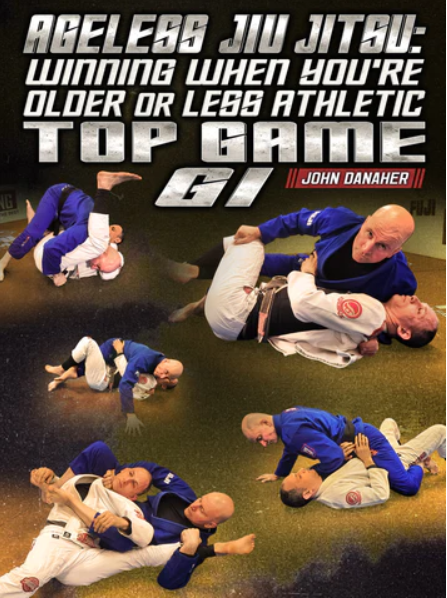
- Immediate day-one utility for white to black belt.
- Teaches universal frames and directions so you aren’t memorizing one-offs.
My Recommendation
Best for: Anyone building a resilient defensive base and consistent guard recovery.
Avoid if: You only want advanced counters after escapes-you’ll get fundamentals first.
Pairs with: Guard Retention – Go Further Faster Lock in the next phase: holding guard once you’ve escaped.
Cheaper alternative: The Grilled Chicken Guard Retention System by Priit Mihkelson
2. The Fastest Way: To Develop An Unpassable Guard
A concise guard retention program focused on the highest-leverage layers that stop passes early.
Quick Facts
- 🎯 All levels
- 🎛️ Guard retention (no-gi)
What It’s About
A streamlined framework for distance, angle, and inside position that prevents passing before it happens.
Why I Like It
- Tighter, faster-to-apply than older long-form sets.
- Prioritizes early interventions that keep you ahead of the passer.
My Recommendation
Best for: No-gi players who want results this month, not next year.
Avoid if: You prefer encyclopedic coverage over a distilled progression.
Pairs with: The Fastest Way: Guard Passing (No-Gi) Work both sides of the guard battle for faster improvement.
Cheaper alternative: Guard Retention Anthology Bundle by Lachlan Giles & Ariel Tabak
3. The Fastest Way: To Become An Effective Guard Passer (No-Gi)
A streamlined passing system that emphasizes winning wedges, pummeling, and directional pressure.
Quick Facts
- 🎯 All levels
- 🎛️ Guard passing (no-gi)
What It’s About
Clear, minimal routes to staple common guards, pummel past frames, and finish with stable pins.
Why I Like It
- Cuts to the patterns you’ll actually hit in live rounds.
- Pairs cleanly with modern wrestle-up and bodylock meta.
My Recommendation
Best for: Players who want consistent, low-risk passes that scale to higher levels.
Avoid if: You want gi-grip variations and lapel-based passing.
Pairs with: The Fastest Way: Unpassable Guard Train both sides for faster progress.
Cheaper alternative: The Body Lock Pass by Lachlan Giles
4. Back Attacks – Enter The System
The straight-jacket back system that standardized modern back control and finish mechanics.
Quick Facts
- 🎯 Intermediate+
- 🎛️ Back attacks (no-gi & gi)
What It’s About
Entries, control, and finishing from back positions with layered hand-fighting and strangle mechanics.
Why I Like It
- Still the reference playbook for back control sequences.
- Gives structure to hand-fighting instead of hoping for openings.
My Recommendation
Best for: Grapplers who reach the back but struggle to secure the finish.
Avoid if: You want a short primer; this is a deep-dive.
Pairs with: The Fastest Way: Increase Your Submission Percentage Sharpen the last mile of your finishes.
Cheaper alternative: Back Attacks: No-Gi by Lachlan Giles
5. The Fastest Way: To Increase Your Submission Percentage (No-Gi)
Focuses on the mechanics that convert dominant positions into taps more reliably.
Quick Facts
- 🎯 All levels
- 🎛️ Submissions (efficiency)
What It’s About
High-leverage finishing details across strangles and joint locks, emphasizing control while applying pressure.
Why I Like It
- Great ROI – small tweaks, big increase in taps.
- Shorter and easier to implement than classic deep-dives.
My Recommendation
Best for: People who get to the end but can’t seal it.
Avoid if: You want full submission systems with every variation.
Pairs with: Back Attacks – Enter The System Combine finishing upgrades with a dominant position system.
Cheaper alternative: The Catch Wrestling Formula by Neil Melanson
6. Leg Locks – Enter The System
The framework that reshaped lower-body submissions: entries, control (wedges), and finishing mechanics.
Quick Facts
- 🎯 Intermediate-Advanced
- 🎛️ Leg locks (no-gi & gi)
What It’s About
A complete lower-body attack system with clear pathways from entries to heel hook finishes and safeguards against counters.
Why I Like It
- Explains control and safety in a meta that can feel risky.
- Still informs how top teams structure leg entanglements.
My Recommendation
Best for: No-gi athletes and anyone who wants a serious leg game.
Avoid if: You’re brand new or prefer a short primer; this is dense.
Pairs with: Triangles – Enter The System Complement lower body with elite upper-body submissions.
Cheaper alternative: Leg Lock Anthology: 50/50 by Lachlan Giles
7. New Wave Jiu Jitsu: A New Philosophy of Submission Escapes
Advanced submission escape mechanics that go beyond surviving – aiming to re-attack after denial.
Quick Facts
- 🎯 Intermediate+
- 🎛️ Submission escapes
What It’s About
Dismantling submission threats with structured defensive wedges and immediate counter-offense options.
Why I Like It
- Focuses on denial plus re-offense, not just survival.
- Pairs naturally with positional escape skills from New Wave.
My Recommendation
Best for: Athletes who already have basic escapes and want counters.
Avoid if: You still need fundamental pin/turtle escapes first.
Pairs with: New Wave: Positional Escapes Round out your escape game with positional skills.
Cheaper alternative: The Submission Escapes Masterclass by Priit Mihkelson
8. New Wave Jiu Jitsu: A New Philosophy of Positional Escapes
A modern take on escaping the classic pins with built-in pathways to top or immediate offense.
Quick Facts
- 🎯 Intermediate+
- 🎛️ Escapes (positional)
What It’s About
Framing, hip direction, and connection principles to escape mount, side, and north-south-then counter while the opponent is off-balanced.
Why I Like It
- Trains you to escape into attacks, not neutral.
- Clear connection between defense and immediate scoring.
My Recommendation
Best for: Intermediate+ players ready to weaponize escapes.
Avoid if: You still need basic frames and guard recovery (start with GFF).
Pairs with: Pin & Turtle Escapes – Go Further Faster Lay the foundation first, then upgrade with New Wave.
Cheaper alternative: Escapology by Priit Mihkelson
9. New Wave Jiu Jitsu: No-Gi Guard Passing
A complete pressure-wedge passing framework with directionality and re-pummeling as core ideas.
Quick Facts
- 🎯 Intermediate+
- 🎛️ Guard passing (no-gi)
What It’s About
Bodylocks, knee cuts, and pressure passes framed by wedge creation, line-breaking, and follow-up pins.
Why I Like It
- Systematizes re-pummeling so you don’t get reset by frames.
- Detailed pinning sequences after the pass to secure points and subs.
My Recommendation
Best for: Passers who want a modern no-gi blueprint.
Avoid if: You want the shortest possible primer – try TFW Passing first.
Pairs with: The Fastest Way: Guard Passing Condensed patterns for quick wins.
Cheaper alternative: The Unity Passing System by Murilo Santana
10. Closed Guard – Go Further Faster (Gi)
A fundamentals-first plan to control, off-balance, and attack from closed guard in the gi.
Quick Facts
- 🎯 All levels
- 🎛️ Closed guard (gi)
What It’s About
Dominant grips, posture breaks, and high-percentage attacks that build a reliable gi closed-guard strategy.
Why I Like It
- Gives structure to a position most beginners meet on day one.
- Great bridge to New Wave closed guard for no-gi emphasis later.
My Recommendation
Best for: Gi players seeking a reliable A-game early.
Avoid if: You train strictly no-gi-consider New Wave Closed Guard instead.
Pairs with: New Wave: Closed Guard Translate the core ideas to no-gi.
Cheaper alternative: Black Magic Closed Guard by Dan Covel
11. Open Guard – Go Further Faster (Gi)
Gi-specific open guard structure with distance, kuzushi, and grip series that scale as you advance.
Quick Facts
- 🎯 All levels
- 🎛️ Open guard (gi)
What It’s About
Builds from posture and grips to kuzushi and sweeping options that survive stronger passers.
Why I Like It
- Clarifies distance management across major open-guard families.
- Strong foundation before moving to New Wave no-gi guard volumes.
My Recommendation
Best for: Gi practitioners who want a dependable open-guard game.
Avoid if: You train no-gi only-consider New Wave Open Guard series.
Pairs with: New Wave Open Guard Vol. 1 – Foundations Transition to the no-gi iteration.
Cheaper alternative: The Systematically Attacking from Open Guard Encyclopedia by Jon Thomas
12. Half Guard – Go Further Faster (Gi bottom game)
A gi half-guard foundation built around inside position, frames, and reliable reversals.
Quick Facts
- 🎯 All levels
- 🎛️ Half guard (gi)
What It’s About
Positioning, underhooks, and knee shields that neutralize pressure and create predictable sweep paths.
Why I Like It
- Teaches you how to stop being flattened.
- Maps cleanly to no-gi half-guard strategies later.
My Recommendation
Best for: Gi half-guard players at any belt.
Avoid if: You want passing-this is bottom-focused.
Pairs with: New Wave: No-Gi Half Guard – 3 Directions of Attack Translate fundamentals to no-gi tactics.
Cheaper alternative: Half Domination by Tom DeBlass
13. Kimura – Enter The System
Builds a kimura control hub that links to back takes, armbars, and sweeps in gi and no-gi.
Quick Facts
- 🎯 All levels
- 🎛️ Kimura system
What It’s About
Using the kimura as a control system from top and bottom to create attacks and transitions.
Why I Like It
- Turns a single submission into a positional hub.
- Translates across gi/no-gi, guard, and top.
My Recommendation
Best for: Players who love the kimura grip and want a structured pathway.
Avoid if: You rarely play positions that expose the far arm.
Pairs with: Back Attacks – Enter The System Capitalize on kimura-to-back transitions.
Cheaper alternative: The Cradle of Filth by Neil Melanson
14. Triangles – Enter The System
A comprehensive triangle architecture with entries, control, and finishes for different body types.
Quick Facts
- 🎯 Intermediate+
- 🎛️ Triangle system
What It’s About
Systemized setups from closed, open, and top; leg and hip angles; finishing pressure without sacrificing control.
Why I Like It
- Emphasizes control before the squeeze.
- Greatly improves finishing rate without brute force.
My Recommendation
Best for: Triangle-oriented guard players at blue belt and up.
Avoid if: You prefer armlocks and guillotines as primaries.
Pairs with: Front Headlock System Cover the guillotine/arm-in strangle family too.
Cheaper alternative: The Science of Filthy Triangles by Neil Melanson
15. Arm Bars – Enter The System
A complete armbar framework with controlling the shoulder line and structured finishing mechanics.
Quick Facts
- 🎯 Intermediate+
- 🎛️ Armbar system
What It’s About
Entries from mount, guard, and back; control concepts to isolate the arm; high-percentage finishing details.
Why I Like It
- Makes armbars feel inevitable once the elbow line is captured.
- Pairs well with triangles and back takes.
My Recommendation
Best for: Submission-hunters who want a structured upper-body matrix.
Avoid if: You rarely isolate arms in your current game.
Pairs with: Triangles – Enter The System Classic armbar-triangle synergy.
Cheaper alternative: Arm Bar Legion by Chris Paines
16. Front Headlock System (Guillotines & Front Head Control)
A positional attack system from the snap-down tree: guillotines, anacondas, d’arces, and control transitions.
Quick Facts
- 🎯 Intermediate+
- 🎛️ Front headlock / guillotines
What It’s About
Winning the head/arm inside track to enter strangles or transition to back and mount.
Why I Like It
- Bridges wrestling ties with submission chains.
- Teaches control so finishes don’t turn into scrambles.
My Recommendation
Best for: No-gi players and wrestlers crossing into submission grappling.
Avoid if: You mostly train gi spider/lapel guards.
Pairs with: Triangles – Enter The System Cover arm-in strangle mechanics from guard too.
Cheaper alternative: The Head & Arm Choke System by Lachlan Giles
17. Master The Move: The Side Crucifix
Concise instruction on using the side crucifix for control and submissions.
Quick Facts
- 🎯 All levels
- 🎛️ Control / Submissions
What It’s About
Danaher details entries into the side crucifix, control mechanics, and attacking both arms with maximum control.
Why I Like It
- Shows overlooked details that make crucifix sustainable against escapes.
- Concise and easy to apply without overwhelming volume.
My Recommendation
Best for: Anyone who wants a high-control position with strong finishing options.
Avoid if: You’re only looking for big, system-wide instructionals.
Pairs with: Master The Move: The Back Crucifix Combine side and back crucifix for a complete attack system.
18. Master The Move: The Back Crucifix
Learn to dominate with the back crucifix – one of the most powerful submission hubs in grappling.
Quick Facts
- 🎯 Intermediate
- 🎛️ Control / Submissions
What It’s About
Explores entries into the back crucifix, how to trap both arms, and connect to strangulations and joint locks.
Why I Like It
- Unpacks both offensive and control options from a unique angle.
- Complements the side crucifix for a rounded crucifix game.
My Recommendation
Best for: Players who want to expand beyond traditional back control.
Avoid if: You want high-volume fundamentals instead of niche mastery.
Pairs with: Back Attacks: Enter The System Expand crucifix attacks into a broader back submission arsenal.
19. Master The Move: Arm Drags
A detailed breakdown of the arm drag as an entry to back attacks and takedowns.
Quick Facts
- 🎯 All levels
- 🎛️ Takedowns / Back takes
What It’s About
Danaher shows how to consistently apply the arm drag from standing and seated positions, and connect it into back takes and sweeps.
Why I Like It
- Clean mechanics for one of the most reliable back-entry moves.
- Applies equally well in gi, no-gi, and wrestling contexts.
My Recommendation
Best for: Players who like to combine wrestling entries with jiu-jitsu control.
Avoid if: You’re looking for a broad system rather than one entry point.
Pairs with: Back Attacks: Enter The System Build a complete back attack system after learning to enter with the arm drag.
20. New Wave Open Guard Vol. 1 – The Two Foundations of Guard Play (No-Gi)
Core no-gi open-guard principles: distance, angle, and inside position with upper-lower body coordination.
Quick Facts
- 🎯 All levels
- 🎛️ Open guard (no-gi)
What It’s About
The movement and pummeling patterns that make any open guard work under pressure.
Why I Like It
- Gives first-principles that apply to all open-guard families.
- Great bridge from gi open guard to no-gi.
My Recommendation
Best for: Students switching to or emphasizing no-gi.
Avoid if: You only compete gi with heavy grip reliance.
Pairs with: New Wave Open Guard Vol. 2 – Sweeps & Reversals Turn foundations into points.
Cheaper alternative: No-Gi Open Guard by Lachlan Giles
21. New Wave Open Guard Vol. 2 – Sweeps & Reversals (No-Gi)
Applies the foundations to high-percentage sweeps and momentum-based reversals.
Quick Facts
- 🎯 Intermediate+
- 🎛️ Open guard (no-gi)
What It’s About
Structured attacks that punish common passing reactions and chain into top pins.
Why I Like It
- Makes counter-attacking feel systematic, not opportunistic.
- Links seamlessly to passing and pinning instructionals.
My Recommendation
Best for: Players who already understand open-guard pummeling.
Avoid if: You haven’t trained the Vol. 1 foundations.
Pairs with: New Wave No-Gi Guard Passing Complete the full guard battle loop.
Cheaper alternative: No-Gi Open Guard by Lachlan Giles
22. New Wave: Side Attacks – Building a Devastating Side Control System
A modern side-control blueprint from pin to finish, with clear transitions and strangles.
Quick Facts
- 🎯 Intermediate+
- 🎛️ Top control & submissions
What It’s About
Securing side control with wedges, isolating the near and far arms, and chaining to high-percentage finishes.
Why I Like It
- Solves the ‘stall’ problem by building direct finish paths.
- Pairs naturally with mount attack progressions.
My Recommendation
Best for: Top players seeking reliable finishes from dominant pins.
Avoid if: You primarily play guard and rarely arrive at side control.
Pairs with: New Wave: Mounted Pin Attacks (4×4 Mount System) Expand to mount finishes.
Cheaper alternative: Side Control Masterclass by Fabio Gurgel
23. New Wave: Mounted Pin Attacks – The 4×4 Mount System
A structured mount attack matrix that keeps control while exposing submissions.
Quick Facts
- 🎯 Intermediate+
- 🎛️ Mount attacks (top)
What It’s About
From stable mount pins to arm traps and strangling positions, with options for high and low mount.
Why I Like It
- Clear progressions reduce the scramble risk.
- Integrates well with side-control pinning.
My Recommendation
Best for: Top-game players who want checkmate sequences.
Avoid if: You prefer leg-lock-centric top games exclusively.
Pairs with: New Wave: Side Attacks Side and mount should evolve together.
Cheaper alternative: The Mount Attack Encyclopedia by Fabio Gurgel
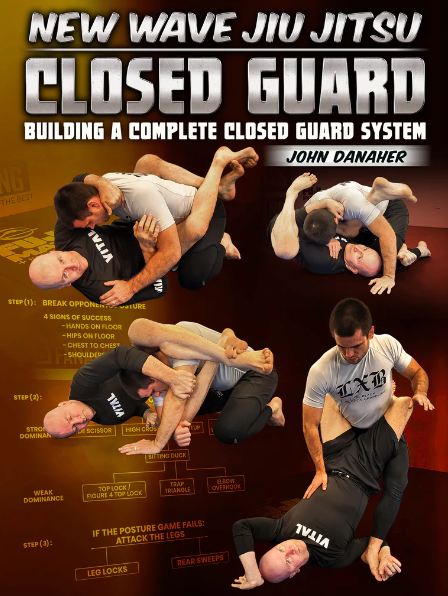
24. New Wave: Closed Guard – Building a Complete Closed Guard System (No-Gi)
A no-gi closed guard with posture-breaking mechanics and direct strangling routes.
Quick Facts
- 🎯 Intermediate+
- 🎛️ Closed guard (no-gi)
What It’s About
Posture control without gi grips, angle creation, and submission chains that keep opponents defensive.
Why I Like It
- Modernizes closed guard for no-gi reality.
- Clear finishing pathways beyond ‘break posture and hope’.
My Recommendation
Best for: No-gi players who still want a powerful closed guard.
Avoid if: You are focused solely on open/wrestle-up games.
Pairs with: Closed Guard – Go Further Faster (Gi) Cross-train the gi version for grip insights.
Cheaper alternative: No-Gi Closed Guard by Lachlan Giles
25. New Wave: No-Gi Half Guard – 3 Directions of Attack
Retention, reversals, and leg-entry threat combined into a cohesive no-gi half-guard plan.
Quick Facts
- 🎯 Intermediate+
- 🎛️ Half guard (no-gi)
What It’s About
Three-lane decision-making: hold, sweep, or attack legs based on passer reactions.
Why I Like It
- Gives a simple compass when options feel overwhelming.
- Connects bottom work directly to leg attacks.
My Recommendation
Best for: No-gi half-guard players who like clear directionality.
Avoid if: You play deep lapel gi half and want grip specifics.
Pairs with: Half Guard – Go Further Faster (Gi) Transfer concepts back into the gi.
Cheaper alternative: The Half Guard Anthology by Lachlan Giles
26. Standing2Ground: Takedowns & Standing Skills for Jiu Jitsu (Vol. 1)
The BJJ-adapted entry to stand-up: ties, posture, and takedown safety for guard players and passers.
Quick Facts
- 🎯 All levels
- 🎛️ Stand-up (no-gi/gi-agnostic)
What It’s About
Fundamental stance, hand fighting, and high-percentage entries that land you in scoring positions safely.
Why I Like It
- Optimized for jiu-jitsu, not wrestling rules.
- Gives confidence to start from the feet.
My Recommendation
Best for: Grapplers who pull guard by default and want options.
Avoid if: You only train seated starts.
Pairs with: The Fastest Way: Effective in the Standing Position A concise stand-up accelerator.
Cheaper alternative: Fundamental Folkstyle Wrestling by Hudson Taylor
27. Standing2Ground: Upper Body Takedowns (Vol. 2)
Clinches, trips, and throws adapted for BJJ’s grip fighting and mat outcomes.
Quick Facts
- 🎯 Intermediate+
- 🎛️ Stand-up (upper-body attacks)
What It’s About
Static and dynamic ties to off-balance and finish without exposing your neck or giving up guard.
Why I Like It
- High return for gi and no-gi alike.
- Focuses on safe landings into dominant pins.
My Recommendation
Best for: Players who like body locks, trips, and clinch-to-top.
Avoid if: You only drill shots and double legs.
Pairs with: Standing2Ground: Positional Dominance & Scrimmage Wrestling (Vol. 3) Win hand fights and ties before the takedown.
Cheaper alternative: Fundamental Folkstyle Wrestling by Hudson Taylor
28. Standing2Ground: Positional Dominance & Scrimmage Wrestling (Vol. 3)
Win the hand fight, own the ties, and your takedowns get easier and safer.
Quick Facts
- 🎯 All levels
- 🎛️ Stand-up (hand fighting & ties)
What It’s About
Dominant grips and sequences that make your opponent’s reactions predictable, enabling clean finishes.
Why I Like It
- Gives structure to the ‘messy’ part of stand-up.
- Increases takedown percentage without risking position.
My Recommendation
Best for: Competitors who struggle to create clean entries.
Avoid if: You never start on the feet.
Pairs with: Standing2Ground bundle Get all three volumes together.
Cheaper alternative: Fundamental Folkstyle Wrestling by Hudson Taylor
29. Feet To Floor (Gi) – Vol. 1-3 Bundle
Gi grip fighting, kuzushi, and throws tailored for BJJ outcomes-slower burn but timeless mechanics.
Quick Facts
- 🎯 All levels
- 🎛️ Stand-up (gi)
What It’s About
From fundamental standing skills to advanced grip sequences for safe, scoring takedowns in the gi.
Why I Like It
- Deep dive into gripping and balance that lasts your entire career.
- Teaches safe landings into pins rather than judo ippon focus.
My Recommendation
Best for: Gi competitors and coaches building team curriculum.
Avoid if: You only train no-gi; consider Standing2Ground instead.
Pairs with: Standing2Ground bundle (No-Gi) Parallel no-gi path from the feet.
Cheaper alternative: The Higashi Method For BJJ by Shintaro Higashi
30. Ageless Jiu Jitsu – Winning When You’re Older or Less Athletic (Bundle)
Game plans that reduce strain and maximize leverage for longevity in gi and no-gi.
Quick Facts
- 🎯 All levels (30+ focus)
- 🎛️ Longevity / strategy
What It’s About
Position choices, pacing, and submissions that age well-prioritizing structure over explosiveness.
Why I Like It
- Practical adjustments you can make tomorrow.
- Targets common pain points for older or busy practitioners.
My Recommendation
Best for: Hobbyists, masters competitors, and coaches with adult programs.
Avoid if: You want high-pace scramble systems only.
Pairs with: Ageless Bottom (Gi) – Single Title Try an individual volume first if unsure.
Cheaper alternative: Old Man Jiu-Jitsu by Tom DeBlass
31. The Fastest Way: Becoming Effective in the Standing Position
A condensed, high-impact primer to feel competent on the feet quickly.
Quick Facts
- 🎯 All levels
- 🎛️ Stand-up (accelerator)
What It’s About
Essential stance, ties, and a few reliable finishes-enough to start scoring safely.
Why I Like It
- Low time investment for big confidence gain.
- Pairs well before diving into multi-volume series.
My Recommendation
Best for: Busy practitioners who want standing competence ASAP.
Avoid if: You’re ready for deep multi-volume stand-up study.
Pairs with: Standing2Ground Vol. 1 – Takedowns & Standing Skills Expand once you’ve got the essentials.
Cheaper alternative: Takedowns for BJJ by Matt D’Aquino
32. Master The Move: The Shoulder Crunch Series
A full study of the shoulder crunch as a control-and-sweep engine.
Quick Facts
- 🎯 All levels
- 🎛️ Sweeps / Control
What It’s About
Danaher shows how to use the shoulder crunch to off-balance, sweep, and set up submissions from seated guard positions.
Why I Like It
- Turns an underused guard control into a central sweeping weapon.
- Connects easily to both classical and modern guard styles.
My Recommendation
Best for: Guard players who like to off-balance and stay offensive.
Avoid if: You rarely sit guard or prefer top pressure.
Pairs with: Go Further Faster: Guard Retention Stay in position long enough to apply shoulder crunch attacks.
33. Master The Move: The Straight Arm Bar (Ude Gatame)
Danaher’s fastest arm lock – the straight arm bar, refined into a complete system.
Quick Facts
- 🎯 Intermediate
- 🎛️ Submissions
What It’s About
A precise dive into ude gatame, showing cutting and shotgun variations and how to funnel opponents into these finishes.
Why I Like It
- Turns a simple submission into a specialized game.
- Highlights overlooked mechanics that increase finishing percentage.
My Recommendation
Best for: Submission-focused players who love armbars.
Avoid if: You prefer broad coverage over laser focus.
Pairs with: Enter The System: Arm Bar The comprehensive armbar study that places this move into a larger system.
34. Master The Move: The Anaconda Strangle
A focused guide to the anaconda choke from front headlock situations.
Quick Facts
- 🎯 Intermediate-advanced
- 🎛️ Chokes / Front headlock
What It’s About
Danaher explains setups, mechanics, and finishing details for the anaconda choke, linking it into the broader front headlock system.
Why I Like It
- Clarifies finishing mechanics that many players miss.
- Strong connections to wrestling-style front headlock play.
My Recommendation
Best for: No-gi players and wrestlers looking to add submission threats from the front headlock.
Avoid if: You rarely find yourself in front headlock positions.
Pairs with: The Front Headlock System Danaher’s full front headlock system that expands beyond just the anaconda.
35. Master The Move: The American Lock
A sharp focus on one of the oldest submissions in BJJ, the Americana shoulder lock.
Quick Facts
- 🎯 Beginner friendly
- 🎛️ Submissions / Control
What It’s About
Danaher explains the Americana as both a submission and a control tool, breaking down finishing mechanics and setups from dominant positions.
Why I Like It
- Makes a ‘basic’ move work at high levels with precise details.
- Shows how Americana can open pathways to more dominant pins.
My Recommendation
Best for: Beginners who want to make their basics more effective.
Avoid if: You rarely play from top control or prefer modern submission games.
Pairs with: Go Further Faster: Pin Escapes & Turtle Escapes Learn how opponents defend or escape Americanas, and how to counter.
36. New Wave Jiu Jitsu Bundle
Bundle reference used for cross-links from individual New Wave entries.
Quick Facts
- 🎛️ Bundle
What It’s About
Collects the modern Danaher curriculum across escapes, guard, passing, and top attacks.
Why I Like It
- Covers a complete no-gi path with consistent terminology.
- Often discounted during sales.
My Recommendation
Best for: Students committing to a full Danaher track.
Avoid if: You only need one topic right now.
Pairs with: Go Further Faster bundle Gi-oriented foundations in parallel.
37. Go Further Faster Bundle
Bundle reference used for cross-links from GFF entries (escapes, guard families, passing).
Quick Facts
- 🎛️ Bundle
What It’s About
Gi-friendly fundamentals and universal principles that scale to no-gi.
Why I Like It
- Ideal for teams and beginners.
- Creates a common language for coaches to teach from.
My Recommendation
Best for: Clubs needing a shared curriculum.
Avoid if: You only train no-gi and want the compressed TFW format.
Pairs with: New Wave bundle Modern no-gi track.
38. Enter The System Bundle
Bundle reference used for cross-links from ETS entries (Back, Legs, Triangles, Kimura, Arm Bar, Front Headlock).
Quick Facts
- 🎛️ Bundle
What It’s About
Deep dives into Danaher’s hallmark submission and control systems.
Why I Like It
- Still gold-standard references for many subsystems.
- Great library value during site-wide sales.
My Recommendation
Best for: Submission nerds and coaches building complete trees.
Avoid if: You only want fast, minimal primers (see TFW / MTM).
Pairs with: Master The Move micro-series Plug-and-play modules for quick wins.
Who is John Danaher? (Teaching style & why people rate him so highly)
John Danaher is the legendary BJJ coach of Gordon Ryan and previously the Danaher Death Squad (Gary Tonon, Nicky Ryan, Craig Jones, Eddie Cummings, and others). Before that he coached Georges St‑Pierre in MMA. Many consider him the best BJJ coach ever. Danaher’s teaching style is like a university lecture: heavy on concepts and principles with detailed step‑by‑step instruction. You will learn a lot if you pay attention; some find his pace slower than average.
John Danaher Series Explained (pick the right track fast)
-
Go Further Faster (Gi fundamentals)
Gi‑first fundamentals that also carry over to no‑gi. If you train gi, start here.
Start with (Danaher’s advice): Pin Escapes & Turtle Escapes and Guard Retention.
Suggested watch order (Gi):
-
New Wave (No‑Gi fundamentals)
No‑Gi curriculum with modern terminology and systems. If you train no‑gi, start here.
Start with (Danaher’s advice): Pin Escapes and Submission Escapes.
Suggested watch order (No‑Gi):
-
Enter The System (Deep systems)
Long‑form, system‑building instructionals (Back, Leg Locks, Kimura, Triangles, Front Headlock, Arm Bar). Best for coaches and students who love depth.
-
The Fastest Way (Condensed results)
Short, focused programs to get results quickly. Good add‑ons if you want less talk, more reps.
-
Ageless Jiu Jitsu (for 30+ / less athletic)
Energy‑efficient Gi & No‑Gi systems optimized for longevity.
-
Master The Move (single‑topic plug‑ins)
Targeted deep dives that bolt onto any main track.
Best John Danaher Instructionals by Goal / Position
Guard Retention
- No‑Gi (short course): The Fastest Way — Unpassable Guard
- Gi fundamentals: Go Further Faster — Guard Retention
- No‑Gi long form: New Wave — Open Guard (Foundations)
Guard Passing
- No‑Gi (short course): The Fastest Way — Effective Guard Passer
- No‑Gi long form: New Wave — No‑Gi Guard Passing
- Gi: Go Further Faster — Passing the Guard
Back Attacks
- System: Enter The System — Back Attacks
- Plug‑ins: MTM — Back Crucifix, MTM — Side Crucifix
Leg Locks
- System: Enter The System — Leg Locks
- Entries & control (no‑gi base): New Wave — No‑Gi Half Guard (3 Directions)
Escapes (start here)
Complete fundamentals
- Gi track: Go Further Faster bundle
- No‑Gi track: New Wave bundle
Older / less athletic
- Start here: Ageless Jiu Jitsu bundle (Gi & No‑Gi)
- Gi focus: Top Game (Gi) / Bottom Game (Gi)
Standing / takedowns
- Best all‑rounder: Standing2Ground bundle
- Alternate path: Feet to Floor bundle or TFW — Standing Position
Shortest path to results
Overlap & Watch Order (simple rules that prevent double‑buying)
First principles (from Danaher’s guidance): begin with escapes and guard retention. Choose the Gi path (Go Further Faster) if you train in the gi; choose the No‑Gi path (New Wave) if you don’t. After that, branch to closed guard or half guard, then open guard and passing. Older athletes can also start with Ageless Jiu Jitsu.
After your base is solid, add Enter The System for deep systems, or use The Fastest Way series for quick wins. Older athletes can prioritize Ageless Jiu Jitsu.
Free & legal John Danaher content
- Ultimate Submissions (FREE anthology): includes a Danaher segment among other instructors — get it here.
Danaher Terminology (quick glossary)
- Inside position: control the space between limbs; win underhooks/frames.
- Straight‑jacket: back‑attack system that traps the arms to expose the neck.
- Ashi garami: lower‑body entanglement positions for control and leg attacks.
- Elbow/shoulder line: geometric checkpoints for finishing arm locks.
- Wedges: structural blocks (hips/knees/elbows/head) to restrict movement.
- Dilemma principle: force A/B reactions so either choice benefits you.
- Pin → submit: stabilize control first; then attack submissions.
- 4×4 mount system: mount flow between four pins and four finish families.
FAQ — John Danaher Instructionals
Where should a beginner start with John Danaher instructionals?
If you train gi, begin with Go Further Faster — Pin Escapes & Turtle Escapes and Guard Retention. If you train no‑gi, start with New Wave — Pin Escapes, then Submission Escapes.
What is the difference between Go Further Faster, New Wave, Enter The System, The Fastest Way, Ageless, and Master The Move?
Go Further Faster = gi fundamentals. New Wave = no‑gi fundamentals. Enter The System = long‑form deep systems (e.g., back, leg locks). The Fastest Way = condensed “results‑first” modules. Ageless = optimized for older/less athletic grapplers. Master The Move = single‑topic plug‑ins.
What is the best John Danaher instructional for guard passing?
For no‑gi short course: The Fastest Way — Effective Guard Passer. For a no‑gi long course: New Wave — No‑Gi Guard Passing. For the gi: Go Further Faster — Passing the Guard.
What is the best John Danaher instructional for guard retention?
For no‑gi short course: The Fastest Way — Unpassable Guard. For gi fundamentals: Go Further Faster — Guard Retention. For a no‑gi long course: New Wave — Open Guard (Foundations).
What is the best John Danaher instructional for back attacks?
Pick the deep system: Enter The System — Back Attacks. Then add plug‑ins like MTM — Back Crucifix or MTM — Side Crucifix.
Is there a free John Danaher instructional?
Yes. Ultimate Submissions is a FREE anthology that includes a Danaher segment.
What watch order does John Danaher recommend overall?
Start with escapes and guard retention (Gi: Go Further Faster; No‑Gi: New Wave). After that, move into half guard or closed guard, then open guard, then guard passing. If you are older or less athletic, consider starting with Ageless Jiu Jitsu.
What should I add after I finish the fundamentals?
Layer in deep systems like Enter The System (bundle) — e.g., Leg Locks or Back Attacks — or plug gaps with Master The Move titles.