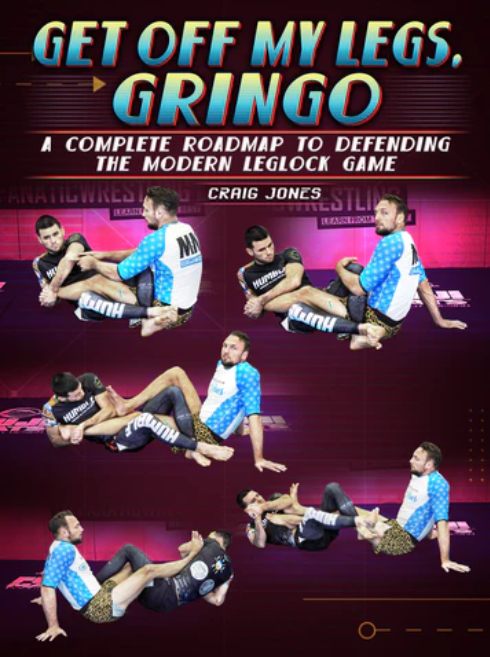
Get Off My Legs Gringo Review: 1001 Details from Craig Jones

Craig Jones’ complete system for surviving and escaping every major leg lock position, taught from an elite attacker’s perspective.

Last updated: March 2026

Get Off My Legs Gringo by Craig Jones

The leg lock defense bible: heel slipping, cross ashi survival, misdirectional counters, and prevention from every guard position.

  • ⏰ 5 hours 17 minutes
  • 📅 Released July 2021
  • 🎯 Craig Jones
  • 🥋 No-gi
  • 🏆 6 volumes
  • ⭐ BJJ World: 8/10
My verdict: The most structured leg lock defense system available. Craig covers prevention, early escapes, and late-stage survival for every ashi garami variant. The misdirectional defense alone is worth the price. If you train no-gi and face leg lockers regularly, this is required viewing.
Check Price on BJJ Fanatics

Product Details

Full TitleGet Off My Legs Gringo by Craig Jones
InstructorCraig Jones
Runtime5 hours 17 minutes across 6 volumes
Volumes6 (MP4, HD 720p)
Release DateJuly 2021
Price~$197 retail (frequently 40-50% off during BJJ Fanatics sales)
FormatNo-gi
Star TechniqueMisdirectional defense ⭐ Standout
Where to BuyBJJ Fanatics

What Get Off My Legs Gringo Covers

Get Off My Legs Gringo is Craig Jones’ complete defense system against leg locks. It covers every stage of leg lock defense: prevention (keeping yourself out of leg entanglements), early escape (getting out before the submission is locked in), and late-stage survival (what to do when you’re deeply caught in cross ashi or 50/50).

Craig’s approach is described as “classically unorthodox” with little resemblance to what most people teach for leg lock defense. As one of the best leg lock attackers in grappling history, Craig knows exactly what makes a successful heel hook or knee bar. He teaches defense from the attacker’s perspective, showing you what leg lockers look for so you can deny those grips, angles, and exposures before they happen.

The instructional starts with foundational concepts like the knee line, hip positioning, and the difference between inside and outside ashi. It then moves through heel slipping mechanics, deep cross ashi survival, shallow ashi defense, outside position escapes, and finishes with a full volume on prevention from every guard position. The result is a curriculum that reads like a structured practice plan with clear progression from basic concepts to advanced counters.

Volume-by-Volume Breakdown

Volume 1: Calm Down Mate – Foundational Concepts (~1 hour)

Craig opens with his defensive framework, built around understanding what makes you vulnerable to leg locks. The volume covers the knee line concept (what controls your exposure), hip positioning differences between traditional and modern escapes, the inside vs outside distinction that underpins every defense in the system, hamstring exposure, hiding the heel, hand fighting within leg entanglements, and the height problem. There are 13 chapters total, and Craig treats this volume as the foundation for everything that follows.

Volume 2: Heel Slipping Techniques

This is where Craig teaches you to escape heel hooks that are already partially locked in. The heel slip method (adapted from Eddie Cummings’ pioneering work) forms the core technique. Craig then covers secondary leg usage when your primary leg is trapped, the two-foot problem (when both feet are in danger simultaneously), outside foot assists, the high outside slip, and late-stage hand fighting for when you’re already deep in trouble. Seven chapters of progressively worse scenarios and how to escape each one.

Volume 3: Late-Stage Cross Ashi Defense

The most technical volume, and where the star technique lives. Craig covers the Tombstone defensive position, defeating Double Trouble (when your opponent threatens two submissions at once), limiting Achilles lock pressure, shoulder height survival, surviving Crisscross when your legs are deeply entangled, hamstring exposure defense from cross ashi, inverted cross ashi defense, and the misdirectional defense. ⭐ Star Technique The misdirectional is described by Ognen Dzabirski of BJJ World as “the star of this entire instructional.” The volume ends with back step to back take, showing how to convert late-stage defense into offense.

Volume 4: Dealing With Shallow Ashi

Covers defenses against the less-deep leg entanglement positions. Craig addresses back step entries defense, Kani Basami (leg scissors) setup defense, 50/50 countering, foot crossing defense, hand fighting from shallow ashi, and what he calls the “lesser of two evils” concept for choosing which bad position to accept when escape isn’t immediately available.

Volume 5: Defending Outside Attacks

A position-by-position breakdown of outside ashi defenses. Each section runs about 10 minutes and covers a specific variant: standing ashi, split squat ashi, seated ashi, standing outside ashi, seated outside ashi, and beating the reap (defending reaping entries). Seven chapters that give you a specific defensive protocol for every outside leg attack you’ll face in competition.

Volume 6: Leg Lock Prevention – Advanced Concepts

The final and most unique volume. While most leg lock defense instructionals only teach you what to do after you’re caught, Volume 6 teaches prevention from every major guard position. Fourteen chapters cover: submission chains awareness, the kneeling vs standing misconception, defending from open guard, passing leg lockers’ guards safely, getting a leg inside from supine, beating outside entries, defending from butterfly guard, beating elevation sweeps, defending from closed guard, closed guard safety protocols, defending from half guard, knee shield, and butterfly half. This is the volume that separates GOMLG from every other leg lock defense resource.

The Misdirectional Defense: Why It’s the Star Technique

Ognen Dzabirski of BJJ World called the misdirectional “the star of this entire instructional,” and for good reason. It’s a counter-intuitive defensive concept where you redirect the attacker’s pressure in a direction they don’t expect, turning their committed attack into an escape opportunity for you.

Most leg lock defenses teach you to fight directly against the submission: pull your heel free, fight the grip, clear the knee line. The misdirectional takes a different approach. Instead of fighting the direction of the attack, you redirect momentum, creating a brief window where the attacker has committed their body weight in one direction while you escape in another.

This technique is particularly effective because experienced leg lockers have trained specifically to deal with direct defensive resistance. They expect you to pull your heel out, so they have grip sequences and body positioning to counter that. The misdirectional bypasses those counters entirely by going somewhere the attacker hasn’t prepared for.

Get Off My Legs Gringo vs Pillars of Defense (Gordon Ryan)

These are the two best leg lock defense instructionals available. Here’s how they compare:

AspectGet Off My Legs Gringo (Craig Jones)Pillars of Defense (Gordon Ryan)
Defensive PhilosophyPrevention-first, concept-basedSequence-driven, late-stage focus
Core ApproachHeel hiding, stance control, foot positioning, pommelingDetailed defensive cycles, competition-tested sequences
Key StrengthCovers secondary attacks, includes drilling-friendly blocksTransferable concepts, strong late-stage survival material
CoverageComplete map for every ashi variant and 50/50 defenseBroader rolling breakdowns showing techniques in live sparring
Prevention?Full volume (Vol. 6) dedicated to preventing entriesLess prevention material, focuses on what to do once caught
WeaknessLess rolling footage, large volume of material needs a structured study planHeel hooks dominate the curriculum, less toe hold and kneebar coverage
FormatNo-gi, 6 volumes, ~5h17mNo-gi

Bottom line: If you want a prevention-first system that teaches you to avoid leg entanglements before they happen, go with Craig’s GOMLG. If you’re already getting caught regularly and need better late-stage escape sequences with competition footage showing how they work live, Gordon Ryan’s Pillars of Defense is the better pick. Ideally, you’d own both.

What Reviewers Say

“Craig Jones’ defensive-oriented BJJ DVDs have been his best work.”

Ognen Dzabirski, BJJ World (8/10 rating)

“The DVD will add to your BJJ even if you’re skeptical about leg locks.”

Ognen Dzabirski, BJJ World

“The most complete and best explained instructional you can get for leg lock defense.”

Community assessment

“A lot more excited about this DVD than all his leg-lock-attacking ones put together.”

Online reviewer

BJJ World score: 8/10 overall. Ognen Dzabirski praised Craig’s unorthodox defensive approach and singled out the misdirectional defense as the standout technique. His main note was that the curriculum is dense and requires a practice plan to work through systematically.

Strengths and Weaknesses

What’s Great

  • Covers ALL stages of defense: prevention, early escape, mid-stage, and late-stage survival
  • The misdirectional defense is a unique technique you won’t find in any other instructional
  • Prevention volume (Vol. 6) is rare. Most leg lock defense sets only teach escapes, not avoidance.
  • Written from an elite attacker’s perspective. Craig knows exactly what leg lockers look for.
  • Every major ashi garami variant gets a dedicated defense protocol
  • Craig is a clear, direct teacher who explains the “why” behind each defense

What’s Weak

  • Not for beginners. The curriculum assumes familiarity with heel hooks, knee bars, and ashi garami positions.
  • Less rolling footage than Gordon Ryan’s Pillars of Defense, which shows techniques in live sparring
  • Dense material needs a structured study plan. You can’t just watch it once and absorb everything.
  • Volume 4 chapter structure is less organized than the other volumes
  • Lachlan Giles’ Leg Lock Anthology covers some defense within a broader offensive system, which may suit grapplers who want attack and defense integrated

Who Should Buy / Who Should Skip

Buy Get Off My Legs Gringo if you…

  • Train no-gi and regularly face opponents who attack leg locks
  • Already understand basic leg lock positions (ashi garami, 50/50) but lack a defensive system
  • Want prevention strategies, not just escapes for when you’re already caught
  • Are an intermediate or advanced grappler (blue belt with no-gi experience and above)
  • Compete under IBJJF no-gi, ADCC, or sub-only rulesets where heel hooks are legal
  • Want to learn defense from someone who is one of the best leg lock attackers in history

Skip Get Off My Legs Gringo if you…

FAQ – Get Off My Legs Gringo

Is Get Off My Legs Gringo good for beginners?

No. Get Off My Legs Gringo covers advanced leg lock defense concepts like heel hook escapes, cross ashi survival, and 50/50 countering. You need to already understand basic leg lock positions and terminology. Beginners should focus on fundamental guard and escape skills first. If you want a more accessible Craig Jones instructional, Make Z Guard Great Again has fewer prerequisites.

What belt level do you need for Get Off My Legs Gringo?

Blue belt with significant no-gi experience at minimum, though the instructional is most useful for purple belts and above. You need to know what ashi garami, 50/50, cross ashi, heel hooks, and knee bars are before this material will make sense. If you’ve never been caught in a heel hook, the urgency of these defenses won’t click yet.

How does Get Off My Legs Gringo compare to Gordon Ryan’s Pillars of Defense?

Craig’s GOMLG is prevention-first and concept-based, with a full volume dedicated to avoiding leg entanglements before they happen. Gordon Ryan’s Pillars of Defense is more sequence-driven with a focus on late-stage escapes and includes more rolling footage showing techniques in live sparring. GOMLG has better coverage of secondary attacks and ashi variants, while Pillars has stronger late-stage survival material. Ideally you’d own both.

What is the misdirectional defense?

The misdirectional is the standout technique of the entire instructional, highlighted by Ognen Dzabirski of BJJ World as the star of the DVD. It’s a counter-intuitive defense where instead of fighting directly against the submission, you redirect the attacker’s momentum in an unexpected direction, creating an escape window. It bypasses the grip sequences and counters that experienced leg lockers use against traditional defensive resistance.

How long is Get Off My Legs Gringo?

Get Off My Legs Gringo is 5 hours and 17 minutes across 6 volumes. Volume 1 covers foundational concepts in about an hour. Volumes 2-5 cover specific defensive positions (heel slipping, cross ashi, shallow ashi, outside attacks). Volume 6 covers prevention from every guard position with 14 chapters.

Is Get Off My Legs Gringo worth it?

Yes, if you train no-gi and face leg lock attacks regularly. BJJ World gave it 8/10 and called Craig’s defensive work his best material. The prevention volume alone sets it apart from every other leg lock defense instructional. At retail price around $197 it’s competitive with Gordon Ryan’s Pillars of Defense, and both are frequently discounted 40-50% during BJJ Fanatics sales.

Does Get Off My Legs Gringo work for gi training?

The entire system is designed for no-gi grappling. While some conceptual frameworks (knee line awareness, hip positioning) apply universally, the specific techniques assume no grips on clothing and focus on heel hooks and toe holds that are restricted or banned under most gi rulesets. For gi-specific leg lock defense, you’ll want resources focused on straight ankle locks and kneebar defense.

Ready to Stop Getting Leg Locked?

Craig Jones’ Get Off My Legs Gringo covers prevention, escapes, and late-stage survival for every leg lock position. 6 volumes, 5+ hours of defense.

Check Price on BJJ Fanatics

50% off Craig Jones, John Danaher and many other instructors!

Close the CTA

You can save 50% on instructionals -

don't miss out on today's deals

Pssst....

Craig Jones best instructionals roundup