Craig Jones Power Ride Review: A Hands-On Breakdown

A hands-on review of Craig Jones’ revolutionary wrestling-inspired pinning system. Filip Zanki at BJJ World gave it a perfect 10/10, and after 3 months of training it I understand why.

Last updated: March 2026

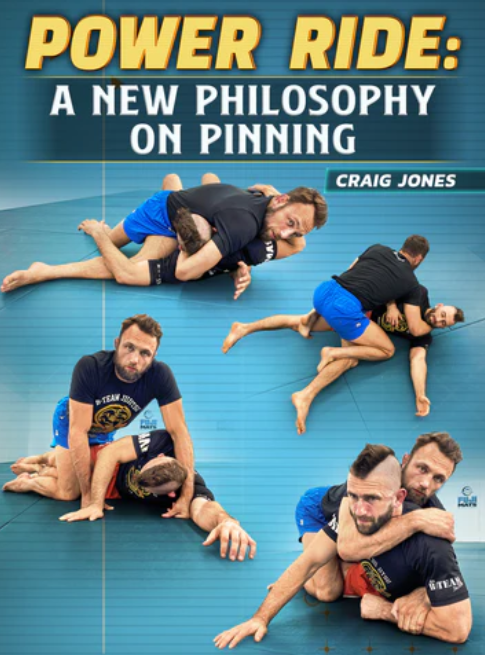
Power Ride: A New Philosophy on Pinning

Craig Jones teaches you to pin like Khabib Nurmagomedov instead of chasing IBJJF points.

  • ⏰ ~4 hours (6 volumes)
  • 📅 April 2022
  • 🎯 Craig Jones
  • 🥋 No-gi focused
  • 💰 $197 retail
BJJ World rating: 10/10. Top 5 instructional I ever watched. Maybe #1. This changed how I think about pinning entirely.

View on BJJ Fanatics

Product Details

Full Title Power Ride: A New Philosophy on Pinning by Craig Jones
Instructor Craig Jones
Runtime ~4 hours across 6 volumes
Release Date April 2022
Retail Price $197 (frequently 40-50% off during BJJ Fanatics sales)
Style No-Gi (concepts transfer to gi)
Level Intermediate to Advanced (requires passing fundamentals)
BJJ World Rating 10/10 (Filip Zanki)

Check Current Price

The Core Idea: On the Legs, Not Past the Legs

Craig Jones’ Power Ride has an ambitious goal: to change how we pin people in Brazilian jiu-jitsu.

Craig argues that we should pin like Khabib Nurmagomedov, instead of how we do it now.

How we pin people now is according to the IBJJF point system. We use side control, mount, back mount and north south.

But MMA fighters like Khabib use an entirely different system of pins. And in this instructional Craig Jones teaches you how to do that too.

The shortest summary of Craig’s new philosophy of pinning is this: don’t be past the legs, be on the legs.

All the normal BJJ pins are past the legs. But the problem with this is that the legs are free. They’re free to bridge, to hip escape, and cause all kinds of problems.

Craig’s new pins (which he stole from Khabib) are on the legs. This prevents all bridges, hip escapes, and really all explosive movements. So it’s really superior for holding people down.

Old pins New pins
What? Side control, mount, north south, back mount Leg shelves, leg splits, cross body rides, Daghestani handcuffs
How? Past the legs On the legs
Why? To score IBJJF points Control leading to submission
Table: The difference between traditional pins and the new style of pinning from Craig Jones and Khabib

How Do ‘On the Legs’ Pins Work?

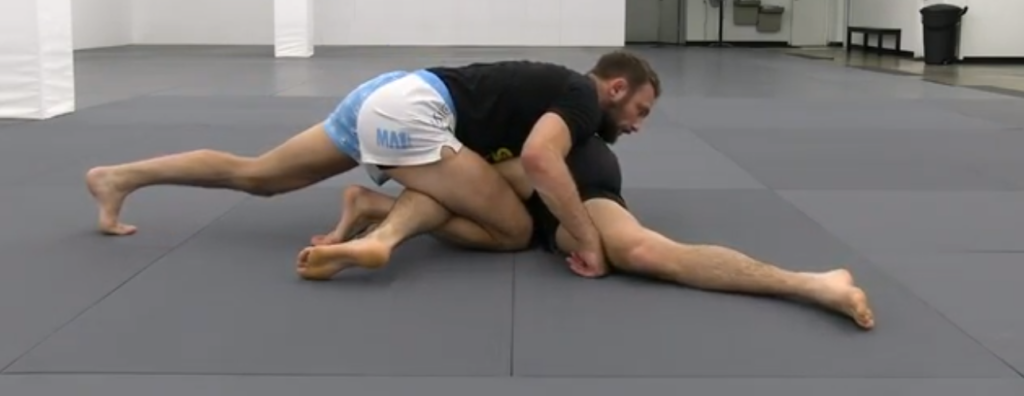
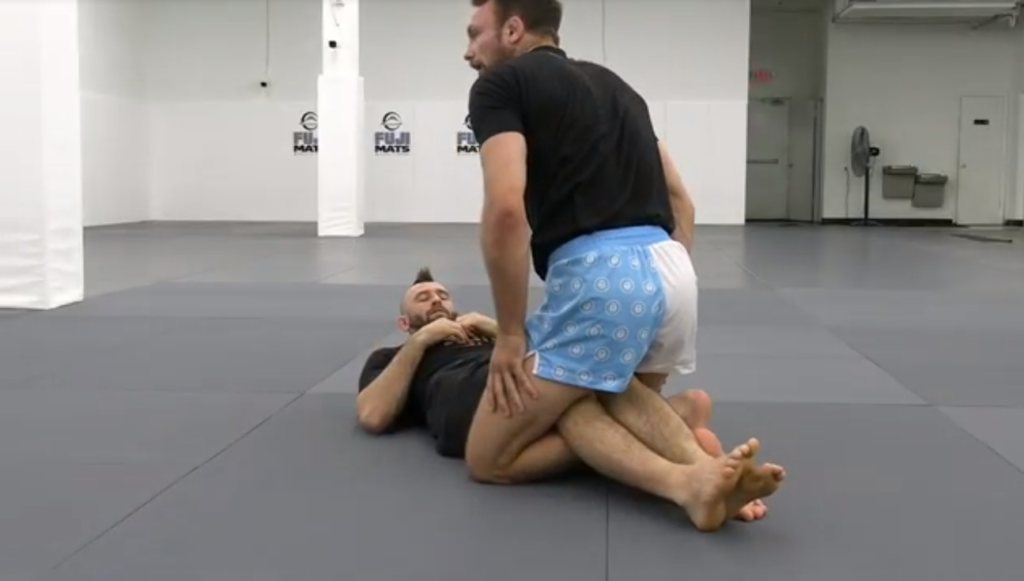
Craig shows many ways to pin the opponent’s legs.

Sometimes you’re literally on the legs.
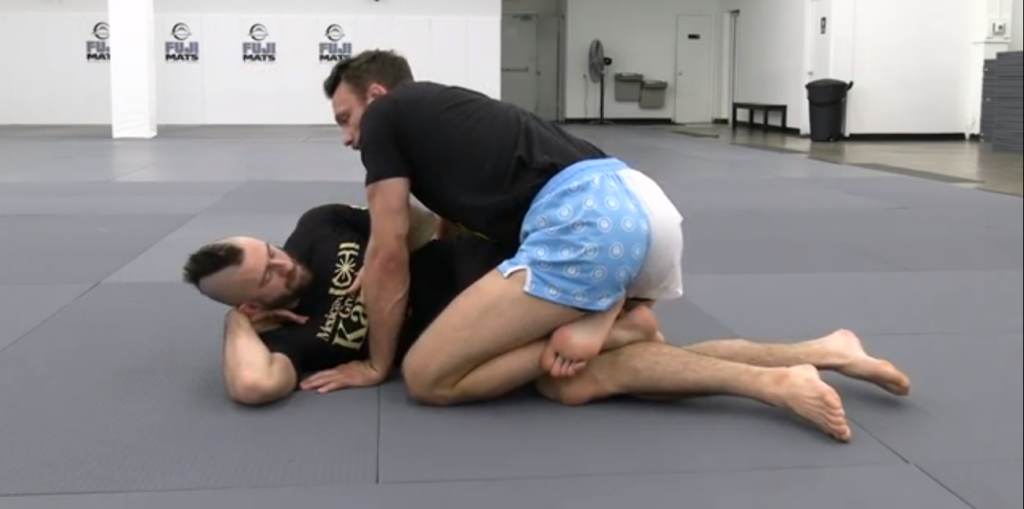
Craig Jones demonstrating an on-the-legs pin position

Sometimes you split the legs.

Craig Jones demonstrating a leg split pin

Sometimes you shelf the legs.

Craig Jones demonstrating a leg shelf pin

Sometimes you twist the leg.

Craig Jones demonstrating a leg twist pin

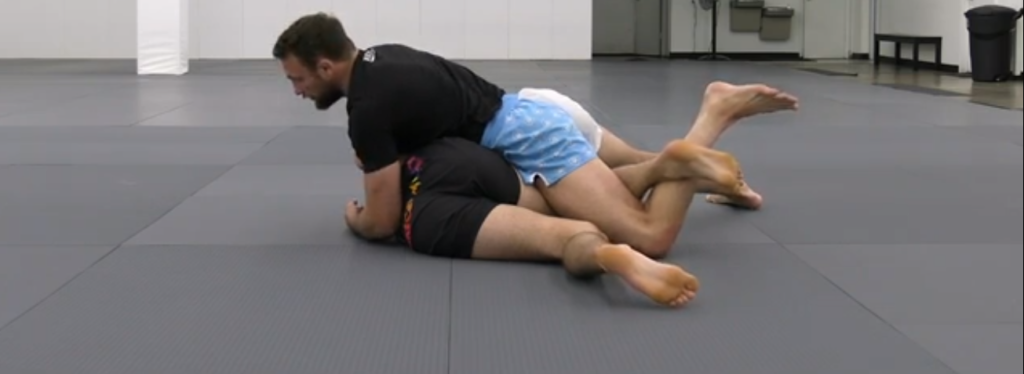
And eventually you want to get to a full belly down back mount: where you essentially cover, shelf and split the legs, all at the same time.
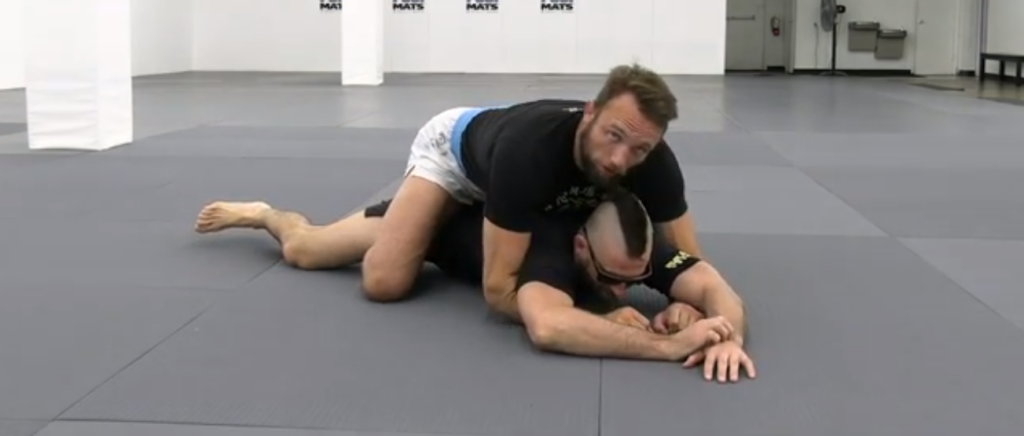
Craig Jones demonstrating belly down back mount with leg control

So there isn’t just one way to pin the legs – it’s a whole system. And Craig does a great job of explaining how to do it and how to integrate it with your existing BJJ game.

Volume-by-Volume Breakdown

Volume 1 (~30 min) Theory & Philosophy

Craig opens with his thesis: points do not equal control. He breaks down why traditional BJJ pins (side control, mount, north south) all share the same flaw – your opponent’s legs are free. He analyzes how Khabib Nurmagomedov pins fighters in MMA and builds the case for controlling the legs instead of bypassing them. He covers movement mechanics, power generation from riding positions, and why the IBJJF scoring system trained us to hold positions that aren’t actually that hard to escape.

This volume is pure concept. No techniques yet. But it reframes everything that follows.

Volume 2 (~30 min) Leg Rides & Lower Body Control

This is where the system starts. Craig teaches the Turk (and reverse Turk variations), the leg shelf, leg splitting mechanics, and the crab hook. Each control is shown as a way to immobilize your opponent’s lower body so they can’t bridge, hip escape, or generate any explosive movement.

The leg splitting control stood out immediately. BJJKlar’s reviewer noted that even lower belts reacted noticeably when he applied these controls for the first time.

Volume 3 (~40 min) Upper Body Controls

Now Craig layers upper body controls on top of the leg rides: claw rides, crossface control, Nelson variations (half Nelson, power half Nelson), the Dagestani handcuff (wrist ride), and open elbow control. This is the volume that connects riding with submissions – the Dagestani handcuff forces people belly down, which opens rear naked choke entries.

This was the volume I had to rewatch. The Dagestani handcuff with the RNC grip is what converts pins into finishes, and I was initially neglecting it.

Volume 4 (~40 min) Turtle Solutions

Craig addresses the most common defensive response to riding: turtling up. He shows diagonal rides, spiral rides, cradles, and underclaws for breaking down turtled opponents. Each technique creates submission loops – you threaten one attack, they defend into another.

If your opponents turtle when you ride them (and they will), this volume gives you the tools to punish that reaction specifically.

Volume 5 (~40 min) BJJ Integration

This volume bridges the gap between wrestling rides and standard BJJ. Craig shows how to apply riding concepts from side control, mount, and knee on belly. He covers entries from common BJJ passing positions and how to transition between traditional pins and ride-based control.

Volume 5 is what makes Power Ride practical for pure BJJ players. You don’t need to abandon your existing game – you layer the riding concepts on top of it.

Volume 6 (~60 min) Submissions

The longest and most detailed volume. Craig shows submissions that flow naturally from riding control: arm triangle setups, D’Arce choke entries, belly-down rear naked choke, arm-in Ezekiel, half Nelson submissions, the cow catcher, kimura pathways, gift wrap to triangle, and Spider-Man wrist control.

The arm triangle and D’Arce setups are the highest-percentage finishes from riding. When you ride someone’s legs and force them to defend with their arms, the head-and-arm chokes open up almost automatically.

My Experience Training Power Ride

Phase 1

I watched the whole instructional on a Saturday before I went to training. I could immediately:

  • Pin people’s legs
  • Keep people pinned forever with no chance to escape
  • Get to the belly down back mount (once)

Super happy about this 🙂

Phase 2

Over the following weeks my experience stayed the same: the pins are extremely effective, and people literally have no escapes for them.

BUT it’s hard to progress to a submission.

So I watched the instructional again to get more details…

Phase 3

The main thing I wasn’t using yet was the Daghestani handcuff with the rear naked choke grip. These grips are how you force someone belly down. Without these grips, people can stall out in a defensive position on their side/back.

I had to practice these grips because they were new for me. I now still make the mistake that Craig talks about sometimes (using the RNC grip to cross face instead of to elongate the spine), but I’m getting better.

I tap out a lot of people already using this sequence, some of whom are better than me.

But what I appreciate even more than these submissions is the control. I don’t even use the normal pins anymore when I roll with big, explosive, MMA-type people – I feel much safer when I ride their legs.

So I’m super happy with my progress – I can really control and submit people now that I couldn’t 2 months ago.

What Makes Power Ride Stand Out

Wrestling ride philosophy adapted for BJJ. There are plenty of instructionals on passing and top control (Gordon Ryan’s Systematically Attacking from Top being the most comprehensive), but none of them teach wrestling-style rides. Power Ride fills a gap that literally no other BJJ instructional covers.

Khabib-inspired system. Craig didn’t just copy a few wrestling moves. He analyzed Khabib Nurmagomedov’s MMA ground control and reverse-engineered it into a systematic BJJ approach. The “on the legs, not past the legs” framework gives you a mental model, not just techniques.

Dense and efficient. At roughly 4 hours, Power Ride packs more usable material per minute than most modern instructionals. Compare that to Gordon Ryan’s 8+ hour sets or John Danaher’s 15-hour series. Craig teaches efficiently without unnecessary repetition.

Fatigue scoring. Dan Jonaher on Substack credits Power Ride as the origin point for the “fatigue scoring” concept in no-gi grappling. The idea: instead of chasing points, you exhaust your opponent with relentless ride pressure until they make mistakes. This concept has spread throughout competition no-gi.

My Verdict

I love this instructional, it’s in my top 5 for best instructionals I ever watched. It might even be #1.

Craig is a really great teacher: he keeps it short enough, while still explaining a lot of details and repeating what’s most important.

This dvd is a real eye opener. A paradigm shift. I now focus on getting on the legs instead of past the legs. And I think this style of pinning will become the new standard.

✅ What’s Great

  • Paradigm-shifting concept that changes how you think about top control
  • Pins work immediately, even your first day drilling them
  • Craig is a clear, efficient teacher (4 hours, no filler)
  • The system integrates naturally with pressure passing and back takes
  • People have zero escapes for these pins at first
  • Filip Zanki (BJJ World) gave it a perfect 10/10

❌ What Could Be Better

  • Progressing from pins to submissions takes real practice – the pins are easier than the transitions to finishes
  • You need decent smash passing already to access most entries (if your passing is weak, start with a passing instructional first)
  • Doesn’t score points under IBJJF rules – best for sub-only, MMA, or training
  • One volume has a prolonged laughing segment that breaks the instructional flow (BJJKlar noted this)
  • Primarily no-gi – limited direct gi application compared to gi-specific pressure passing sets

What Reviewers and Grapplers Say

“No doubt this is one of the best Craig Jones Jiu-Jitsu instructionals ever.”

Filip Zanki, BJJ World (10/10 rating)

“He has created a whole system of pinning and controlling an opponent from the top that borrows the best elements of wrestling and adapts them for use in BJJ.”

JitsMagazine review

“Controlling someone until they tap is a better long-term goal than just holding positions for points.”

BJJKlar review

“I tested a few concepts immediately, especially the leg-splitting control, and they worked surprisingly well. Even lower belts showed telling reactions to this style of wrestling-inspired pressure.”

BJJKlar review

“Power Ride by Craig Jones definitely changed my game a bit. Not so much any particular technique he shows, but the ideas it centers around like splitting the legs, keeping the hips and head facing different directions, encouraging preferable reactions from your opponent by making undesirable reactions extremely uncomfortable.”

u/imdefinitelyfamous on r/bjj

“Honestly my favorite instructional ever. I’ve never had people fight so hard just to be in bottom mount or side control.”

u/Bearjewjenkins2 on r/bjj

“Everyone should watch Craig Jones’ Power Ride as he covers the turk and a whole bunch of variations like the reverse turk and other forms of leg pins. It has changed my game more than any other instructional.”

u/JohnFatherJohn on r/bjj

Honest Weaknesses

Pin-to-submission transition is the hard part. The pins themselves work on day one. But turning that control into a finish requires real mat time. I spent weeks pinning people with zero ability to submit them from the riding position. Volume 6 covers submissions, but the transitions from riding to finishing are where the learning curve lives. Gordon Ryan’s Systematically Attacking from Top covers the submission-from-control pipeline more thoroughly, though without the wrestling ride component.

Not beginner-friendly. JitsMagazine noted that beginners can learn the concepts, but in practice you need existing top game skills to apply the system. If you can’t smash pass or leg drag yet, you won’t be able to get to the riding positions Craig teaches. Andrew Wiltse’s Half Guard Anthology or a guard passing fundamentals set would be better first purchases for newer grapplers.

The laughing segment. BJJKlar’s reviewer flagged one segment with prolonged laughing that breaks the instructional flow. For a $197 product, that’s a valid criticism – though it’s brief and the rest of the content more than compensates.

IBJJF competition limitations. Most Power Ride positions don’t score points under IBJJF rules. If you compete primarily under point-based rulesets, you’ll get less direct competitive value. The system is strongest in sub-only formats and MMA.

Who Should Buy Power Ride

  • Blue belts and above with solid pressure passing (smash pass, leg drag)
  • No-gi grapplers who compete in sub-only or want better top control
  • MMA fighters who want Khabib-style ground control
  • Anyone who can already finish arm triangles and D’Arces (the natural submissions from riding)
  • Grapplers frustrated with opponents escaping traditional side control and mount

Who Should Skip It

  • Fresh white belts without passing fundamentals – learn to smash pass first
  • Pure gi competitors under IBJJF rules who need point-scoring positions
  • Anyone looking for a complete passing system (Power Ride is about what happens after you pass)
  • If you only compete under IBJJF rules where these positions don’t score, the value drops significantly

The pressure passes that lead to the pins are:

  • Leg smash passes
  • Tight leg drag style passes

If you can’t do these passes, I think it’ll be hard for you to access most of the pins that Craig shows. (My smash pass was already good, which is why I think I could implement a lot of the pins on day 1.)

The submissions that opponents often give up to defend the pins are:

  • Arm triangles
  • D’arces

If you don’t know how to finish these submissions, it’ll be hard to use the pins effectively. Because if your opponents realize you can’t punish them, they will defend your pins in ways that they wouldn’t be able to if you could punish them.

To be clear: these techniques aren’t essential to use Craig’s pins, as there are many more entries and submissions that he shows. But I think they’re the most important ones.

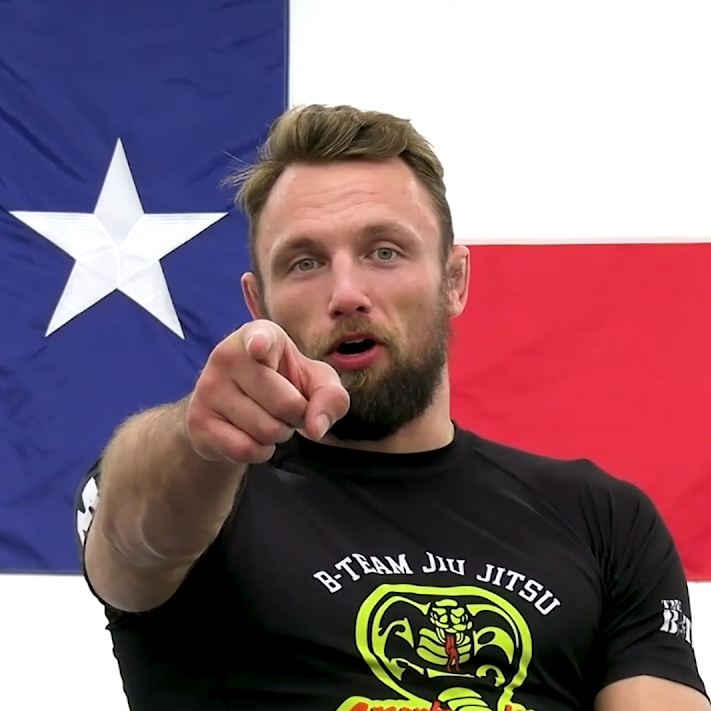
Watch Craig Jones Use Power Ride in Competition

You can also watch Craig Jones use the pins he teaches in Power Ride in the video below. He uses many different techniques that he teaches in the instructional.

Related Craig Jones Instructionals

Power Ride pairs well with Craig’s other instructionals that cover adjacent positions:

Full guide: Best Craig Jones Instructionals Ranked

FAQ: Craig Jones Power Ride

What is Power Ride by Craig Jones about?

Power Ride teaches a wrestling-inspired system of pinning that controls the opponent’s legs instead of bypassing them. Drawing from Khabib Nurmagomedov’s MMA ground game, Craig Jones covers leg rides (Turk, crab hook, leg shelf), upper body controls (Dagestani handcuff, claw rides, Nelsons), turtle breakdowns, and submissions that flow from riding positions. The core philosophy: be on the legs, not past the legs.

Is Power Ride good for beginners?

The concepts are simple enough for beginners to understand, but applying them in live rolling requires existing pressure passing skills. You need to be able to smash pass or leg drag to get to the riding positions Craig teaches. If you’re a fresh white belt, work on your passing first. If you’re a blue belt with solid passing, Power Ride will click fast.

Power Ride vs Power Bottom – which Craig Jones instructional should I get first?

They cover opposite sides of grappling. Power Ride is about top control and pinning. Power Bottom covers sweeps and submissions from bottom. If you prefer playing on top and have decent passing, start with Power Ride. If you spend more time on bottom or need a complete bottom game, Power Bottom is the better first purchase. Many grapplers own both since they complement each other.

How long is Power Ride?

About 4 hours across 6 volumes. That’s remarkably compact for the amount of material covered. Volume 1 is theory (~30 min), Volumes 2-5 cover specific positions (~30-40 min each), and Volume 6 on submissions is the longest (~60 min).

Does Power Ride work in gi?

The concepts work in both gi and no-gi since the pins rely on body positioning rather than grips. The instructional is taught no-gi, and the Khabib/wrestling riding approach is most associated with no-gi and MMA. That said, leg rides, the Turk, and crossface controls all transfer to gi rolling without modification.

Does Power Ride score points in IBJJF competition?

Most Power Ride positions don’t score points under IBJJF rules because you’re not in traditional mount or back mount. The system is designed for control leading to submission, not point accumulation. It’s best suited for sub-only rulesets, MMA, or situations where you care about control more than tournament points.

What submissions does Power Ride lead to?

The main submissions from Power Ride positions are arm triangles, D’Arce chokes, and rear naked chokes (once you force them belly down using the Dagestani handcuff grip). Volume 6 also covers the Ezekiel, cow catcher, kimura pathways, and gift wrap to triangle. The arm triangle and D’Arce are the highest-percentage finishes because riding naturally exposes the head and arm.

Ready to Change Your Top Game?

Power Ride taught me to control and submit people I couldn’t before. Filip Zanki gave it a 10/10 for a reason. If you have solid passing, this system will click fast.

Check Price on BJJ Fanatics

50% off Craig Jones, John Danaher and many other instructors!

Close the CTA

You can save 50% on instructionals -

don't miss out on today's deals

Pssst....

Craig Jones best instructionals roundup