Systematic Submission Dilemmas Review: 3 Craig Jones Lessons

A detailed review of Craig Jones’ instructional on combining triangle chokes and leg locks into a unified dilemma system, with 60+ chapters covering finishing mechanics, entries from every position, and match commentary against elite opponents.

Last updated: March 2026

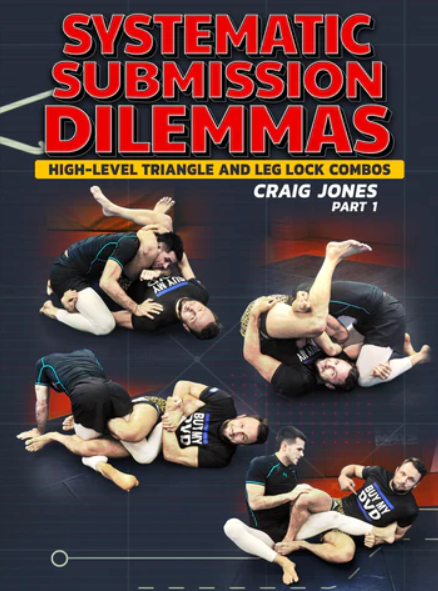
Systematic Submission Dilemmas by Craig Jones

High-level triangle and leg lock combos: the only instructional that builds a unified dilemma system between upper and lower body attacks.

  • ⏰ 7 hours 20 minutes
  • 📅 Released late 2020
  • 🎯 Craig Jones
  • 🥋 No-gi
  • 🏆 8 volumes, 60+ chapters
My verdict: This is Craig Jones at his most technical. If you already know basic leg lock positions and triangle mechanics, this instructional shows you how to combine them into a dilemma system that forces your opponent to choose between getting choked and getting their legs attacked. The finishing mechanics alone (Volume 1) are worth the price.
Check Price on BJJ Fanatics

Product Details

Full TitleSystematic Submission Dilemmas: High Level Triangle and Leg Lock Combos
InstructorCraig Jones
Runtime7 hours 20 minutes across 8 volumes
Chapters60+ chapters
Release DateLate 2020
Price~$197 retail (frequently 40-50% off during BJJ Fanatics sales)
FormatNo-gi, digital video (8x MP4 HD 720p)
Where to BuyBJJ Fanatics

The Core Innovation: Triangle + Leg Lock Dilemma System

Most leg lock instructionals teach leg locks. Most triangle instructionals teach triangles. Craig Jones is one of the few grapplers who built a system that forces opponents to choose between defending their neck and defending their legs.

The dilemma in one sentence: When your opponent defends the triangle by posturing up, you transition to their legs. When they defend the leg lock by pulling their legs back, you attack the triangle. Every defense to one attack feeds directly into the other.

The concept of attack dilemmas isn’t new. Ryan Hall introduced the “your money or your life” analogy, and John Danaher popularized dilemma-based thinking in the leg lock context. Craig’s specific contribution is connecting triangles and leg locks as two ends of the same system. Nobody else had mapped those transitions this thoroughly.

Craig started his competition career as a triangle specialist with over 100 triangle finishes before he became known for leg locks. That trajectory (similar to Ryan Hall’s path) means he genuinely understands both halves of the system at an elite level. This isn’t a leg locker bolting on some triangle content for marketing purposes.

Full Chapter Breakdown (All 8 Volumes)

Volume 1: How To Break Legs (13 chapters)
  1. Introduction
  2. Leg Lock Breaking Mechanics – Breaking The Unbreakable – Twisting Locks – Breaking Mechanics And Asymmetry: The Vinny Magalhaes Match
  3. Hierarchy Of Breaking Grips For Inside & Outside Heel Hooks
  4. The Outside Heel Hook
  5. The Single Greatest Drill To Develop A Strong Outside Heel Hook
  6. The Inside Heel Hook From Cross Ashi
  7. Inside Heel Hook From Cross Ashi – Outside Hip
  8. Inside Heel Hook from an Asymmetrical 50/50
  9. Inside Heel Hook From Backside 50/50
  10. The Single Greatest Drill To Develop A Strong Inside Heel Hook
  11. Finishing The Toe Hold & The Two Most Powerful Grips
  12. Aoki Lock
  13. Estima Lock

Volume 1 is arguably the most valuable section of the entire instructional. Craig focuses purely on finishing mechanics: how to actually break legs once you have the position. Most leg lock instructionals spend 90% of their time on entries and 10% on finishing. Craig flips that ratio here. The grip hierarchy for heel hooks and the two drills for developing strong inside and outside heel hooks are standouts.

Volume 2: Straight Leg Locks (3 chapters)
  1. Straight Locks – Ankle Lock: Solving ‘The Kick Through Problem’
  2. 50/50 Straight Ankle
  3. Knee Bars

The shortest volume, but the ankle lock chapter solves a specific problem most grapplers struggle with: opponents kicking through your ankle lock grip. Craig also covers the 50/50 straight ankle (IBJJF-legal) and kneebar finishing details.

Volume 3: Triangle (Sankaku) Finishing Mechanics (10 chapters)
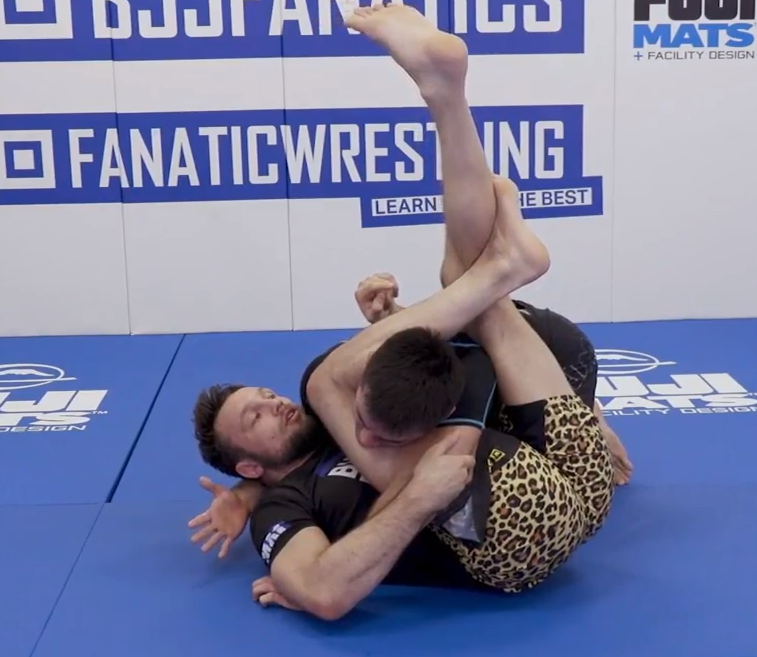
  1. Triangle (Sankaku) Finishing Mechanics – Front Triangle (Omote Sankaku) & The Two Main Problems
  2. Hantai Sankaku & Overcoming The Hip Grip
  3. Ushiro Sankaku (Rear Triangle)
  4. Overcoming
  5. Troubleshooting The Rear Triangle (Ushiro Sankaku) With Front Triangle (Omote Sankaku)
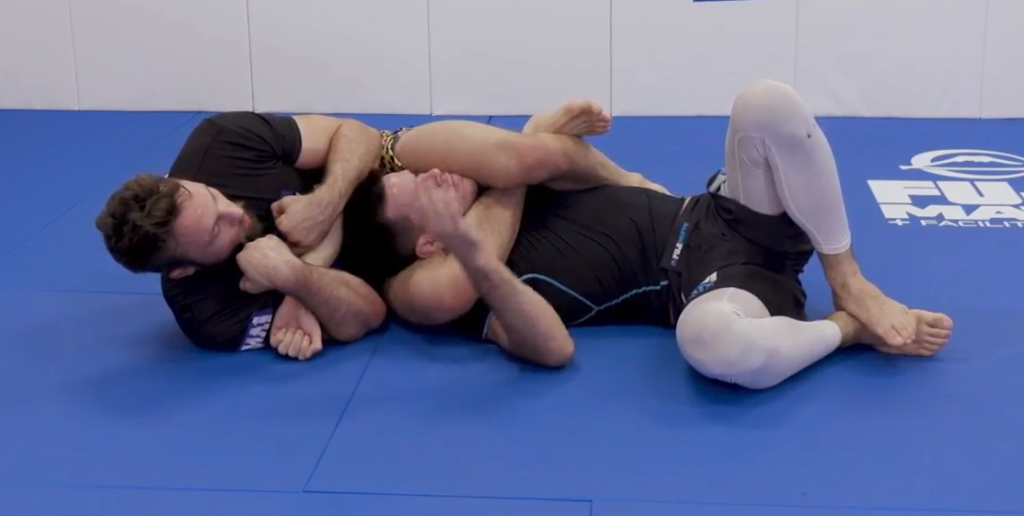
  6. Gyaku Sankaku (Reverse Triangle) And The ‘Step Over Problem’
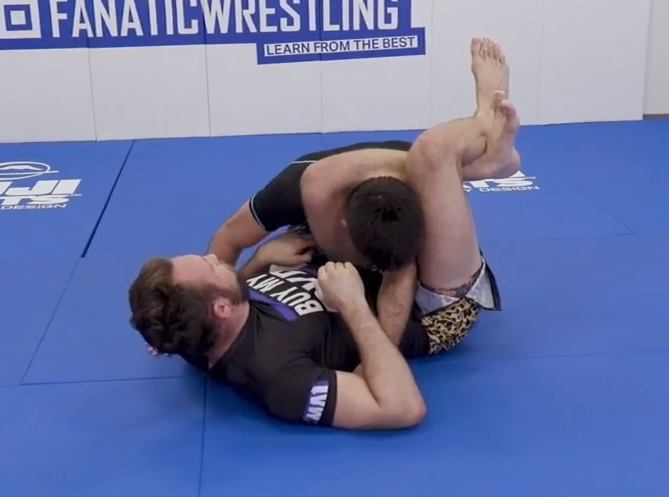
  7. Yoko Sankaku (Side Triangle)
  8. The Tightest Yoko Sankaku Finish – Overcoming ‘The Wardzinski Bridge Over’ Problem
  9. Triangles & The ONLY TIME I’ve Ever Been Heel Hooked – The Nathan Orchard Story
  10. Triangling For Endomorphs

Craig covers all five triangle variations (front, reverse, rear, side, and hantai) with specific finishing problems and solutions for each. The “Triangling for Endomorphs” chapter is rare – most instructionals assume a lean body type. The Nathan Orchard story provides context on the one time triangles left Craig vulnerable to heel hooks, which directly informed his dilemma system.

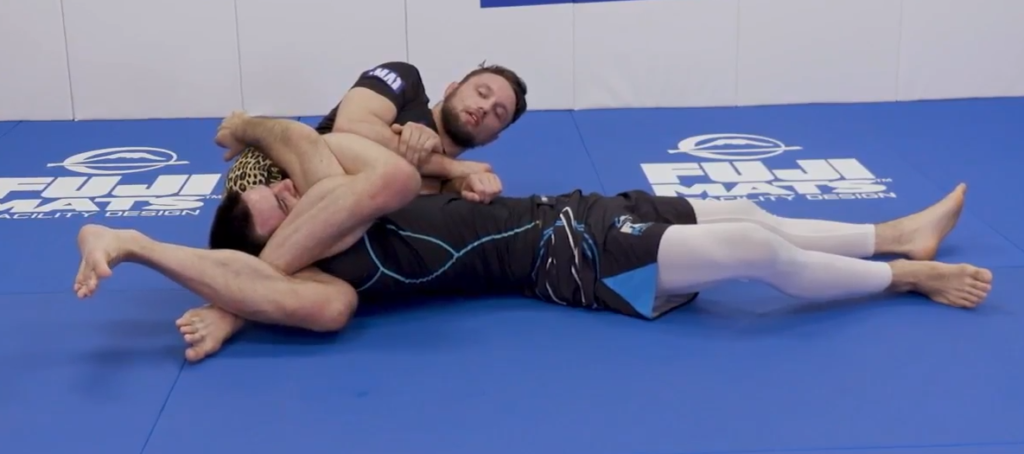
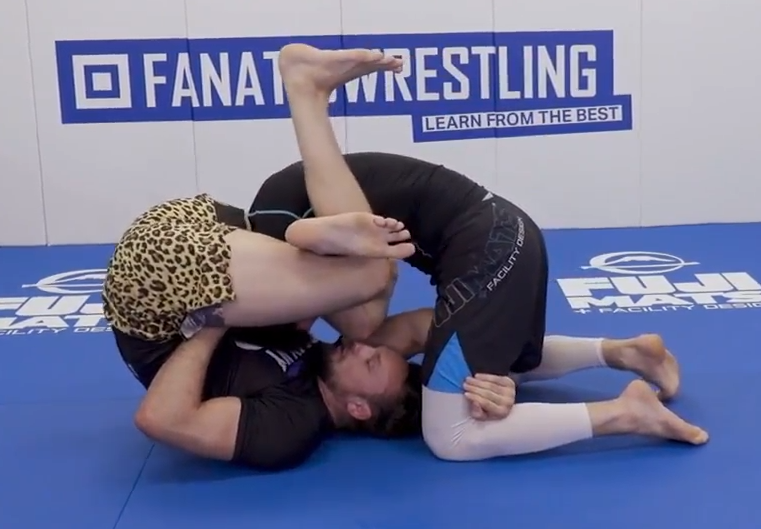
Craig Jones demonstrates a yoko sankaku
Craig Jones demonstrates a reverse triangle
Craig Jones demonstrates a front triangle
Volume 4: Entering The Triangle From Bottom Position (13 chapters)
  1. Entering From Bottom Position – Fighting For Your Two On One Grips
  2. Front Sankaku Entry Against Kneeling Opponent
  3. Front Sankaku Entry Against Standing Opponent
  4. Hip Bump Entry from Open Guard
  5. Hip Bump Entry From Closed Guard
  6. Lumberjack Entry
  7. Overhook Entry
  8. Exploring Triangles From The Williams Guard
  9. The Relationship Between Arm In Guillotines And Triangles
  10. Understanding The Relationship Between High Knee Shields, Low Knee Shields, & Triangles
  11. Low Knee Shield Scissor Entry
  12. Knee Shield To Butterfly To Kuzushi
  13. Scoop Grip Entry For Gyaku Sankaku

Volume 4 is the largest chapter count in the set. Craig covers triangle entries from every bottom position: closed guard, open guard, half guard knee shields, Williams guard, and even off guillotine attempts. The knee shield to triangle relationship is particularly useful for half guard players looking to add upper body threats.

Volume 5: Entering From Top Position (6 chapters)
  1. Introduction To The Shoulder Pry
  2. Entering Front Triangle From Shoulder Pry
  3. Ankle Sankaku From Shoulder Pry
  4. The Ushiro/Ankle Sankaku Dilemma From Shoulder Pry
  5. Incorporating The Shoulder Pry From Side Control
  6. Entering Yoko Sankaku From The Kimura Trap

Craig introduces the Shoulder Pry, his primary tool for entering triangles from top position. The Shoulder Pry from side control and the Kimura Trap to Yoko Sankaku pathway give you triangle threats from dominant positions where most people only think about arm locks and chokes.

Volume 6: Playing The Dilemma Between Upper & Lower Body (8 chapters)
  1. Playing The Dilemma Between Upper Body & Lower Body Attacks
  2. Transitioning To The Legs – Omote Sankaku To Back Side 50/50
  3. Addressing The Problem Of A Split Squat From Backside 50/50
  4. Imanari Roll Entry To Cross Ashi From Omote Sankaku
  5. Omote Sankaku To X-Guard
  6. Addressing The ‘Back Step Problem’ From Reverse X
  7. Entering Backside 50/50 From X-Guard
  8. Omote Sankaku To Standard Ashi Garami

This is the heart of the instructional. Volume 6 maps the specific transitions between triangle positions and leg lock positions. When your front triangle gets defended, Craig shows exactly how to flow into Backside 50/50, Cross Ashi (via Imanari Roll), X-Guard, or Standard Ashi Garami. Each transition addresses specific defensive reactions your opponent will have.

Craig Jones demonstrates a hentai sankaku
Volume 7: Advanced Transitions & Combinations (13 chapters)
  1. Failed Off Balance From Standard Ashi Garami
  2. Using Kuzushi To Enter Reverse X From Ashi Garami
  3. Exploring The Relationship Between Ashi Garami & X-Guard
  4. Exploring The Intricacies Of Reaping
  5. Breaking Our Opponents Stance With A Lace To Lace Kuzushi (The Anthony Rumble Entry)
  6. Hantai Sankaku To Backside 50/50
  7. Imanari Roll Entry To Cross Ashi From Hantai Sankaku
  8. Entering 50/50 From Hantai Sankaku
  9. Generating Heel Exposure Towards The Inside & The Outside Against A Split Squat 50/50
  10. Backside 50/50 Entry From Standard 50/50
  11. Flanking Our Opponent From 50/50
  12. Gyaku Sankaku To Back Side 50/50
  13. Dealing With The ‘Step Over Problem’ From Gyaku Sankaku

Volume 7 extends the dilemma system into advanced territory. Craig addresses what happens when initial transitions fail, how to use kuzushi (off-balancing) to recover, and how to chain between different leg lock positions when one entry gets shut down. The reaping intricacies chapter is worth studying even outside the context of this system.

Volume 8: Match Commentary (6 matches)
  1. COMMENTARY – Craig Vs. Jake Shields
  2. COMMENTARY – Craig Vs. Vinny Magalhaes
  3. COMMENTARY – Craig Vs. Gilbert Burns
  4. COMMENTARY – Craig Vs. Anthony Rumble Johnson
  5. COMMENTARY – Craig Vs. Adam Wardzinski
  6. COMMENTARY – Craig Vs. Nick Calvanese

Craig breaks down six of his own matches, showing how the dilemma system works against world-class opponents. The Vinny Magalhaes match is referenced in Volume 1 for breaking mechanics. The Adam Wardzinski match shows the “bridge over” problem that Craig solved in Volume 3. Each match demonstrates specific techniques from the instructional applied under competition pressure.

Match Commentary Breakdown (Volume 8)

Volume 8 is one of the most valuable sections because you see Craig’s system tested against elite-level opponents. Each match connects back to specific techniques taught earlier in the instructional:

Craig vs. Jake Shields

UFC veteran and former Strikeforce champion. Shows the dilemma system working against an MMA-trained grappler with heavy wrestling defense.

Craig vs. Vinny Magalhaes

ADCC champion. Referenced in Volume 1 as the case study for breaking mechanics and asymmetry in heel hook finishing.

Craig vs. Gilbert Burns

UFC title challenger. Demonstrates the system’s effectiveness against a high-level BJJ black belt competing in MMA.

Craig vs. Anthony “Rumble” Johnson

UFC fighter. The “Lace to Lace Kuzushi” entry from Volume 7 is named after this match (the Anthony Rumble Entry).

Craig vs. Adam Wardzinski

IBJJF World Champion. The “Wardzinski Bridge Over” problem from Volume 3’s side triangle section comes directly from this match.

Craig vs. Nick Calvanese

Shows the complete dilemma system in action, with Craig flowing between triangles and leg locks throughout the match.

What Reviewers Say

“Not many people really connect Triangles and leg locks, and especially not in the way he does.”

BJJ World

“Craig’s way of teaching via instructionals is one of the best out there. His DVDs are underrated so far.”

BJJ World

“The way Craig sets everything up, links attacks, and explains concepts is original in many areas.”

BJJ World

Craig’s teaching style is consistently praised across his instructionals. He’s precise, stays on topic, demonstrates in detail, and doesn’t pad chapters with filler. For this instructional specifically, reviewers highlight the originality of connecting triangles and leg locks as a unified attack system rather than treating them as separate skill trees.

Strengths and Weaknesses

What’s Great

  • Only instructional that systematically links triangles and leg locks as a unified dilemma
  • Volume 1’s leg lock finishing mechanics are a masterclass on their own
  • All five triangle variations covered with specific finishing problems solved
  • Match commentary against elite opponents (Vinny, Burns, Shields, Wardzinski) proves the system works
  • Craig is precise and concise – 7+ hours of content with zero filler
  • “Triangling for Endomorphs” chapter addresses body-type-specific adaptations rarely covered elsewhere
  • Entries from every position: closed guard, open guard, half guard, top, and standing
Craig Jones demonstrates a back triangle (ushiro sankaku)

What’s Weak

  • Advanced material. Requires existing knowledge of basic leg lock positions (Ashi Garami, 50/50, Cross Ashi) and triangle mechanics
  • Some content is slightly dated – doesn’t include the false reap, which Craig would likely include if filmed today
  • Not a first leg lock resource. For beginners to leg locks, Lachlan Giles’ Leg Lock Anthology: 50/50 is more accessible
  • No named negative reviews found, which limits the ability to present specific criticisms beyond “it’s advanced”
  • Less structured than Danaher’s Enter the System, which builds more gradually from concept to application

Who Should Buy / Who Should Skip

Buy Systematic Submission Dilemmas if you…

  • Already know basic leg lock positions (Ashi Garami, 50/50, Cross Ashi, Backside 50/50)
  • Have working triangle mechanics and want to connect them to your leg lock game
  • Want to improve your leg lock finishing (not just entries)
  • Compete in no-gi or sub-only formats where both triangles and heel hooks are legal
  • Like dilemma-based systems that force opponents into lose-lose choices
  • Want match commentary showing techniques applied against elite competition
  • Are a triangle specialist looking to add leg lock transitions to your existing game

Skip Systematic Submission Dilemmas if you…

  • Are new to leg locks entirely (start with a beginner leg lock instructional first)
  • Don’t have basic triangle finishing ability (learn standard triangles before studying advanced variations)
  • Train primarily in the gi where heel hooks aren’t allowed
  • Prefer highly structured, step-by-step progression (try Danaher’s leg lock system instead)
  • Want a dedicated triangle-only instructional (try Craig’s Triangle Machine or Ryan Hall’s The Triangle)

FAQ – Systematic Submission Dilemmas

Is Systematic Submission Dilemmas good for beginners?

No. This is an advanced instructional that assumes you already know basic leg lock positions (Ashi Garami, 50/50, Cross Ashi) and have working triangle mechanics. If you’re new to leg locks, start with Lachlan Giles’ Leg Lock Anthology. If you’re new to triangles, learn standard triangle finishing first before studying the five variations Craig covers here.

What belt level do you need for Systematic Submission Dilemmas?

Purple belt or above is the recommended minimum. You need solid no-gi experience, comfort in leg lock positions, and the ability to finish a basic triangle before this instructional adds value. Advanced blue belts with significant no-gi competition experience and existing leg lock knowledge may also benefit.

How does this compare to John Danaher’s Enter the System leg locks?

Danaher’s Enter the System is more structured and builds gradually from concepts to applications. It’s a better first leg lock resource. Systematic Submission Dilemmas assumes you already have that foundation and focuses on connecting leg locks to triangles as a dilemma system. They complement each other well: Danaher for the base, Craig for the upper-lower body connection.

How long is Systematic Submission Dilemmas?

7 hours and 20 minutes across 8 volumes with 60+ chapters. Volumes 1-7 cover technique (finishing mechanics, triangle variations, entries, and dilemma transitions). Volume 8 contains match commentary where Craig breaks down six of his own matches against elite opponents including Vinny Magalhaes, Gilbert Burns, and Adam Wardzinski.

Is Systematic Submission Dilemmas worth it?

Yes, if you meet the prerequisites. It’s the only instructional that systematically connects triangles and leg locks as a unified dilemma system. The leg lock finishing mechanics in Volume 1 alone are worth studying. Craig’s teaching style is precise with no filler, and the match commentary proves the system works against world-class competition. At ~$197 retail it’s priced fairly for 7+ hours of advanced content, and BJJ Fanatics regularly runs 40-50% off sales.

Does Systematic Submission Dilemmas work in the gi?

Partially. The triangle mechanics and entries (Volumes 3-5) transfer well to gi. The leg lock material (Volumes 1-2) and the dilemma transitions (Volumes 6-7) are primarily no-gi because heel hooks and reaping are typically illegal in gi competition. If you train both gi and no-gi, you’ll use the triangle content in both but the full dilemma system only in no-gi.

How does this compare to Craig Jones’ Triangle Machine?

Triangle Machine is Craig’s dedicated triangle instructional with deeper coverage of triangle-specific setups and finishing. Systematic Submission Dilemmas covers triangles too, but its unique value is the dilemma system connecting triangles to leg locks. If you only want triangles, get Triangle Machine. If you want the triangle-to-leg lock connection, get SSD.

Ready to Build Your Triangle + Leg Lock Dilemma System?

Craig Jones’ Systematic Submission Dilemmas teaches the only unified system connecting triangles and leg locks. 8 volumes, 7+ hours, 60+ chapters of advanced no-gi technique.

Check Price on BJJ Fanatics

50% off Craig Jones, John Danaher and many other instructors!

Close the CTA

You can save 50% on instructionals -

don't miss out on today's deals

Pssst....

Craig Jones best instructionals roundup