
Home / Garry Tonon / Unifying The Systems Review
Garry Tonon’s Unifying The Systems Review
Buy it if you lose the submission the moment he defends. The way he gets out of one puts him in the next.
See Unifying The Systems →No-gi. Who should buy it ↓
- No-gi
- 8 volumes, 7 h 54
- 96 chapters
- No live rounds
- Released November 2020
Garry Tonon’s Unifying The Systems is a no-gi course about what to do when a submission fails. It runs through leg locks, the back, the kimura, the front headlock, the armbar and the triangle, the six subjects of 

 John Danaher’s Enter The System courses, and teaches the switches between them.
His escape is your next attack
You have the armbar. He locks his hands, you pull until your arms are empty, and then he rips his elbow out and you have nothing. Tonon’s aim for those moments is “a submission response for every action” the other man takes to get away. Locked hands, a roll, an arm pulled free: each gets a switch. Our call: worth it if you already finish a few submissions and keep losing them when he defends. Skip it if you still need the finishes themselves, because he leaves those to Danaher and Gordon Ryan.
$197 list, $82.74 with the house code we tested on November 13, 2026, for 7 h 54 of teaching and no live rounds.
Six ways he gets out
The course is filed by system: legs, back, kimura, front headlock, armbar, triangle. On the mat you do not feel systems. You feel what he does to get out. So that is how we sorted it: what he does, and the switch Tonon has for each.
This is the first thing Tonon teaches after the introduction. Twist a man’s foot and he turns with the twist to take the pressure off. From an outside heel hook that turn straightens his leg, and Tonon says this is why people fail to finish there: the heel hook is gone and a kneebar has taken its place. If he keeps rolling onto his back, the kneebar goes too: sit up, hug his heel and you are in the inverted heel hook. That last switch is the clip at the top of this page.
Two more things from this part. You can start the roll on purpose: Tonon takes a toe hold he does not expect to finish, only to make the man turn into the kneebar. And when you cannot keep up with a roll, he switches to the straight ankle lock. He says it may be one of the weaker holds, but it is the one that stays on through a roll, so he uses it to climb back to something better.
The same thing happens with the arms. You are underneath with both hands locked on his arm. He rolls.
01 From the bottom, lock both hands on his arm at your face. He rolls forward over you to get out. Keep your hands locked through the roll: you both land on your backs, him lying beside your hip and your grip still locked at your chest
In the course this roll starts a chain of up to three attacks, with a fork in the middle. First the armbar, with your legs crossed over his neck as he goes over. If he leaves your legs alone, a triangle. If he pushes them off, an armbar with your knee dropped to the mat. If he keeps rolling, the omoplata.
Vol 4 · 56:17A roll is how he saves a leg or an arm. To save his neck he uses his hands: one comes up between you. Tonon’s answer is to let go of the neck first. A man who is fighting your hands has his elbow away from his body, and an open elbow is all a kimura needs.
02 On your back with his head trapped under your arm, he brings a hand up to your chest. Let go of his neck and lock a kimura grip (a figure-four) on that arm
Tonon calls the front headlock and the kimura a pair: when you have one, you have the other. He adds that the switch is safest once you have sat up, because if it fails you can go back to the guillotine. Inside the front headlock the same trade runs both ways. Go for a D’Arce or an anaconda and his elbows open, which bares his neck for the guillotine. Go for the guillotine and his hands come in, which makes the D’Arce easier.
Vol 5 · 29:59It works from the legs too. Dig for a heel hook from cross ashi garami and he sits up and grabs your hands or your head. From there Tonon goes to his back with an arm drag, to a kimura, or to a guillotine. He knows what leg lockers think of leaving a heel hook for a kimura, says it in words we will not print, and gives two reasons to do it anyway: the heel hook may be illegal where you compete, or your best submission may be upstairs.
The other thing his hands can do is lock together. Now you are the one prying, and Tonon’s advice is to stop. When you cannot get the hands apart, he says, a triangle is always an option. You do not have to separate his arms for it. You only have to open them far enough to get a leg through.
03 Kneeling at his head with a grip on his arm, pull the arm away from his body, step your leg in front of his shoulder into his armpit, fall to your side and lock your legs around his head and arm: the side triangle
In the course the grip is a kimura on a man lying on his side with his hands locked. Tonon asks you to pay special attention to this pair, because the kimura and the triangle lead to each other both ways. From the same kimura he also shows the front triangle and the back triangle. A stuck armbar gets the same advice: leave his arms where they are and go to a mounted, side or back triangle. And if he lets go of his own hands on the way, go straight back to the armbar.
Vol 4 · 31:50Locked hands are one way to keep an arm. The other is to get it out. From under your armbar he bridges into you, gets his elbow to the mat and pulls. Tonon points out what that does to him: he has turned toward you and his head is off the mat. That, he says, is when you open your leg and take the triangle.
04 You sit on top in an armbar and he turns into you to free his arm. Keep the arm, fall back under him and throw your leg over his shoulder, his head and arm between your legs for the triangle
Tonon’s rule for the chapter: any time the arm comes out, a triangle is there. If the arm comes all the way free, he takes the other one and makes the same swing. He names the exception as well: once your legs are past his shoulders, the pulled elbow leaves you no forearm and no head to hold, and this switch is gone. From the bottom, an arm yanked out of your armbar goes to the omoplata instead.
Vol 6 · 1:05:08Look at what he has done in the last three stops: all of it with his arms and his head. Tonon credits John Danaher with the rule the whole team worked by: go from upper body submissions to the legs. His reason is that a man busy defending upstairs forgets his legs or sticks them out. He calls the armbar to the legs one of the most important switches there is.
05 From the armbar, scoop behind his near knee, then let go of his arm, swing your leg around his leg and sit up with his leg trapped between yours and his foot held at your chest
The detail Tonon insists on is your knee against his hip before you step through. Skip it, he says, and your own leg gets caught on the way in. The same scoop behind the knee comes back from a kimura in half guard and from a triangle he is standing up out of, and a guillotine that will not finish gets its own way to his legs.
Vol 6 · 14:01Sooner or later he stops defending and turns away to leave. Tonon says you will get this far more often than a back take on a man who faces you, because he chooses to show you his back, and that it works the same from every leg lock: keep hold of his heel, come up on an elbow, take his hip, pinch your knees around his knee and go to his back. Once you are there and he slides down your body to get away from the strangle, that has an answer too: the back triangle.
The back is also where the chains get long. Tonon admits he has no direct switch from a leg lock to an armbar or a triangle that he trusts enough to teach. It takes three or four switches, through the back.
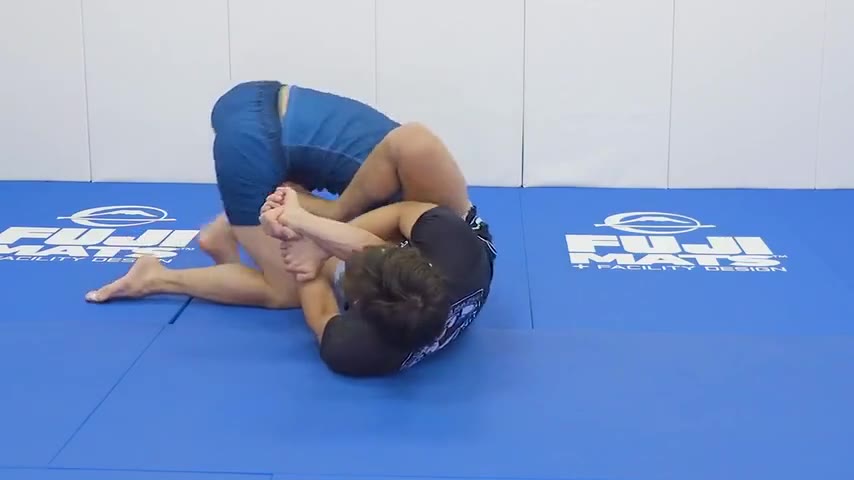 01
 02
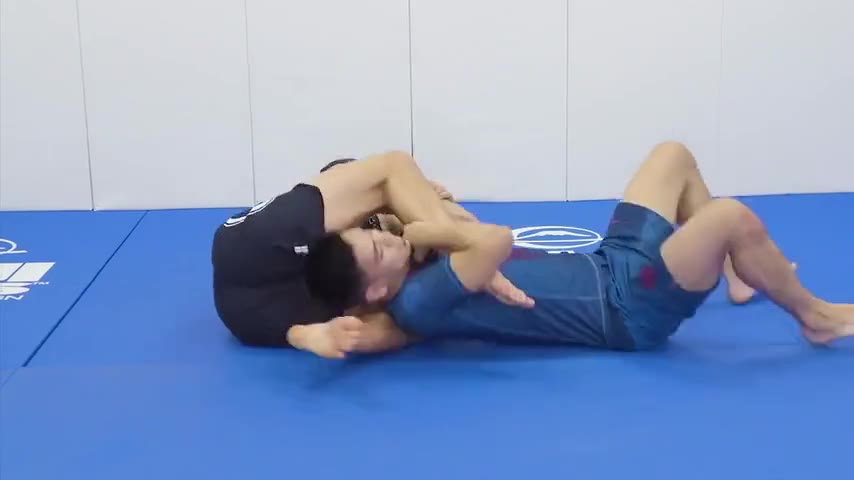 03
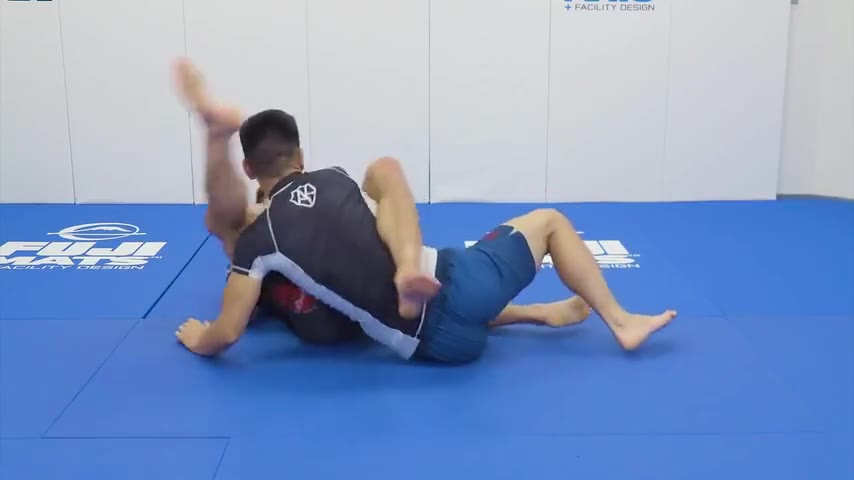 04
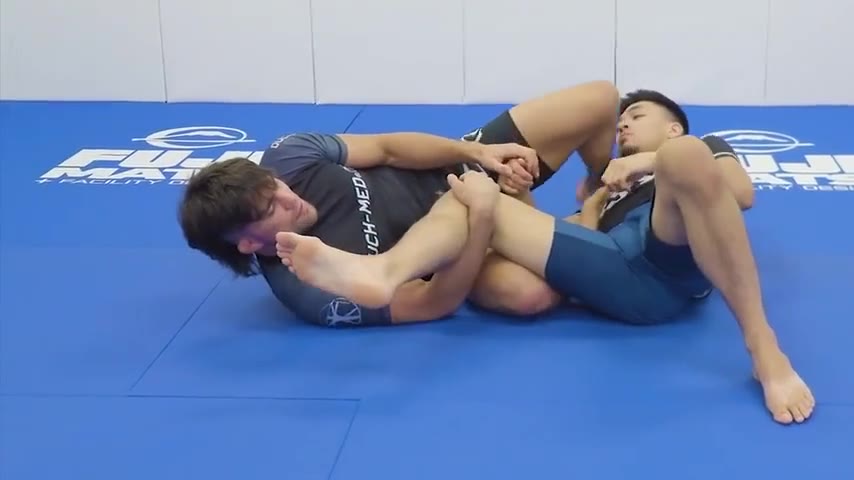 05
Who should buy it
- You lose the submission when he defendsThat is the whole course. Six kinds of defence, and a switch for each.
- You own some of Danaher’s Enter The SystemThis is what goes between those courses. Tonon says so at the start: the mechanics of each finish he leaves to Danaher and Gordon Ryan, and his job is how one submission connects to the next.
- You have one submission that works on everybodyTonon’s advice in the last volume is to build your game around the one or two submissions you finish people with in the gym. The chains are how you get back to them: he says three or four switches should take you from almost any submission to the one you want.
- You are a blue beltLucas W. (December 2023) calls it super helpful from intermediate level up, but probably not your best option if you are relatively new. Your belt matters less than having a submission people already have to defend.
- You train in the gi or compete under IBJJF rulesThere is not one gi grip in it. Most switches into the legs end at a heel hook, and Tonon himself gives IBJJF as a rule set where the inverted heel hook is illegal. Check your own rule book. He also calls the omoplata a weak finish without the gi. The switches between the armbar, the kimura, the triangle and the back need none of that.
- You cannot finish these submissions yetBy his own word this is not a course on mechanics. Start with a course on your best submission. Danaher’s Enter The System has one for each of the six.
 You want proof in live roundsThere are none, and the partner goes along in every rep. Craig Jones’ Systematic Submission Dilemmas teaches one of these chains (triangle to legs) and closes with his commentary on six of his own matches.
 You are the one getting submittedThat is Tonon’s other course, Exit The System.
What buyers on BJJ Fanatics say
Evan (September 2022) describes the problem this course is for: he steers people where he wants them, but when they have an answer he does not know what comes next. Brandon L. (May 2021) found the ways into the legs from other submissions the most valuable part. Chris C. (October 2023) suggests using the chains as drills. Daniel L. (May 2021) and Justin H. (August 2023) had watched Danaher’s Enter The System first and say this fills the gaps between those courses.
The reservations all point the same way. Duane K. (February 2026) says it may be harder to follow if you do not know the finishes. Richard (April 2023) notes you do not get the full details of each submission. Lucas W. (December 2023) would not pick it for someone fairly new.
Worth it? The pros and cons
- One idea carries all eight volumes: the way he defends tells you what to attack next
- Filed so you can start from your own best submission: each system has its own chapters to the legs, the back, the kimura and the rest
- 1 h 07 on getting from the back and the upper body submissions to his legs, a switch Tonon rates among the most important (detail 05)
- He says what is weak: the straight ankle lock and the no-gi omoplata as finishes, the near-side kimura from an armbar, and the direct switch from legs to armbar that he does not have
- Things of his own: a front headlock from the crucifix that he believes is close to unique to him, and a knee strangle off the kimura that he says he has finished in competition
- Not so much about mechanics, in Tonon’s own words: apart from a stronger kimura and his knee strangle, he sends you to Danaher and Gordon Ryan for the finishes
- No live rounds, and the partner goes along in every rep. Craig Jones’ Systematic Submission Dilemmas ends with six of his own matches
- No-gi only, and most switches into the legs end at a heel hook
- Lopsided: the kimura gets two volumes and close to two hours, the back gets 51 minutes and the triangle 46
- He repeats himself and says so: the crucifix to front headlock is taught in Volumes 2 and 3, and in Volume 7 he tells you to fast forward through the back triangle arm locks if you remember them
Have the next one ready.
What’s inside: eight volumes, six systems
Why chains matter, then one system at a time, then the chains run without stopping. Tap a volume for what’s in it.
Vol 1 · 1:25:06Why chains, then leg locksboxing combinations, three goals, rolling with him, toe hold, kneebar, ankle lock, switching legs, legs to back, legs to kimura, legs to front headlock
The first eight minutes are the reason for the course. Tonon compares submissions to punches in boxing: a combination moves the man, saves a missed attack, pulls his guard away from somewhere else, keeps him defending and gets your best weapon home. Then 52 minutes inside the legs, built on following his roll (the clip at the top): outside heel hook, toe hold and kneebar, the straight ankle lock as the hold that survives a roll, turning yourself around his leg when he will not turn, and changing to his other leg. The last 25 minutes leave the legs for the back, the kimura and the front headlock. He closes by admitting there is no direct way from the legs to an armbar or a triangle.
Vol 2 · 50:41The backcross body ride, back to armbar, back triangle, kimura as a recovery, crucifix, back to front headlock, back to legs
It opens with the one long chain inside the back system. From the cross body ride: a toe hold on the leg you have trapped, then his other leg when he pushes with it, then a shoulder lock when he uses his hands, then a neck crank. After that come three ways to an armbar, the back triangle for the man who slides down to escape the strangle, and the kimura as a way to keep hold of someone who is getting off your back. Tonon says the kimura matters more there as a recovery than as a finish. The crucifix gets its own part, with the switch to a front headlock that he believes is close to his own. The volume ends with one way into the legs when he has stripped your hooks.
Vol 3 · 58:31Kimura, part onea stronger kimura, kimura to front headlock, kimura to armbar, kimura to legs
Six minutes on making the kimura itself stronger with your legs. Then three ways out of it. To the front headlock: when he ducks his head out behind your back on a single leg, when you are side on in half guard, and from the crucifix, which Tonon says is partly a repeat of Volume 2. To the armbar when he locks his hands, including one that pins his wrist under your armpit. To the legs, which takes the last 19 minutes: the scoop behind his knee from half guard, the man lying on his side, and lifting him for a sweep that he blocks. Tonon’s claim for the scoop is that the whole leg lock game opens from that one grip.
Vol 4 · 57:22Kimura, part twoways into the T-kimura, kimura to the back, kimura to triangle, a knee strangle, omoplata, rolling with him
It starts with ways into what he calls the T-kimura, from top, bottom and turtle, then goes to the back, with one pull to the back he admits looks far-fetched and says works for him in training. The middle is the kimura to the triangle: four triangles from the kimura (detail 03 is one of them), more from the crucifix and from the bottom, plus a strangle with the knees that has no chapter of its own in the shop’s list. Then the omoplata. Tonon calls it a weak finish without the gi and treats it as a place you pass through: from there to a triangle, his legs, his back or a front headlock. The last five minutes are the roll from the kimura (detail 01).
Vol 5 · 1:16:54Front headlockguillotine and arm triangles, following him, to the legs, to the kimura, to arm locks, to triangles, to the back
The second longest volume, with the most chapters: 17. First the trade between the guillotine and the D’Arce and anaconda, then how to stay with a man who hops past your guard or rolls to a shoulder. Then the exits, one target at a time. The legs get 14 minutes. The kimura is detail 02, and Tonon adds that the arm-in guillotine needs an elbow in front of his elbow before the switch is safe. The arm locks include one he says will probably not break anybody and is there to lead somewhere else. The triangles and the back close it, with an over-under grip against a seated guard that he says he had worked on for a few years.
Vol 6 · 1:13:56Armbarkinds of armbar, armbar to legs, to the back, to kimura and omoplata, to triangles
Eleven minutes on moving between the armbar positions, with the reason for the old rule about not crossing your legs: it is about the moment he comes up on top and you need a leg across his face. Then 18 minutes on the armbar to the legs, from top, from bottom and when he stacks you (detail 05). The back comes next, for the man who clears your leg and sits up. The kimura and omoplata part is where he says the near-side kimura is only worth taking as a step to somewhere else. The last 22 minutes go to the triangle: by way of a straight arm lock that he says is used for this more than as a finish, when he rips the arm out (detail 04) and when his hands stay locked.
Vol 7 · 46:03Triangleskinds of triangle, triangle to legs, triangle to arm locks and kimura, wrist lock, omoplata
The shortest of the system volumes. Eleven minutes on moving between triangles, starting with the reverse triangle for the man who blocks your hip. Twelve on the legs: he steps up to pull out and you scoop the leg, or he stands and you put your head between his legs. Tonon says plainly that the mounted triangle and the back triangle are too far from his legs for this. Then the arms. From a front triangle you press his arm straight against your hip; he bends it and you have the kimura or an Americana; he straightens it again and you have the armbar. A wrist lock is in there too, only to make him straighten the arm. One section repeats Volume 2, and he tells you to skip it if you remember.
Vol 8 · 24:56Three and four in a rowwhy three or four, chains from all six systems, training advice, outro
Two minutes on why chains stop at three or four switches: longer than that, he says, is not realistic in a match. Then 17 minutes of chains from each system in turn, mostly without words, with a partner who is partly coached and partly free. Tonon says this is how the team warmed up before competitions. He left live rounds out on purpose and says these chains do that job. His training advice is one goal for your own rounds: move from one submission to the next as often as you can.
The outro points you to Danaher and Gordon Ryan for the details of each submission, and to Exit The System for getting out of them.
Compare to
- Exit The System (Garry Tonon, $197 list, 8 volumes, 5 h 04, 2019): the same fight from the other side. There you are the one caught: get out as early as you can and end the escape in your own attack. Tonon points to it himself at the end of this course. You get submitted more than you submit: that one first. Read our review.


 Enter The System (John Danaher, six courses, $197 list each): one course per system: Leglocks, Back Attacks, The Front Headlock System, Kimura, Triangles and Arm Bars. Tonon says these are where to go for the mechanics of each finish, at the start of this course and again at the end. Unifying The Systems is the part between them. You cannot finish your best submission yet: buy the Danaher course for it first, and this one second.
- Systematic Submission Dilemmas (Craig Jones, $197 list, 8 volumes, 7 h 18, 2020): one chain instead of all of them. Craig Jones takes the triangle and the leg locks, teaches how to finish both, and builds the course on the moment a man postures out of your triangle and gives you his leg. The last volume is his commentary on six of his own matches. Tonon gives that switch 12 minutes and spends the rest on all the others. Triangles and leg locks are your game: Craig’s. You want a way out of every submission you already have: Tonon’s. Read our review.
List prices on BJJ Fanatics, checked November 13, 2026 (The Front Headlock System on November 3).
Get the next review like this one
New reviews in this format land in your inbox, with the details on video. You also get the free BJJMore email course and the instructional-platform discounts I use myself (worth $46).

BJJMore earns a commission if you buy through these links, at no extra cost to you. Released by BJJ Fanatics in November 2020; reviewed on all eight volumes.
FAQ
Is Unifying The Systems worth it?
Yes, if you can already finish a few submissions and keep losing them when the other man defends. It teaches which submission to switch to for each way he gets out, across leg locks, the back, the kimura, the front headlock, the armbar and the triangle. It is $197 list for 7 h 54 ($82.74 with the house code we tested). In Tonon’s words it is not so much about mechanics: it barely teaches the finishes, and it has no live rounds.
Is it gi or no-gi?
No-gi. There is not one gi grip in the eight volumes, and BJJ Fanatics lists it as no-gi. Most of the switches into the legs end at a heel hook, so check your rule set before you build on those.
How long is it?
7 hours 54 minutes over eight volumes and 96 chapters. Volume 1 is the longest at 1 h 25 and Volume 8 the shortest at 25 minutes. All of it is teaching: there is no live rolling.
Do I need Danaher’s Enter The System first?
No. Tonon says he made it so that someone who has seen none of those courses can follow, and he admits some overlap for that reason. But you do need the finishes from somewhere. This course is not so much about mechanics, he says more than once, so it barely shows how to break with an armbar or strangle with a triangle.
Does it show the chains working in live rounds?
No. Volume 8 has 17 minutes of chains of three and four submissions, drilled with a partner who is partly coached. Tonon says he left live rounds out on purpose. If you want to see one of these chains in real matches, Craig Jones’ Systematic Submission Dilemmas ends with six of his.
Unifying The Systems or Exit The System?
They are two halves. Unifying is for the attacker: he escapes, you switch. Exit The System is for the man escaping: get out and come out attacking. You get caught more than you catch people: Exit first. You catch people and lose them: this one.
Is there a discount code?
On November 13, 2026 the house code EXTRAXX58 took 58% off at checkout: $82.74 instead of $197. BJJ Fanatics rotates its codes and sales, so check the price on the day you buy.
Don’t start over
He defends, and your submission is gone? This is what to grab next: six ways he gets out, and a switch for each. No-gi, 7 h 54, and you bring your own finishes.