
Home / Best Craig Jones instructionals / Just Stand Up Review
Just Stand Up Review: Get Up, Then Keep Them Down
Buy it if you keep ending up stuck underneath: the way back to your feet from turtle, then how to pin people so they cannot get up either.
See Just Stand Up on BJJ Fanatics →Or Power Bottom? Which one first ↓
Yes, if you end up stuck underneath. It teaches the way up from turtle, then how to pin people so they cannot get up either
Craig’s claim in the first minutes: most jiu-jitsu teaches you to pin yourself. You get passed, you pull him back into your guard or half guard, and he stays on top. His answer is the wrestler’s one. Turn to your knees, keep the space by your hips closed, beat his hands, and stand. Then the course turns round: on top, land in half guard, sit your weight on his bottom leg, and he cannot do any of it to you. Both halves are one fight seen from each side. Underneath, you turn to your knees and stand. On top, you pin the leg he needs to do the same to you. That is why they belong in one course.
The catch: it is no-gi, it has no live rounds, and Craig mostly talks two partners through it instead of showing it himself. You will also get caught while you learn to turtle on purpose, and Craig says so himself: “you are going to get caught”.
Reviewed by Max, black belt. All four volumes. Updated November 2026.
11 details, from stuck underneath to holding him down
The course follows one fight. First you are underneath and want up. Then you are on top and he wants up. Each step below is the next problem in that fight.
- 1Turtlewin the hands, stand (vol 1)
- 2Halfway upseatbelt or body lock (vol 2)
- 3On your backhip sit, power half (vol 2)
- 4On tophalf guard, leg turks (vol 2)
- 5Finisharm triangle (vol 3)
Craig’s starting point: the technical stand up only works if he gives you distance, and nobody does. So instead of pulling him back into your guard, you turn to your knees from side control, elbows inside your knees so there is no room for his hooks. Then two things get you up. First the hands. Then you stand, as in the clip at the top of this page.
01 His hand is on your hip. Wrong: grab his wrist with your elbow out, and he grabs yours. Right: elbow tight, cover his hand, push it down behind you
The small hand fight that decides if you get up at all. Craig: “If I grab his wrist, he can grab my wrist.”
Vol 1 · 28:43You won the hands and started up. Now he grabs you from behind, and standing is right against one of his two grips and the mistake against the other. Do the wrong one and you hand him your back.
02 Halfway up, he has a seatbelt. Wrong: stand and he rides your back. Right: stay low, shake, and he falls off over your shoulders
His rule for the moment you are halfway up: “To beat the seatbelt, circle and shake.” A seatbelt is one arm over your shoulder and one under the other. It keeps him above you when you stand, but nothing holds him when you stay low.
Vol 2 · 25:3803 He has both arms locked round your waist from behind while you are on all fours: stand up, push his locked hands down at your hip as you step your hip forward, and turn in to face him
The other half of the rule. Locked hands round your waist (Craig calls it double unders) cannot be shaken off, but they slide down you when you stand: “we beat double unders with head height.”
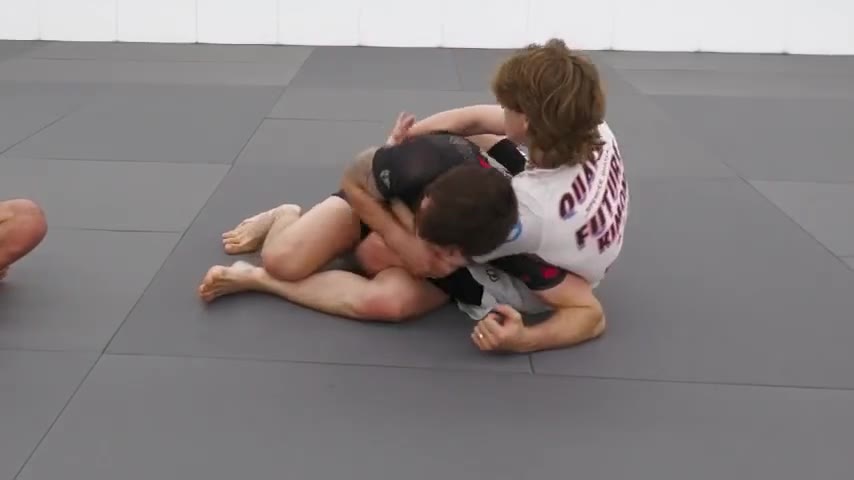
Vol 2 · 27:54Sometimes he is on your back before you can stand. Do not carry him. Sit to your hip so his weight goes onto the mat, then take the arm he holds you with.
04 He rides your back with an arm round your shoulder: drop to your hip with your legs swept out to the side, and he comes down onto the mat with you
Craig’s answer once he is already riding your back. “We sit to a hip and we’re able to sit in such a way that his butt’s on the floor. Now the ground is absorbing some of that weight.”
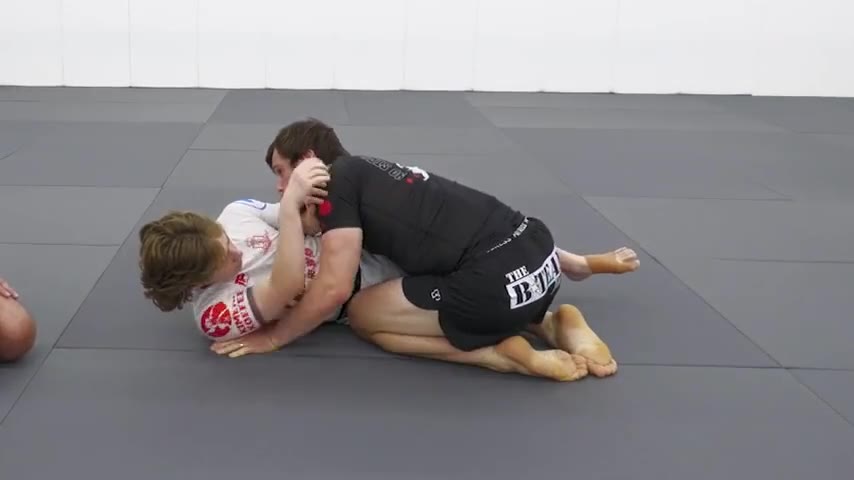
Vol 2 · 9:2705 From the hip sit, trap his choking arm with both hands, then roll: he falls off your back onto his own back and you land on top
How the hip sit ends. You hold the arm he holds you with, and nothing keeps you down: “he gets shook off because he has no means to keep our hips to the ground.”
Vol 2 · 12:39Now the other side of the same fight. Everything in steps 1 to 3 began with a turn to your knees, so on top your job is to stop that turn. Craig’s answer: finish in half guard, not side control (“I’d never recommend going to side control”), and pin his bottom leg. He calls these pins turks: you hook his bottom leg with yours and put your weight on it. The half guard that kept you stuck underneath is now the pin you hold him with.
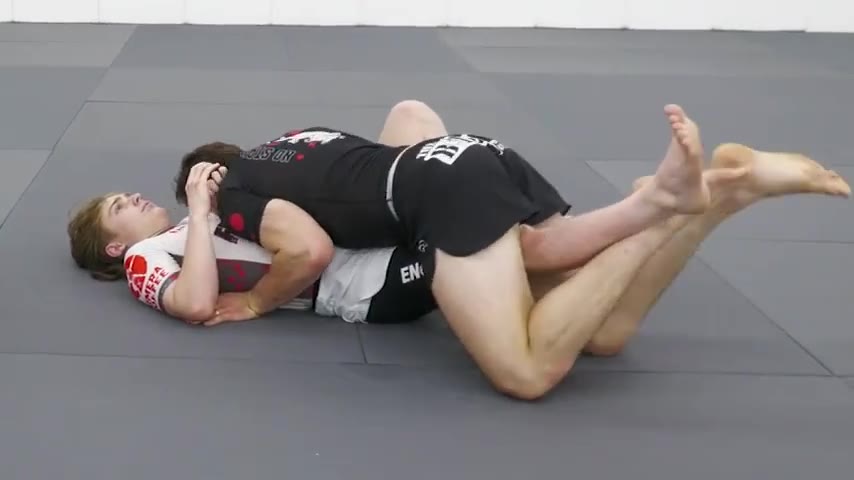
06 From top half guard, hook his trapped leg with your back heel, then sprawl your hips back so your weight sits on his leg and his foot comes off the mat
The first pin: weight on his bottom leg, the leg he needs to hip escape or turn to his knees. “We’ve applied basically all of our body weight to the point of the knee and we’re elevating their foot.”
Vol 2 · 47:5007 From top half guard, sprawl back and use your free foot to push his trapped ankle across, so his leg stays folded with the foot off the mat
Another of his three turks, from the same sprawl. Craig on what it buys you: “Anytime we want, we can push that leg down and step straight over.”
Vol 2 · 56:02You have him pinned, and the finish must not give that back. The submissions in the course are chosen so that you stay on top while you finish. The arm triangle shows why.
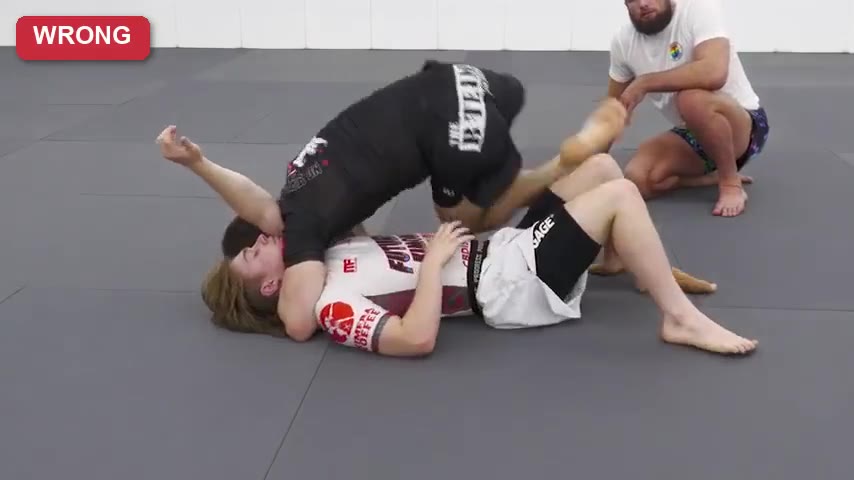
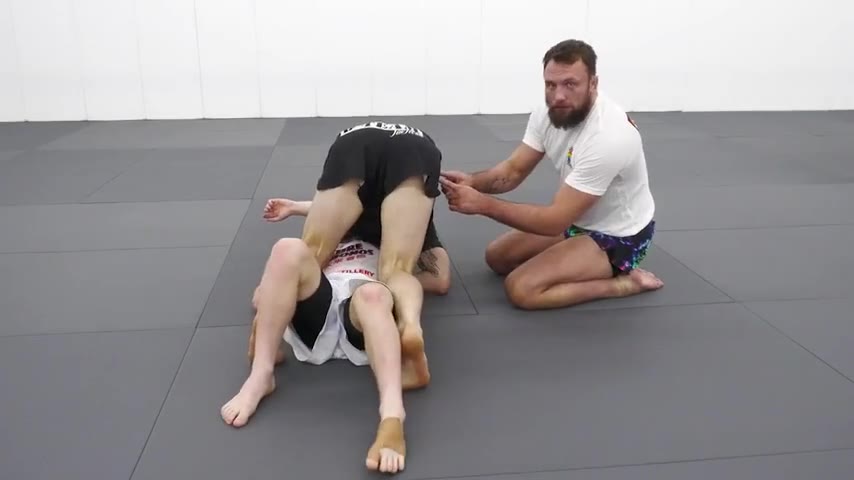
08 Arm triangle from mount, the wrong way: the moment the top man swings his leg over to step off to the side, the bottom man swings his legs and turns up to his knees
Why Craig says you were taught the arm triangle wrong. Stepping off frees his hips, and he does exactly what the first half of the course taught you: turns to his knees.
Vol 3 · 37:0009 Without stepping off: stay on top, lift your hips high, then drop your hips to the mat on one side with your legs sprawled out
No step off, so his hips stay pinned. Craig on the finish: “[The top man] lifts his hips and the same side hip here drops to the floor and all he needs to do to finish is a very slight bicep squeeze.”
Vol 3 · 41:102 more details: the knee slide when he is too heavy, and the power half
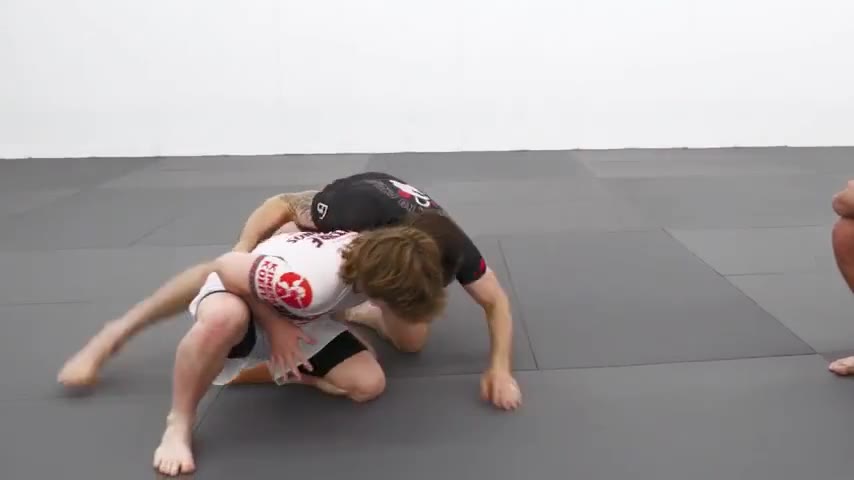
10 Too heavy to stand under: slide one knee out to free your hips, come up on one knee and start working his hands off your hips
For when he is too heavy to build height under. “He slides to make distance, basically separates the hips, and now we’re in this position again where we can start stripping and standing up.”
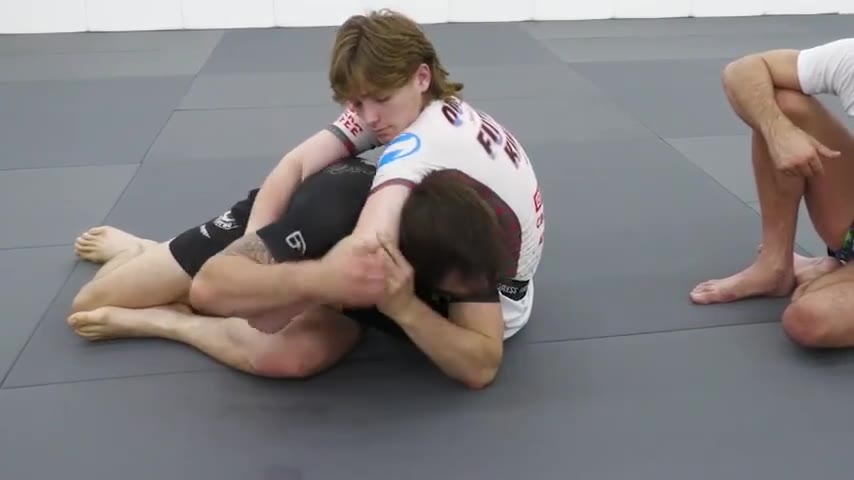
Vol 1 · 38:2111 Stuck in a power half on your neck: keep a hand framed on his elbow, slide your head inside his arm, grab that elbow and roll; he goes over and lands on his back with you on top
Same ending as the hip sit, against a different grip: the power half, his arm under your armpit and his hand on your neck to turn you over. Never fight it flat, Craig says, or “you’re going to destroy your neck”.
Vol 2 · 19:48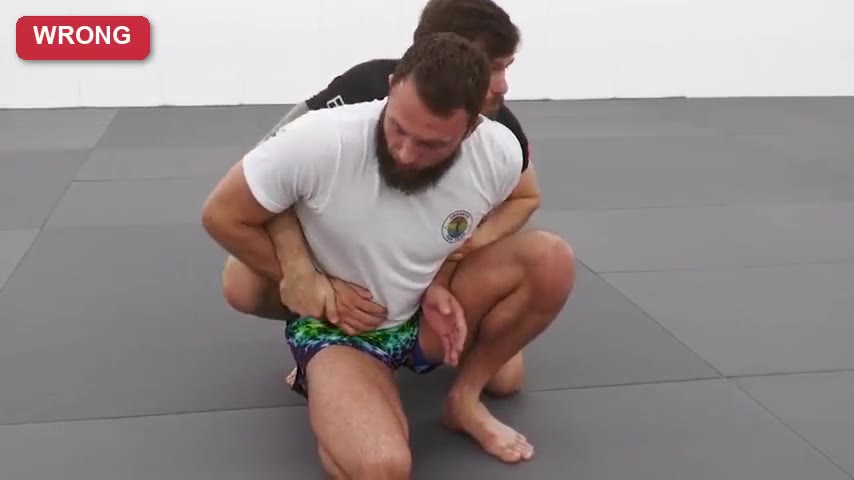 01
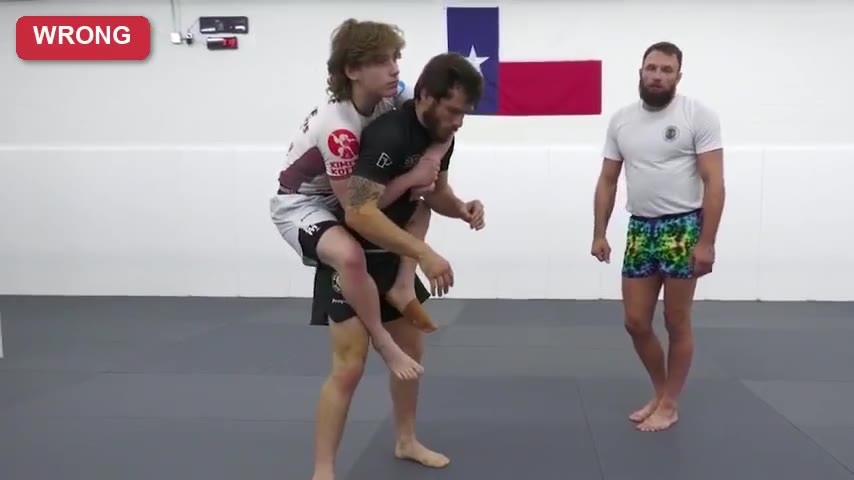 02
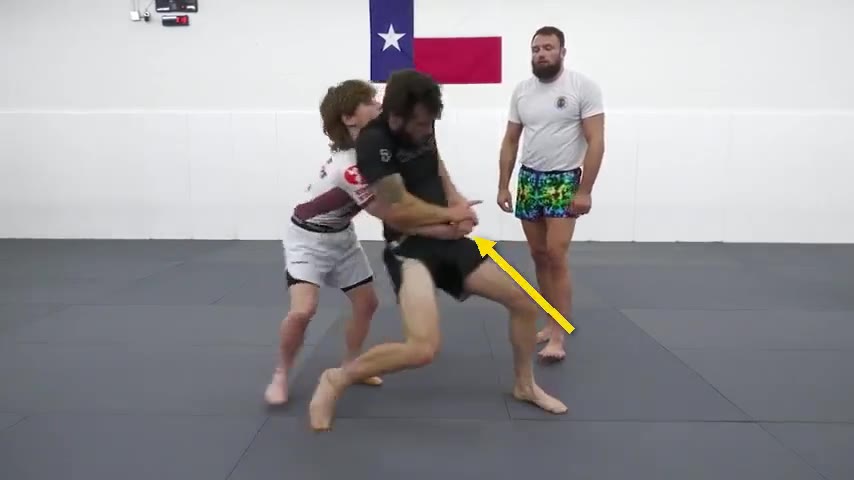 03
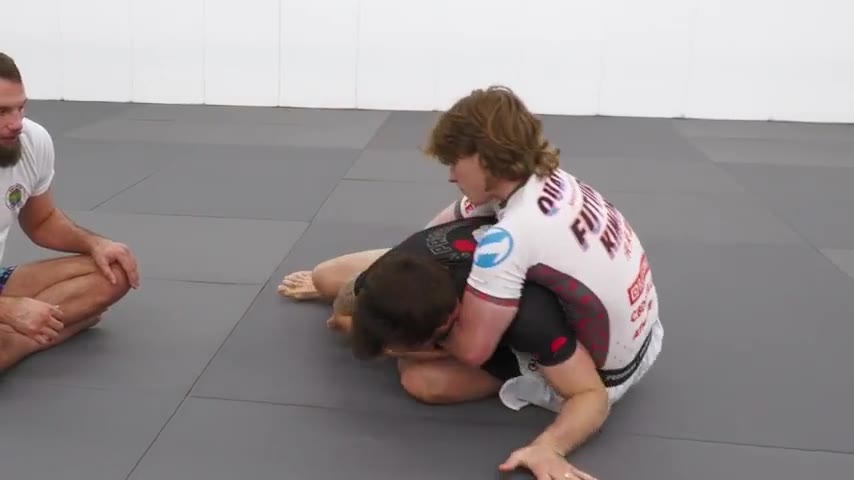 04
 05
 06
 07
 08
 09
 10
 11
How many of these details do you do?
Count the ones you already do in a roll. If most are new to you, this course will change what happens after someone passes your guard, and what happens when you are the one on top.
- No-gi
- 4 volumes, 3 h 29
- 44 chapters
- Half getting up, half holding down
- No live rounds
- Released January 2023
The fights Craig names
He uses UFC fights to make his point. Two of them, next to the course detail they explain.
Glover Teixeira steps off his arm triangle, and Jiri Prochazka gets out: UFC 275, 2022
 UFC 275, 2022
The fight Craig names. Watch the moment Glover leaves mount: Jiri turns to his knees and stands.
Kelvin Gastelum turns to his knees and stands back up against Robert Whittaker: UFC Vegas 24, 2021
 UFC Vegas 24, 2021
Craig names this fight too. Shot through the cage, so the hands are hard to see; the turn and the stand up are not.
Just Stand Up, Power Bottom or Power Ride: which one first?
Three Craig courses touch this. Power Bottom gets you up from seated guard first and from turtle later. Power Ride is a whole course on holding people down. Just Stand Up takes the turtle half of the first, adds pins from half guard, which the second barely touches, and puts them in one fight.
- Which first? If you get stuck after being passed, Just Stand Up: it starts where Power Bottom ends, at turtle, and builds it one step at a time: posture, hand fight, stand. If your guard holds but nothing happens from it, Power Bottom. If you only want to pin, and in more positions than half guard, Power Ride.
- Where they overlap. Standing up from turtle with the leg on his side first is in both Just Stand Up and Power Bottom, and both teach the Granby. The answers to his hook and his power half differ: here you sit on your hip so the mat takes his weight. A buyer who owns both, Hunter R. on BJJ Fanatics (2025), put it this way: Just Stand Up shows how “to escape turtle in a more tride [tried] and true way than B-Team bottom”, where the Power Bottom escapes “were reliant on surprising your opp for the most part”. Read our Power Bottom review.
 And Power Ride? Six volumes on pinning: legs, upper body, turtle rides, entries and finishes. They share the turk, the crossface and the arm triangle. Half guard as the main pin, the staples, the underhook pins and the north south choke are Just Stand Up’s own. See Power Ride or read our Power Ride review.
Who should buy it
Which one are you?
- Gets passed and stays stuckThe way up from turtle, grip by grip.
- Passes people, then loses them to turtleHalf guard pins on the leg he needs to turn, so he stays down.
- White or blue belt in no-giCraig says standing up from turtle is a white to blue belt skill. The pins are simple.
- Purple belt who already turtlesThe hip sit and the arm triangle finish without stepping off are the parts most people were never shown.
 Already owns Power BottomSame turtle habit, other answers to his hook. The half guard pins are new.
- Trains only in the giEvery grip in it is a no-gi grip.
- Wants a guard courseThere is no guard work in it at all.
What buyers and BJJ Reddit say about it
“Half the in structural [instructional] is about getting up and the other half is about keeping them down. This sounds simple but this kind of thing can give BJJ practitioners fits.” Ian B., a buyer on BJJ Fanatics (2026).
“Craig goes into detail on how to stop people from standing up. The half guard pins are my favorite part” Jakob L., a buyer on BJJ Fanatics (2025).
“I’m a featherweight and I use Just Stand Up every roll. Success is dependent on knowing what to do based on where your opponents weight is distributed.” u/DoctorSatan69 on r/bjj (2025).
“Still needs some adjustment for MMA.” Lukas P., a Luta Livre player and former MMA competitor, a buyer on BJJ Fanatics (2024).
“Yeah it’s called just stand up but when you try it some things won’t work in the gi so you stop doing those” u/YaBoyDake on r/bjj (2025).
One more, because every turtle player knows it: Steve C., a 52 year old white belt and a buyer on BJJ Fanatics (2023), told his coach about turtling to stand up. The coach said “Get into turtle then” and kicked him gently in the ribs. Craig’s point is that you do not stay there.
Worth it? The pros and cons
- One fight, both sides: the way up from turtle and the pins that stop it, each explained by the other (detail 06)
- Answers for the moments you already lost: already on your back, a seatbelt, a power half, a body lock (detail 04, detail 03)
- Simple rules you can use the same night: cover the hand, don’t grab the wrist; seatbelt, shake; body lock, stand (detail 02)
- A half guard top game that does not need a guard pass first: the leg turks pin his bottom leg so he cannot turn (detail 07)
- Submissions picked because you stay on top while you finish, with the reason shown on the mat (detail 08)
- Craig names the fights he means, so you can watch them
- Craig mostly coaches two partners through it instead of showing it himself. Paul M., a buyer on BJJ Fanatics (2023): “I do want to see him perform the techniques.”
- No live rounds and no drilling plan beyond solo shadow drilling and the static-to-live pinning drill in volume 3
 Not an escape course for every pin: mount, knee on belly and two hooks in are left out. Danaher’s Pin Escapes & Turtle Escapes covers each pin in eight volumes, $197
- No-gi only: every grip in it is a no-gi grip (see the gi question in the FAQ)
- Heavy on MMA examples, and the front headlock part sits at the end of volume 4, after the pins, though it belongs with the turtle
The way up from turtle, then the pins that stop it. House code EXTRAXX58
What’s inside the four volumes
44 chapters over four volumes, all no-gi. No live rounds. The first half gets you up, the second keeps him down:
Vol 1 · 49:53Why you are stuck, and the turtlepin yourself, posture, hands, stand
Why closed guard and half guard pin you, why side control is a weak pin, and what wrestling teaches that jiu-jitsu does not. Then the turtle: elbows tight, feet covered, the hand fight on your hips (detail 01), building height and standing (the clip at the top), the knee slide (detail 10), and the Granby roll, a shoulder roll that turns you to face him, first solo, then off the knee slide.
Vol 2 · 57:13Lost battles, then half guardhip sit, seatbelt or body lock, leg turks
The hip sit against a hook and a seatbelt (detail 04, detail 05) and against the power half (detail 11); seatbelt or body lock, with no hook (detail 02, detail 03) and with one in. At 37:50 the course turns: half guard as the pin that stops all of it, then three leg turks (detail 06, detail 07).
Vol 3 · 46:39Pins and the arm trianglestaples, crossfaces, underhooks, arm triangle
Single and double leg staples, three crossfaces, the near side underhook, the far side underhook pin, putting legs and upper body together, and forcing half guard against an open guard player. Then the arm triangle: why stepping off lets him out (detail 08) and the finish that keeps you on top (detail 09).
Vol 4 · 55:25North south, then his front headlocknorth south, kimura, sucker drag, barrel roll
Arm triangle set-ups off his kimura grab, the north south choke as a pin and how to finish it, the pass off to the other side, the karate chop to a kimura. Then back underneath: why his front headlock is safer than you think, the sucker drag, the barrel roll dump, Austin DeSanto’s version, and two bonuses, the Saitiev reversal and the Schultz choke.
Compare to
- Pin Escapes & Turtle Escapes (BJJ Fundamentals: Go Further Faster) by John Danaher: The classic way out: eight volumes on escaping mount, side control, knee on belly, north south and the back, then turtle escapes. Danaher teaches each pin escape; Craig teaches you to turn to your knees and stand instead. $197. See it on BJJ Fanatics. Or read our review.
- Nicky Ryan’s Wrestle Up Series by Nicky Ryan: Getting up from guard, not from turtle: wrestle ups from seated guard against a standing or kneeling opponent, and from supine guard. For the man who wants to get up before his guard is passed, not after. $197. See it on BJJ Fanatics. Or read our review.

More options in every Craig Jones instructional ranked and the best BJJ instructionals overall. Prices are BJJ Fanatics list prices, checked November 12, 2026.
Get the next review like this one
New reviews in this format land in your inbox, with the timestamps and clips. You also get the free BJJMore email course and the instructional-platform discounts (worth $46).

BJJMore earns a commission if you buy through these links, at no extra cost to you. This review covers the whole course: all four volumes, released January 2023.
FAQ
Is Just Stand Up worth it?
Yes, if you play no-gi and you end up stuck underneath people, or they keep turtling away from you when you are on top. It teaches both sides of the same fight: getting up from turtle against a man on your back, and holding people down from half guard so they cannot get up. Skip it if you train only in the gi or want a guard course.
Is Just Stand Up only about standing up?
No. A bit over half (1 h 57 of 3 h 29) is about getting up: the turtle, his grips, the hip sit, standing, and his front headlock. The rest is about holding people down: half guard as a pin, three leg turks, staples, crossfaces and underhooks, and two submissions that keep you on top, the arm triangle and the north south choke.
How long is Just Stand Up?
3 hours 29 minutes over four volumes: 49:53, 57:13, 46:39 and 55:25, in 44 chapters. There are no live rounds.
Just Stand Up or Power Bottom: which should I buy first?
Just Stand Up if you get stuck after being passed and want the turtle half in depth, plus Craig’s half guard pins. Power Bottom if your guard holds but nothing happens from it, or you want throws when he locks his hands round your waist from behind (Just Stand Up gets you to your feet against that grip, detail 03). They overlap at turtle: both teach standing up with the leg on his side first.
Is Just Stand Up good for beginners?
Yes, more than most Craig courses. He says standing up from turtle should be something you learn around white or blue belt. The pins are simple to drill. The Granby needs solo practice first: Craig warns you can hurt your neck if you try it mid roll too early.
Does Just Stand Up work in the gi?
Parts of it. Everything is taught no-gi. Turtling, standing up and the half guard pins carry over; some grip fights change when he can grab your collar or sleeve. On r/bjj people report both: one finds more success in the gi, another says some things stop working.
Is Just Stand Up for MMA?
It is built with MMA in mind: Craig opens with why wrestlers keep getting up against jiu-jitsu fighters in the cage, and names UFC fights to make his case, from Gastelum v Whittaker to Teixeira v Prochazka. The techniques are pure grappling, with no strikes, and work in no-gi rolls.
Can I watch any of Just Stand Up for free?
A little. The B-Team’s free video “How To Use Wrestling to Beat Jiu-Jitsu” is a sample of it, and BJJ Fanatics posted three short excerpts from the pinning half: a top lockdown turk, a far side underhook pin and the north south choke as a pinning tool. Together that is about a quarter of an hour of a three and a half hour course.
Is there a discount code?
Yes. The house code EXTRAXX58 took 58% off this course at checkout on November 12, 2026: $82.74 instead of $197. BJJ Fanatics rotates these codes, so check the price on the day you buy.
Tired of being stuck underneath?
If you get passed and stay there, or the people you pass keep turtling away and getting up, this is the course that covers both sides of that fight.
House code EXTRAXX58: $82.74 instead of $197, tested November 12, 2026