
Home / Reviews / John Danaher / Unpassable Guard Review
Danaher’s Unpassable Guard Review: Does It Work?
Buy it if you’re tired of getting passed in no-gi and want one plan, not loose clips. Skip it if you need live rounds.
See today’s price on BJJ Fanatics →
- No-gi
- 8 volumes, 5 h 13 min
- 0 live rounds
- White to blue belt
- Released March 2024
Is The Fastest Way To Develop An Unpassable Guard actually unpassable? No, and John Danaher says so himself. But it’s the clearest no-gi guard retention plan I’ve timed: 5 hours, sorted by the pass you face.
The short answer in full
Danaher’s argument is simple: every guard pass goes through the same five steps, and if you stop the passer at any one of them, there is no pass. So the set spends two volumes on how passing works and the stance you defend from, then six volumes on the passes you’ll actually meet in no-gi, grouped by what the passer controls: your lower legs (toreando, north-south), your hips (body lock, double scoops, knee cut) or your head and shoulders (half guard, underhooks, sit-outs). The same few moves come back against all of them: the knee prop, the elbow prop, the outside shoulder roll, the knee shield.
It’s 5 h 13 min, of which 5 h 11 min is teaching. There are no live rounds, only one resisted demo and about three minutes of silent play. At $197 that’s $38 per hour of teaching; with a code it’s about $16, cheaper per hour than anything I’ve timed except Danaher’s own two longer sets. The price of all that talk is repetition: about 70 minutes are recaps and theory you can skip on a rewatch. I’ve marked them below, with a 55-minute route for busy buyers.
Jump to a section
15 details that are worth the money
From early to late in his pass: first he is still outside your legs and you stop his first moves (1 to 5), then he gets on top of you and you win back space (6 to 10), then he gets close and you stop him from finishing the pass (11 to 15).
Knee outside the ankle
When you prop up on one knee, keep that knee outside its own ankle: inside the ankle, one push tips you over.
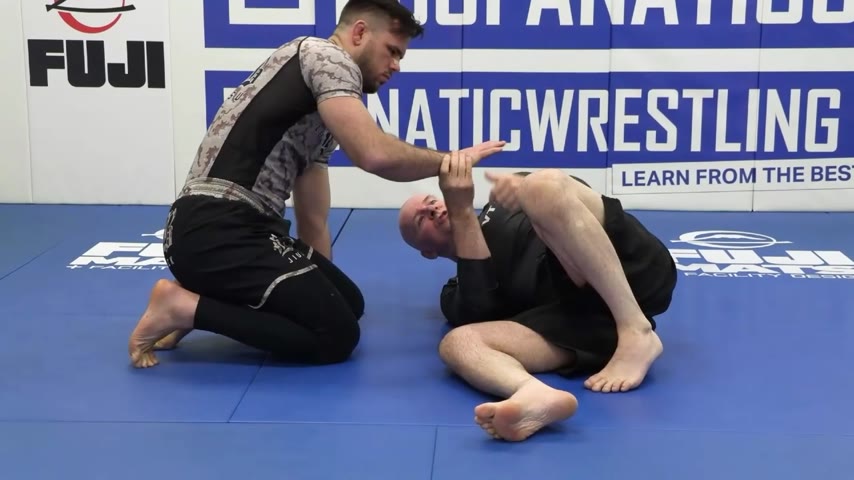
Vol 1 · 29:12The push test
His partner pushes on the shoulder: with the knee outside the ankle, Danaher slides back instead of tipping over.
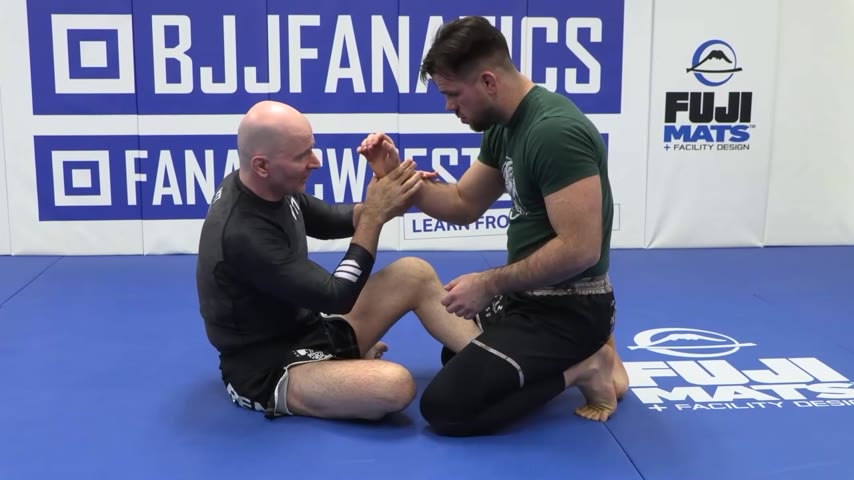
Vol 1 · 29:31Two hands on one wrist
Two hands on one of his wrists: in no-gi he needs both hands to pass, so he must clear this grip first.
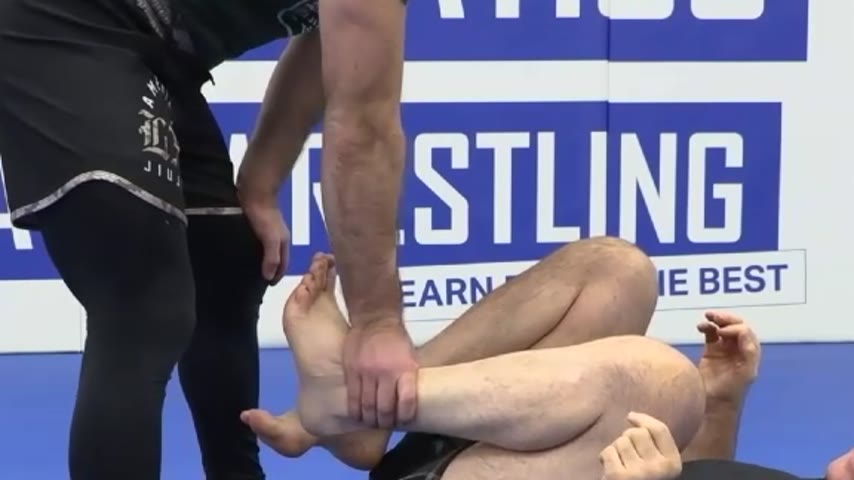
Vol 2 · 44:52Foot on top of his hand
His hand on top of your foot is good for him: lift the foot and put it on top of his wrist instead.
Vol 3 · 7:10Outside leg high, sole on his shoulder
As he runs to the side, thumb-post inside his lead elbow and bring the outside leg high, sole on his shoulder.
Vol 3 · 10:36Shoulder roll, back to guard
From under the passer, roll over your shoulder and come back up with your legs in front of him: guard recovered.
Vol 5 · 38:25Frame his elbows, not his body
From north-south, post on his elbows: push on his torso and you open the lane his head needs.
Vol 4 · 24:12Hands on his face, then onto your side
Both hands on his face, the heel of one under his jaw, then turn onto your side under him and keep one hand behind his head, one on his chin.
Vol 5 · 31:12Legs off his shoulders, onto his biceps
Against double scoops, slide your hamstrings off his shoulders onto his biceps: heavier legs, no stack.
Vol 6 · 4:36Knee back in front of his hip
Hand on his hip, then slide your knee back in between you, in front of his hip: his hips come off you.
Vol 7 · 8:03Feet stacked, one over the other
Stack your feet, top foot pushing and bottom foot pulling: apart, the knee shield goes soft and he crushes it.
Vol 7 · 12:00Feet close together, open hand on his back
An open hand on his back, no hug, and the feet brought in close together. Danaher: “I don't cross my ankles. I just bring my two feet in very close together.”
Vol 7 · 16:18Knee points against his pass
When he lifts his knee to pass, swivel your hips so the hooking knee points away from where he is going.
Vol 7 · 26:06Pinch the hip, stand on the calf
Squeeze your knees high on his hip and stand a foot on his calf: pinch his knee and he just steps over.
Vol 7 · 34:48Temple into his armpit
Danaher plays the passer here: his crossface controls the head through the jaw, and once the bottom player's temple slides into his armpit, that control is gone.
Vol 8 · 4:56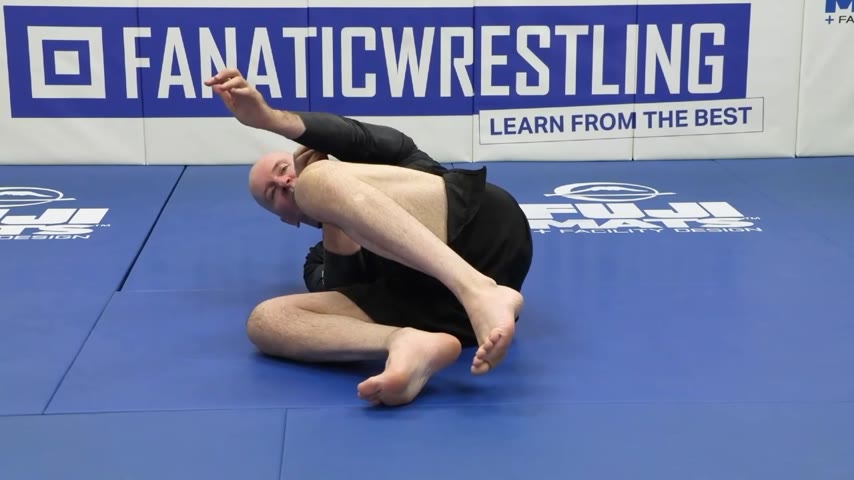 01
 02
 03
 04
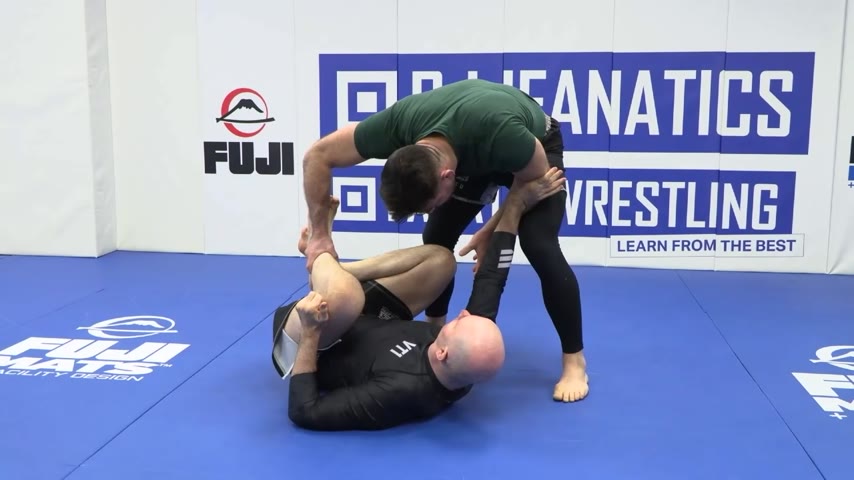 05
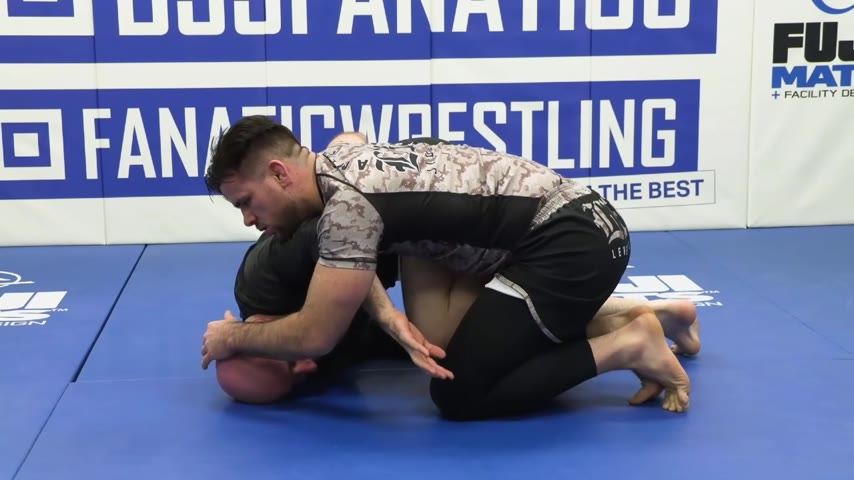 06
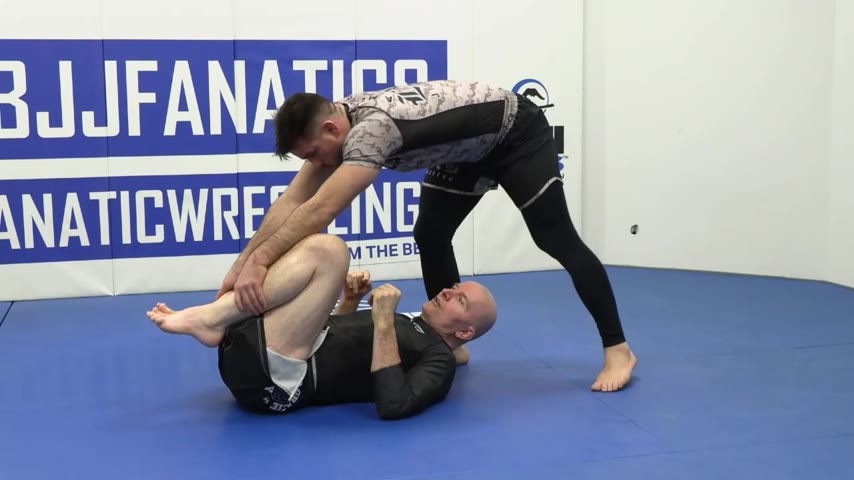 07
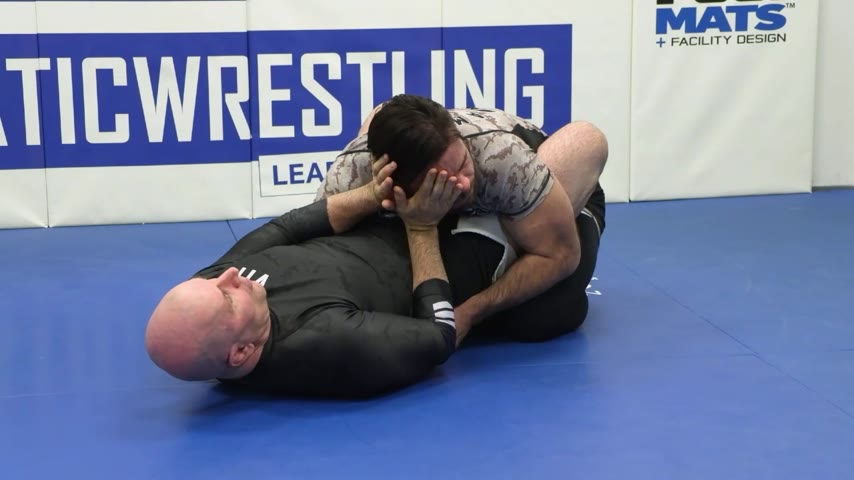 08
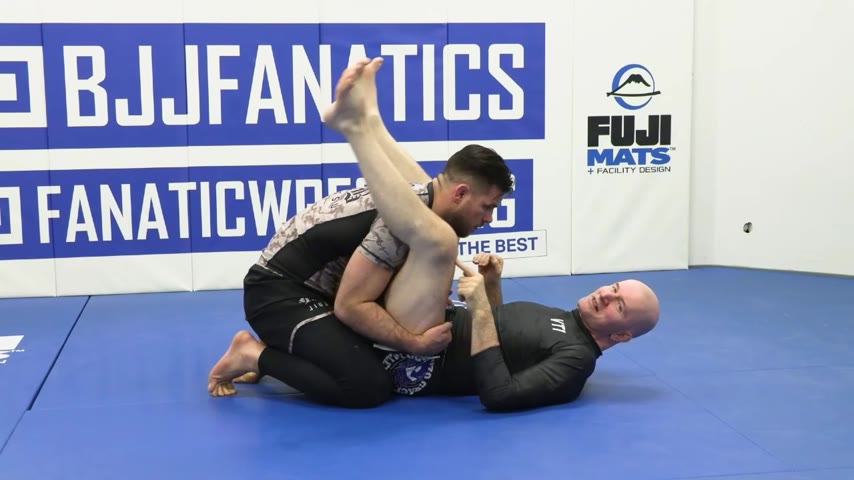 09
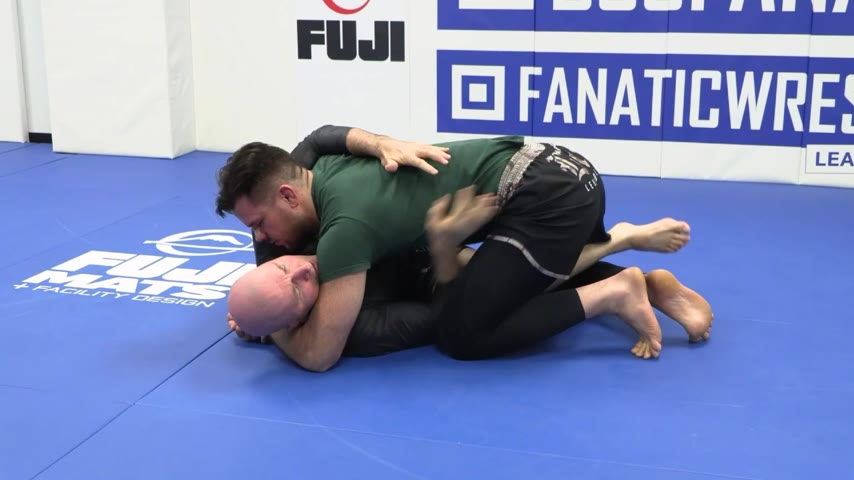 10
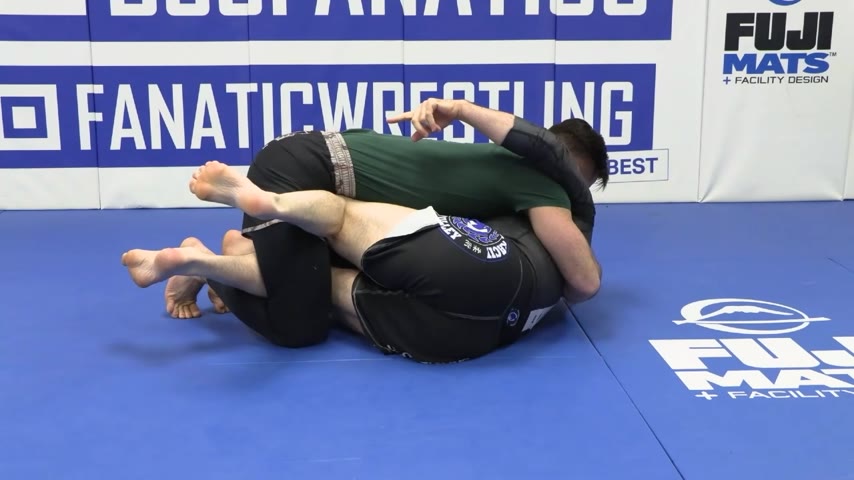 11
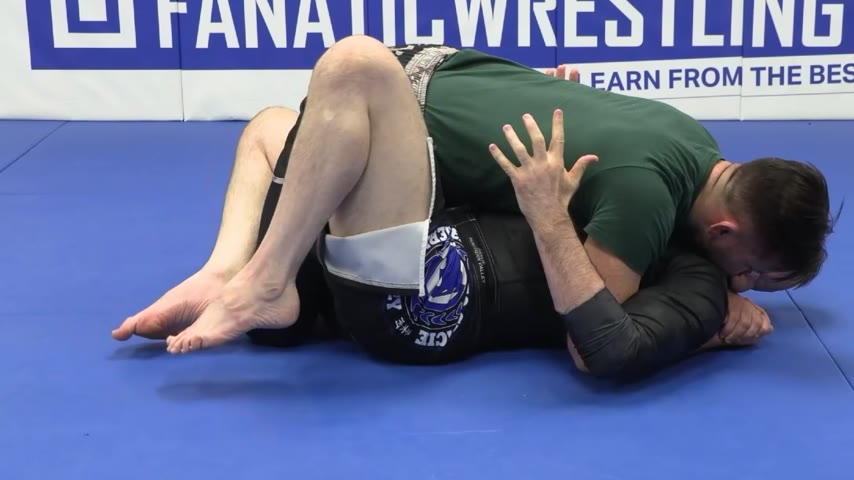 12
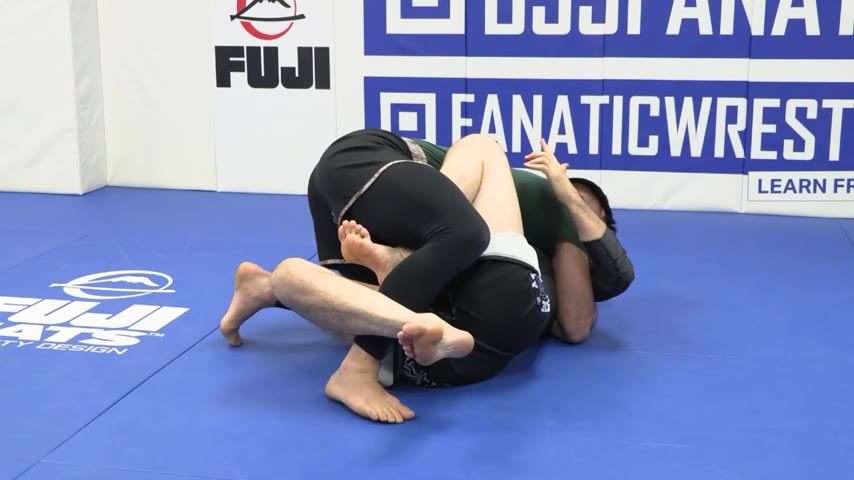 13
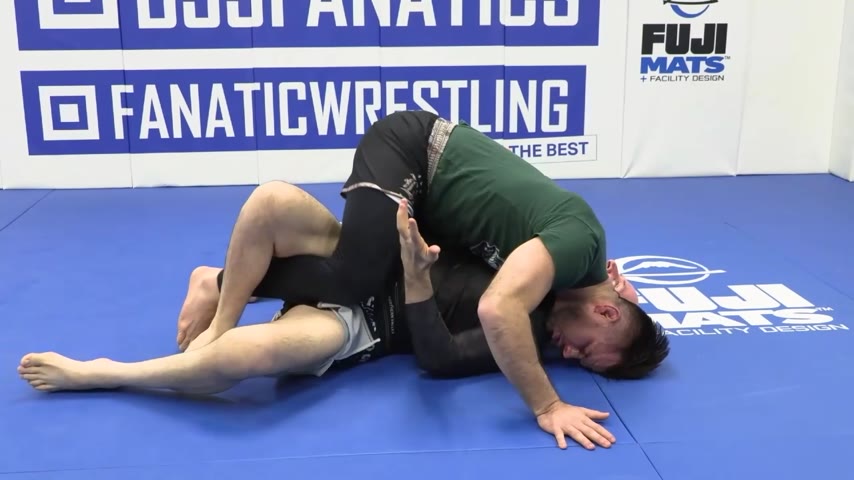 14
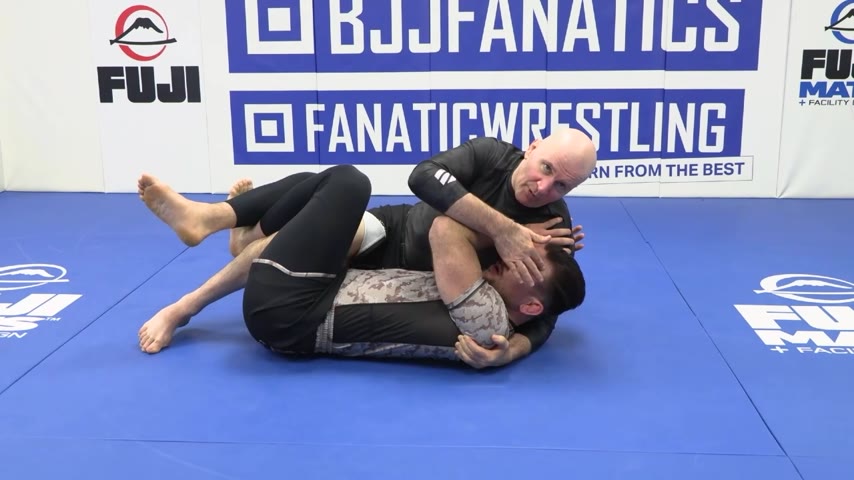 15
How many of these details do you do?
Count the ones you do in every roll, not just in drilling. If three or more are new to you, this set will change how often you get passed.
On October 27, 2026 the house code EXTRAXX58 took 58% off at checkout: $82.74 instead of $197.
Short on time? Watch these 55 minutes first
I timed every chapter so you don’t have to: eight stops that hold the moves the rest of the set keeps coming back to, and the recaps you can skip.
And the other way round: about 70 minutes are recaps and theory you can skip on a rewatch, most of them in Volumes 2, 3 and 5.
The skip list, per volume and with times
My call, stretches of about 2 minutes or more with no new technique (repeat reps, recaps, the passer-side theory). Times in the list below.
- Vol 1: 0:09 to 2:54
- Vol 2: 11:54 to 16:29, 21:19 to 23:29, 27:18 to 33:24, 46:50 to 49:45
- Vol 3: 12:17 to 14:56, 19:24 to 23:24, 32:39 to 36:26, 45:47 to 47:53
- Vol 4: 9:26 to 13:54, 19:51 to 22:00, 25:28 to 27:42
- Vol 5: 0:12 to 3:04, 19:01 to 21:20, 25:15 to 27:45, 31:29 to 33:50, 37:49 to 39:55, 44:13 to 45:31
- Vol 6: 20:59 to 23:27
- Vol 7: 6:39 to 8:16, 9:07 to 10:48, 27:21 to 29:53
- Vol 8: 0:12 to 3:13, 5:31 to 7:13, 8:52 to 9:50, 10:55 to 11:44
Two stretches look skippable but aren’t for thinkers: the gi vs no-gi knee cut lecture in Volume 6 (9:31 to 13:13) is the reason the no-gi answer works, and the silent play in Volume 5 is the only time you see the body lock frames at speed.
Who should buy it: this, Gordon’s or Lachlan’s?
Find yourself in a bucket. One reason each; the pros and cons follow below.
- No-gi player who gets passedEvery volume answers a no-gi pass: toreando, body lock, double scoops, sit-outs.
- White beltOne plan instead of a library, starting with 12 solo movements you can do alone.
- Blue beltSorted by the pass, so you can fix the one that beats you this month.
- Older or not very flexibleFrames and knee shields, not inverting. Danaher's own caveat: the knee prop is harder.
- CompetitorNo live rounds and no match clips: you trust the logic, not the proof.
- Purple belt and upYou already retain well: They Shall Not Pass or the anthology go further.
- Gi guard playerBuilt around no-gi passes. Go Further Faster (2019) is Danaher's gi set.
- Leg lockerLeg entanglements as retention aren't in it. Gordon's Volume 2 is.
Weighing it against They Shall Not Pass or the anthology? One call each:
Unpassable Guard
No-gi, white to blue belt, or not very flexible: one plan, sorted by the pass, about 5 hours.
They Shall Not Pass
You already retain well and want leg entanglements, seated guard and rolls: about 11 hours, $349.
Guard Retention Anthology
Flexible, experienced, gi and no-gi, and you want every situation covered: Giles and Tabak, $247.
What BJJ Reddit says: the anthology, or this?
“Nothing beats Lachlan’s retention anthology”, u/Zearomm (August 2026).
Lachlan and Ari’s is better “BUT the latter is more high level meaning might be harder to implement immediately”, u/Gardener_Warrior (January 2026).
“Anything The Fastest Way is geared for White to Blue Belt in NoGi. It will get you caught up to speed quickly”, u/RecordLonely.
“If you have the flexibility, work lachlans. If not, danahers may be more friendly”, u/SnooPandas2957.
Nobody hates it; the split is that one question. The one complaint about Danaher himself is the pace (see the cons above), and it’s why the route and the skip list exist.
The skeptic’s case: four objections, each with my answer
The titleThe Fastest Way To Develop An Unpassable Guard
Nobody’s guard is unpassable, and Danaher’s “nine times out of ten” line on double underhooks says so. What the set does well is make most passes slower and the rest survivable.
u/TheGreatKimura-Holio on Danaher in generalHe’s long winded and pretty monotone
About 70 of the 313 minutes are recaps and theory. The route above gets you the core in about 55 minutes; the rest is there for when you want the why.
u/ZearommNothing beats Lachlan’s retention anthology
For depth and gi plus no-gi, probably. For a no-gi white or blue belt who wants a plan this month, this set is shorter, cheaper and asks less of your hips.
A common questionIsn’t this just Go Further Faster again?
Same backbone, different passes. Go Further Faster is gi and organized by gi passes; this one is no-gi, with the body lock, double scoops and sit-outs that no-gi passers actually use.
Worth it? The pros and cons
- One clear idea: every pass has five steps, break one
- Sorted by the pass you face: your legs, your hips, your head and shoulders, about 1 h 10 to 1 h 23 each
- A small toolkit that keeps coming back: the knee prop, the elbow prop, the outside shoulder roll, the knee shield
- Honest about its limits: the “nine times out of ten” line on double underhooks
- A full volume on sit-outs, which They Shall Not Pass doesn’t title a chapter after
- 5 h 11 of the 5 h 13 is teaching: about $16 per teaching hour with a code, $38 at list
- No live rounds: one resisted demo and about three minutes of silent play
- About 70 minutes of recaps and theory (the route above gets around them)
- One camera, and the hands are often behind the partner’s back
- No leg entanglements and no rolls with commentary: They Shall Not Pass has both
- No drilling plan beyond the solo warm-up
- Danaher’s pace: “long winded and pretty monotone” to some (u/TheGreatKimura-Holio)
Buy it if, skip it if: the full version, with the prerequisites
You train no-gi and get passed more than you’d like, you’re a white or blue belt who wants one plan rather than a library, you’re not very flexible (most of it runs on frames, knee shields and the knee prop, not on inverting), or you like to know why a move works before you drill it. You need a basic open guard and half guard so the names mean something, and a partner who will feed you the passes.
You train mostly gi (Go Further Faster is built around gi passes), you want leg entanglements as retention or rolls with commentary, you need to see a system work in live rounds before you trust it, or you’re flexible, experienced and want the deepest library: then it’s the anthology.
Mat test plan: what I’ll test in live rolling before the score update
This is a first-watch review: the score comes from watching and timing all eight volumes and analyzing every technique shown. What I’ll test before the update:
- The knee prop with the knee outside the ankle against heavy knee cutters
- The thumb post and high leg against toreando passers
- The shoulder roll when a body lock passer lets go of the hips
- Switching from the hip to the head against sit-out passers
The ranking position in our guard retention list follows after that test.
Five passes, one small toolkit. $82.74 with EXTRAXX58 (tested Oct 27)
Does it work? Not unpassable, by Danaher’s own account
No guard is. In the worst spot of the set he says a passer of the same size and skill “should be able to pass your guard in this position nine times out of ten”. The set makes the other passes hard, and teaches you to survive that one.
Proof ledger1 resisted demodouble underhooks, partner told to pass for real (V7)2 silent play stretchesDanaher on bottom vs the body lock, 3 min in total (V5)0 live rounds in the volumesthe volumes never show it against full resistance0 match clipsno competition footage was pulled for this review
What the volumes show, and what they don’t
The strongest claims in the set are conditional. “If you can stop them on even one of those five steps, he will never pass your guard” (Volume 2) is true by definition, and “you will never struggle with sit-outs again” (Volume 8) is a coach selling a rule he believes in. The honest lines are the useful ones: against a determined body lock passer, no single frame works (“No one of them will stop a determined body lock guard passer”), which is why Volume 5 gives you three safety positions and two late escapes instead of one answer.
What you never see is the system against full resistance. The double underhook demo above is the one place his partner is told to pass for real, and Danaher gives up the upper body to keep the hip. Volume 5 has two short stretches of silent play against the body lock, cut every couple of seconds. There are no rolls in the volumes, and I haven’t pulled match footage of these moves for this review, so unlike my Craig Jones and Gordon Ryan reviews there is no loop next to a real match here. You’re trusting the logic and the coach. For Danaher that’s a safer bet than for most, but it’s still a bet.
What’s inside: one idea, eight volumes
One idea from Volume 2: a pass needs all five steps, so you only have to win one of them. Tap a volume for the details.
- 1Contacthe grips your legs or hips
- 2Distance and anglehe gets off your centre line
- 3Clear the legsyour knees and feet leave the way
- 4Level changeknee or chest down to you
- 5Pin for 3 secondshead and shoulders, or hips
Why this works better than a list of guards
Most guard retention sets teach guards. This one teaches passes. Danaher’s five steps are contact, distance and angle, clearing the legs, the level change, and a pin of head and shoulders or hips held for about three seconds (“both my shoulder and my hip have to be on the ground for three seconds” is his own test of a finished pass). Then he sorts the passes into three methods: through the lower legs, through the hips, through the head and shoulders. Every volume after that answers one method, and he says the aim outright: “we’re trying to do the bulk of our work with a relatively small set of moves”.
BJJ World’s Ognen Dzabirski, who gave it 10/10, put it this way: it’s “focused on preventing different passes, rather than exploring different guards”. That’s also its limit. If you want a guard to attack from, this isn’t that set.
One opinion to know about: Danaher calls inside position “the cornerstone of guard retention”, and he flags himself that this “doesn’t represent orthodox belief”. Volume 3 is built on it.
Vol 1 · 35:27Twelve solo movementsa warm-up you can do alone
Pommeling, shrimping, scooting, hip kipping, crossovers, the knee prop, the shoulder roll and more, as a warm-up you can do alone (details 01 and 02). The full list: pommeling, shrimping, scooting, hip kipping, crossovers, high and inside leg, inverted spin, elbow prop, knee prop, shoulder roll and leg scissor. He says they “don’t require any kind of athletic gifts” and wants them “most days as a warm-up before class”. One honest caveat: the knee prop, his favourite, “might be a little more challenging” if you’re “an older or less flexible person”. BJJ World’s reviewer wasn’t a fan of solo drills for beginners. I’d do them anyway: the knee-outside-the-ankle rule is the one detail every later volume depends on.
Vol 2 · 52:15How passing works, and your stancefive steps, three danger zones, the stance
The five steps of a pass, three danger zones, the three passing methods, then the stance and the two-on-one with the thumbs up (detail 03). The stance: knees to chest, elbows to knees, soles toward him. The longest volume and the one with the most recap: the danger zones are said twice and chapter 2.5 restates the stance from 2.3. The lines to keep are “Stance first, everything else second” and the no-gi point behind the two-on-one: it’s “very difficult in a no-gi context for an opponent to pass your guard with one hand”. Chapter 2.4 is free on YouTube.
Vol 3 · 51:22Vs distance passing and toreandofoot over the wrist, high leg, inside position
Foot over his wrist, the high leg with a thumb in his elbow, inside knee and elbow position, the outside shoulder roll (details 04 and 05). Also the inside leg, the elbow prop and turning away. Chapter 3.4 is the heart of it: inside position, the inside knee in front of his shoulder and the elbow inside his elbow, which Danaher calls “the king of guard retention methods”. Turning away from the pass gets a fair warning: at “world championship competition level” it gets your back taken, and he separates points matches from submission-only. Chapter 3.6, the elbow prop, is free on YouTube.
Vol 4 · 31:57Head control and north-southelbow post, leg frames, the sit-up
The elbow post against head control, leg frames against north-south toreando, the sit-up recovery and framing the elbows (detail 07). Also the inside-position leg scissor. Four minutes of this volume argue why north-south is hard work for the passer, with a bench press comparison. Useful if you also pass; otherwise skip to the leg frames. The rule to keep: “don’t let him get it for free”. The sit-up recovery comes with the one front headlock warning in the set.
Vol 5 · 46:25The body lockthree safety positions, the shoulder roll, the hip slip
What a body lock needs, three safety positions, the chin post and shrimp, the outside shoulder roll and the hip slip (details 06 and 08). A body lock needs three things: hands connected, elbows outside your hips, head below your shoulder. The most honest volume. He admits that “over a 10 minute match at some point he’s going to get to that body lock” and that no single frame stops a determined passer. So you get prevention, then three safety positions (a knee in front of his shoulder is “like kryptonite” to the pass), closed guard and the omoplata among them, then two escapes for when the lock is on. The shoulder roll in the hero loop is from here: it works because the passer has to let go of your hips to pin your head.
Vol 6 · 25:05Double scoops and the knee cutlegs to his biceps, the knee shield
Locked and unlocked double scoops, legs from his shoulders to his biceps, then the knee shield, elbow prop and shoulder roll against the knee cut (detail 09). The shortest volume and one of the densest, with wrist control against the scoops. The knee cut chapter explains why the gi answer fails in no-gi: the cut that goes away from the knee is “very, very effective with a jacket on, not nearly so effective” without one. Chapter 6.2 is free on YouTube.
Vol 7 · 43:03Half guard: head, shoulders, underhooksoutside knee shield, knee lever, double underhooks
The inside knee and elbow escape, the outside knee shield, the knee lever, half butterfly, and the near side and double underhooks (details 10 to 14). The outside knee shield is the one he “probably use[s] more than all the others put together”, and the stacked-feet detail is what makes it hold. Against double underhooks he’s blunt: “You have 100% lost the upper body battle”, so you win the lower body. He also says the near side underhook is “one of my personal favorite guard passing positions”, which tells you how much this volume is the passer talking.
Vol 8 · 27:24Sit-outsswitch from the hip to the head
The sit-out crossface, reverse crossface and reverse underhook sit-out. One rule: “The second they sit out, you switch from the hip” (detail 15). The most original volume, and nothing in They Shall Not Pass is titled after sit-outs. The no-gi notes are good: a crossface is “actually the easiest one to get out of” without a lapel, and a reverse crossface is the one no-gi half guard passers prefer. The first three minutes are an intro and an apology for a camera angle; start at 3:16.
Unpassable Guard in numbers
Timed from the files: every volume, every chapter. Teaching time is the runtime minus live rounds, promo and intro.
The fourth cheapest per teaching hour of the 17 instructionals I have timed the same way. Teaching = runtime minus live rounds, promo and intro. Code prices tested at checkout in October 2026. Different topics, so this compares value per hour, not content.
- 1 h 27 Foundations
- 1 h 23 Vs the legs: toreando, north-south
- 1 h 11 Vs the hips: body lock, scoops, knee cut
- 1 h 10 Vs head and shoulders: half guard, sit-outs
Danaher sorts every pass into three methods: the lower legs, the hips, the head and shoulders (chapter 2.4). Volumes 3 to 8 take them in that order.
Every volume’s length, and how much of it is talking
| Vol | Topic | Length | Talking |
|---|---|---|---|
| 1 | Introduction, 12 body movements | 35:27 | 97% |
| 2 | The 5 steps of passing, danger zones, stance | 52:15 | 98% |
| 3 | Vs distance passing and toreando | 51:22 | 98% |
| 4 | Head control, north-south | 31:57 | 97% |
| 5 | Vs the body lock | 46:25 | 91% |
| 6 | Double scoops, knee cut | 25:05 | 96% |
| 7 | Half guard: head and shoulders, underhooks | 43:03 | 94% |
| 8 | Sit-outs | 27:24 | 96% |
| Total | 40 chapters, 59,230 words | 5:13:01 | 96% |
Only about 9 minutes are free on YouTube, word for word. Watch chapter 3.6, the elbow prop (3:48) before you buy: if Danaher’s pace works for you there, it works for the set.
The three free chapters, and what isn’t free
- Chapter 2.4, the 3 most important guard passing methodologies (3:35)
- Chapter 3.6, the elbow prop method (3:48)
- Chapter 6.2, working against unlocked hands (1:42)
BJJ Fanatics uploads, matched by length and picture against the volumes. The older free Danaher guard retention videos on YouTube are from Go Further Faster (2019, gi), not from this set.
Vs They Shall Not Pass, and vs Danaher’s own passing set
Not a winner, a choice: Danaher builds a small toolkit around what the passer has to do, Gordon covers more ground for almost twice the price.
Only Unpassable Guard is timed from the files. The other runtimes are the lengths listed on our roundups (hatched), not measured. List prices from BJJ Fanatics on October 27, 2026.
Unpassable Guard vs They Shall Not Pass, problem by problem
I have the Danaher footage, not Gordon’s, so every They Shall Not Pass claim here comes from its chapter list on BJJ Fanatics (108 chapters, 8 volumes). Our They Shall Not Pass review covers it in full.
| Problem | Unpassable Guard | They Shall Not Pass (by chapter title) |
|---|---|---|
| Model of passing | 5 steps, 3 danger zones, 3 methods (V2) | Top and bottom player’s goals (V1) |
| Inside position | Inside knee and elbow, “the king” (V3) | Battle for inside position (V1) |
| Toreando and flanks | High leg, inside leg, thumb post (V3) | Pommeling legs, high legs, framing vs a flank (V4) |
| North-south | Leg frames, sit-up, frame the elbows (V4) | Recovering from north-south (V4) |
| Body lock | 3 prerequisites, safety positions, hip slip (V5) | Stopping the initial lock to recovering after a pass (V5) |
| Knee cut | Knee shield, elbow prop, gi vs no-gi (V6) | Preventing and countering a knee cut (V3) |
| Half guard | Inside knee escape, outside knee shield, knee lever (V7) | Butterfly half, knee lever series (V6) |
| Sit-outs | All of Volume 8 | No chapter titled after sit-outs |
| Leg entanglements | Not covered | All of Volume 2 |
| Rolls | None (one resisted demo) | Rolls with commentary (V7 and V8) |
The other two: Lachlan Giles and Ari Tabak’s anthology covers gi and no-gi and is the depth pick. Danaher’s own Guard Retention: Go Further Faster (2019) is the gi version, organized by gi passes. Unpassable Guard keeps its backbone (body movements, how passing works) but is rebuilt around the passes no-gi players use, so it isn’t a re-edit.
Both sides of the same pass: Danaher vs Danaher
Danaher filmed the passing side first, with the same partner in the same room: The Fastest Way To Become An Effective Guard Passer. Five passes meet head-on; if you train both sides, buy the pair.
The five passes side by side, and the gaps both ways
| The pass | Guard Passer teaches | Unpassable Guard answers |
|---|---|---|
| North-south | North-south camping (V2) | Leg frames, then frame his elbows (detail 07) |
| Body lock | Six body lock positions (V5) | Chin post and shrimp, the shoulder roll (details 06 and 08) |
| Knee cut | Four knee cut methods (V5) | Knee shield, knee outside the ankle (detail 01) |
| Half guard sit-out | Sit-out passing (V8) | Switch from the hip to the head (detail 15) |
| Near side underhook | Near side underhook (V7) | Pinch the hip, stand on the calf (detail 14) |
Gaps both ways: this set names no answer to the passer DVD’s cross shin pin, inside knee pin or tripod knee cut. My review of the passing DVD has the same loops from the other seat.
Compare to
- They Shall Not PassGordon Ryan · $349: about 11 hours (listed, not measured), organized by the bottom player’s stance, with leg entanglements and rolls. More ground, almost twice the price. See it on BJJ Fanatics or read our review.
- Guard Retention AnthologyLachlan Giles and Ari Tabak · $247: gi and no-gi, the deepest library, and the one Reddit names first. Better if you’re flexible and want every situation covered. See it on BJJ Fanatics.
- Guard Retention: Go Further FasterJohn Danaher · $197: the 2019 gi version, organized by gi passes, 63 chapters. Buy it instead if you train in the gi; you don’t need both. See it on BJJ Fanatics or read our review.
- The Fastest Way To Become An Effective Guard Passer (No Gi)John Danaher · $197: the other side of this set, filmed ten weeks earlier with the same partner. See it on BJJ Fanatics or read my review.
More options in our best guard retention instructionals and the Danaher instructionals guide.
Get the next review like this one
New reviews in this format land in your inbox, with the timestamps and loops. You also get the free BJJMore email course and the instructional-platform discounts I use myself (worth $46).

BJJMore earns a commission if you buy through these links, at no extra cost to you. First-watch score: I watched, timed and analyzed all eight volumes (released March 2024) and will update it after drilling the system.
FAQ
How long is The Fastest Way To Develop An Unpassable Guard?
5 hours 13 minutes over eight volumes and 40 chapters: 35:27, 52:15, 51:22, 31:57, 46:25, 25:05, 43:03 and 27:24. Of that, 5 hours 11 minutes is teaching. There are no live rounds, only one resisted demo and about three minutes of silent positional play.
Is it gi or no-gi?
No-gi. Danaher bills it as no-gi guard retention in the first minute, everyone wears rash guards, and Volumes 6 and 8 explain where the gi answer is different. For the gi, his Guard Retention: Go Further Faster (2019) is the set to buy.
Do I need Go Further Faster Guard Retention too?
Not if you train no-gi. Go Further Faster is the gi version, organized by gi passes; this set keeps its backbone and rebuilds it around no-gi passing. Gi players should buy Go Further Faster instead, not both.
Unpassable Guard or They Shall Not Pass?
Unpassable Guard if you’re newer to no-gi and want one plan: about 5 hours for $197, a small toolkit sorted by the pass. They Shall Not Pass if you already retain well and want leg entanglements, seated guard and rolls with commentary: about 11 hours (listed, not measured) for $349.
Is it better than Lachlan Giles and Ari Tabak’s Guard Retention Anthology?
It depends on you. The anthology is deeper and covers gi and no-gi. Unpassable Guard is shorter, cheaper and asks less flexibility, which is why Reddit users recommend it to white and blue belts and to less flexible players.
Is it good for white and blue belts?
Yes. It starts with twelve solo movements that need no athletic gifts and explains how passing works before any technique. The one caveat is Danaher’s own: the knee prop is harder if you’re older or less flexible.
Which John Danaher guard retention instructional is best?
For no-gi, this one: newer, shorter and built around the passes no-gi players use. For the gi, Guard Retention: Go Further Faster.
What’s free on YouTube?
Three chapters, word for word, uploaded by BJJ Fanatics: 2.4 on the three passing methodologies (3:35), 3.6 on the elbow prop (3:48) and 6.2 on unlocked double scoops (1:42). About 9 minutes of the 5 hours 13.
Is there a discount code?
On October 27, 2026 the house code EXTRAXX58 took 58% off at checkout: $82.74 instead of $197. BJJ Fanatics rotates these codes, so check the price on the day you buy.
Make him work for every step
If you play no-gi and your guard gets passed, this is 5 hours of clear teaching for about $16 an hour with the code. Watch the 55-minute route first. Don’t pay list for it.
On October 27, 2026 the house code EXTRAXX58 took 58% off at checkout: $82.74 instead of $197.