
Home / Reviews / The 2026 Ranking
Best No-Gi BJJ Instructionals on BJJ Fanatics (2026)
The 16 no-gi instructionals on BJJ Fanatics I’d buy, ranked by a black belt: what each one fixes on the mat, who should skip it, and a clip from every set we’ve reviewed in full.

Heads up: the BJJ Fanatics links below are affiliate links. If you buy through them I earn a commission at no extra cost to you. It never changes the rankings: every pick is judged on what it fixes on the mat and how well it teaches.
Jump to a pick
- 1. They Shall Not Pass
- 2. Systematically Attacking The Legs
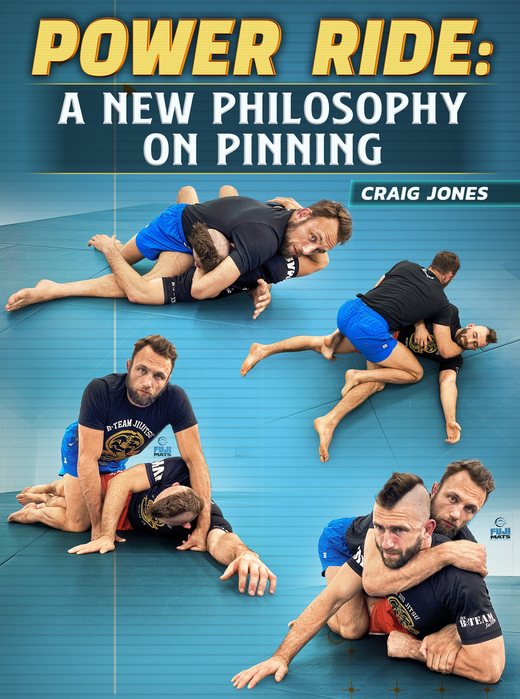
- 3. Power Ride: A New Philosophy on Pinning
- 4. Tripod Passing: Beating Inside Position
- 5. The Fastest Way To Develop An Unpassable Guard
- 6. Systematically Attacking The Back
- 7. The Anti-Wrestling Equation
- 8. Pillars of Defense: Pin Escapes
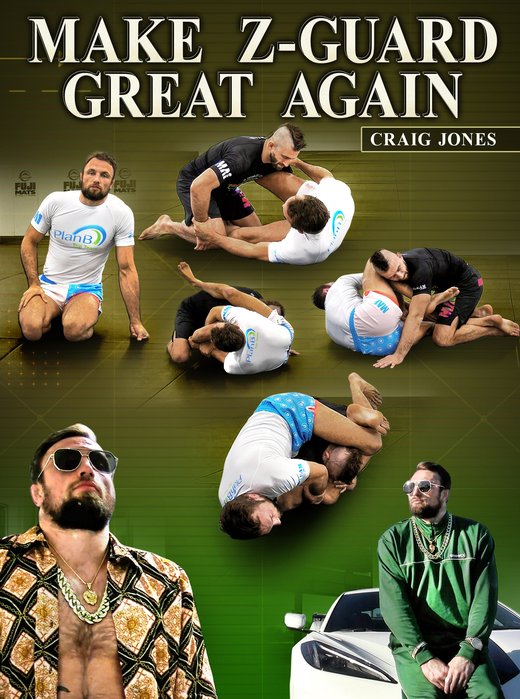
- 9. Make Z Guard Great Again
- 10. Master The Move: The Ankle Lock
- 11. The Fastest Way: Effective Guard Passer
- 12. Octopus Guard 2.0
- 13. Systematically Attacking the Guard
- 14. Leg Lock Anthology: 50/50
- 15. Foundations of Brazilian Jiu-Jitsu No-Gi
- 16. No-Gi Butterfly Guard Rediscovered
- Comparison table
- FAQ
The top picks, up front
November 2026They Shall Not Pass
Gordon RyanKeep your legs in front of the passer, whatever pass she tries.
11 h 48 min · no-gi · blue belt+ · $$$Systematically Attacking The Legs
Gordon RyanYou reach the legs and they slip out: every finish, from every entanglement.
8 h 21 min · no-gi · blue belt+ · $$$Power Ride
Craig JonesPin the legs first and people stop escaping. I trained it for three months.
4 h 09 min · no-gi · blue belt+ · $$These are the 16 no-gi sets on BJJ Fanatics I’d point a no-gi player to, ranked in the same order as our overall ranking. Eleven of them have a full review on this site, and under each of those you see one detail from the course.
The short answer: you keep getting passed? Buy They Shall Not Pass, or Danaher’s Unpassable Guard if you want it short. You reach the legs but don’t finish: Systematically Attacking The Legs. People escape when you’re on top: Power Ride. New to no-gi: Faria’s Foundations No-Gi covers the whole game for $99 list.
They Shall Not Pass
Gordon RyanYour guard keeps getting passed. Gordon starts from the passer’s side: almost every pass has to pin your head and shoulders, so you win by keeping inside position and a free head. Then he goes through every way of passing he names, each with its own counter.

What it covers
Volume 1 sets the goals: inside position, concave shoulders, hiding the jaw, and the seated guard against loose passing. Then one volume per way of passing: leg entanglements as retention, the split squat and straight hamstring, the toreando, flanks and four chapters of north-south, stack passing and body locks, and the longest volume, on half guard and under/over. Volume 7 is 25 minutes of live rolls, and in Volume 8 Gordon talks over the same rolls. Our full review has 12 details, each with a clip.
Why it stands out
- One idea explains every chapter: passes need your head and shoulders, except north-south
- Counters, not only recoveries: the sumi gaeshi off the body lock, lifting her over your head off double overs
- A whole volume on using leg entanglements to keep your guard
Long and lecture-paced: 11 h 48 min, so watch it a volume at a time. There are no solo drills, no knee shield method and no shoulder roll recovery. If you want the short plan, Danaher’s Unpassable Guard (#5) does the basics in 5 h 13 min for $197.
Anyone who gets flattened, flanked or body locked and wants an answer for each way people pass. No-gi competitors who play seated guard, the legs or half guard.
you’re a white belt who wants a quick fix: start with the Unpassable Guard (#5).
Pillars of Defense: Pin Escapes (#8). Gordon skips the shoulder roll back to guard and would rather escape once he’s passed, so you need the escapes.
Systematically Attacking The Legs
Gordon RyanYou get to the legs, but people slip out before you finish. This is Gordon on what happens once you’re there: keeping hold of the leg and finishing it, with heel hooks, Achilles locks, toe holds and kneebars. It doesn’t teach how to get there.

What it covers
Gordon builds it on one idea: attack from positions where you can reach his heel and he can’t reach yours. Then he works through each leg entanglement in that order: irimi ashi (the single leg X), outside ashi, a whole volume of toe holds, 90 minutes of cross ashi, and finally 50/50, which he treats as a position to get out of on top. Volume 7 is 26 minutes of positional rounds; in Volume 8 he talks over them for 56 minutes. Our full review has 8 details, each with a clip.
Why it stands out
- Every lower-body submission: heel hooks, Achilles locks, a whole toe hold volume, kneebars
- Decision trees per position: if he boots the foot, go to the heel; if he points the toes, the Achilles lock is on
- Live rounds, then the same rounds with Gordon explaining every decision
 No entries and no defence: Gordon points you to his open guard sets for the ways in. 50/50 gets one teaching volume of six; Lachlan’s Leg Lock Anthology: 50/50 (#14) goes deeper there and teaches the entries too. New to leg locks? Danaher’s Leglocks: Enter The System teaches the entries and is the better first course.
No-gi players under heel hook rules who reach the legs and lose the heel. Owners of Danaher’s Enter The System who want the finishing layer on top.
your gym bans heel hooks, you train mostly in the gi, or you don’t know what an ashi garami is yet.
Lachlan’s Leg Lock Anthology: 50/50 (#14) for the entries this set leaves out, or Danaher’s Ankle Lock (#10) for the one leg lock allowed at every belt.
Power Ride: A New Philosophy on Pinning
Craig JonesPeople escape once you get on top. Craig pins the legs first: split them, ride them, Turk them, shelf them, until his feet can’t reach the mat to bridge or shrimp. I trained it for three months before I reviewed it: the pins worked from day one, the finishes took weeks.
What it covers
Volume 1 is the idea: control over points, and why the legs come first. Volume 2 is the leg rides: split, ride, Turk, shelf and rear mount. Volume 3 adds the upper body: the claw, the open elbow, the Dagestani handcuff and the half nelson. Volume 4 breaks the turtle with the kosoto, the cradle, diagonal and spiral rides and the underclaw. Volume 5 brings it into positions you already reach (side control, mount, knee ride, the back, the leg drag, the body lock), and Volume 6 is the finishes: the belly-down rear naked choke, the rear Ezekiel, the cow catcher, the gift wrap and the half nelson. Our full review has 14 details, each with a clip.
Why it stands out
- Fills a gap most jiu-jitsu teaching skips: wrestling rides that work under submission rules
- Almost every minute of its 4 hours is teaching
- The pins work without a wrestling background
He can bridge if his feet are on the floor. He can hip escape if his feet are on the floor.
Craig Jones, Power Ride, Vol 1 at 19:02
 Top position only: it doesn’t get you on top, so pair it with a passing set. Craig’s Power Ride 2.0 (October 2026) costs the same $197 but covers one position, top half guard, with about half the teaching. If you buy one, buy this one.
No-gi players who get on top and lose it in the scramble. Wrestlers who want their rides to count in jiu-jitsu.
you want classic mount and side control: this is a different way to pin. White belts: get a passing and escaping base first.
Tripod Passing (#4) or Danaher’s Guard Passer (#11) to get on top, then this to stay there.
Tripod Passing: Beating Inside Position
Jozef ChenButterfly and seated guard players lift you and sweep you. Chen puts your weight where their hooks can’t carry it, on your head and your high hips, then makes them give up one hook and beats the last one.

What it covers
Volume 1 builds the tripod: four checks so his hooks can’t lift you, each shown with Owen Jones doing his best to lift Chen. Volume 2 is half butterfly, and Volume 3 beats the last hook (the step over, the knee pummel, the windshield wiper) and adds entries against reverse De La Riva and the knee shield. Volume 4 answers the usual problems: strong wrist grips, a whizzer, scoop grips, X guard. Volumes 5 and 6 are positional rounds with Owen Jones and Kenta Iwamoto, talked through. Our full review has 12 details, each with a clip.
Why it stands out
- One problem, solved in order: pin the shoulders, take your weight off his hooks, beat one hook at a time
- Chen uses it in his own matches: our review puts the first check next to his WNO 24 match with Dorsey
- $127 list, the cheapest set in our top ten
 Not an easy pass: expect to get swept while you learn it, and Chen talks fast. It has no seated entries either: those are in his Engaging Without Regrets. For one passing plan for every guard, Danaher’s Guard Passer (#11) is broader.
No-gi players who pass from their knees and keep getting lifted by butterfly hooks or shin on shin.
you’re new to passing (learn a simpler pass first) or you train gi only.
Power Ride (#3) to hold the position once you’re past.
The Fastest Way To Develop An Unpassable Guard
John DanaherYou get passed and want one plan you can use this month, not a library. Danaher sorts the passes you’ll meet in no-gi by what the passer controls, and answers all of them with the same few tools: the knee prop, the elbow prop, the outside shoulder roll and the knee shield.

What it covers
The first two volumes cover 12 movements you can drill alone, how passing works and the stance you defend from. The other six take the passes you’ll actually meet, grouped by what the passer controls: your lower legs (toreando, north-south), your hips (body lock, double scoops, knee cut) or your head and shoulders (half guard, underhooks, sit-outs). Our full review has 15 details, each with a clip, and a 55-minute route through the set.
Why it stands out
- One plan instead of a library, built for white and blue belts
- The same few tools come back against every pass, so there’s less to remember
- Mostly frames and the knee shield, not inverting: fine if you’re not flexible
No live rounds: one resisted demo and about three minutes of silent play. About 70 minutes are recaps you can skip on a rewatch, and by Danaher’s own account it isn’t unpassable. No leg entanglements as retention either: They Shall Not Pass (#1) has a whole volume on them.
White and blue belts who get passed a lot in no-gi and want one plan.
you train mostly in the gi, or you want to see a system work in live rounds first.
They Shall Not Pass (#1) when you want the deep version, or Pin Escapes (#8) for when the pass happens anyway.
Systematically Attacking The Back
Gordon RyanYou get to the back, and then they escape or hang on until the bell. This is the back system Gordon built with John Danaher: which side you’re on, how to win the hand fight, and how to lock the strangle. Our full review →

What it covers
Volume 1 sets it up: diagonal control, the underhook side against the overhook side, and getting your hook back when he hip escapes. Volumes 2 to 4 are his escapes and your answers: the high ball ride, the claw grip against a two-on-one, the cross body ride and the guillotine, hammerlock and leg attacks it opens. Volumes 5 and 6 are the finish: elbow and hand fighting, breaking his grips, locking the strangle, trapping his hands, and the garrote and mandible strangle. Volume 7 is five gym rolls with Gordon talking you through them; Volume 8 is the same rolls without the talk.
Why it stands out
- One question runs the whole set: are you on his underhook side or his overhook side?
- Two volumes on the finish alone: hand fighting, grip breaks and locking the strangle
- Five gym rolls, then Gordon explaining each one
It starts once you’re behind him: there’s little on getting to the back in the first place, and at $349 list it’s one of the priciest sets here. For the ways in, The Anti-Wrestling Equation (#7) has back takes from the front headlock and the turtle, and Power Ride (#3) rides him from behind and finishes belly down.
No-gi players who take the back often and finish it rarely.
you can’t get to the back yet: fix your passing first.
The Anti-Wrestling Equation (#7) for the back takes this set leaves out.
The Anti-Wrestling Equation
Craig JonesJiu-jitsu players wrestle better every year. In turtle they don’t wait on their elbows anymore: they post on their hands and stand up. Craig rebuilds the front headlock, the turtle, the rear body lock and the back take for that, with simple mat returns that work under jiu-jitsu rules.

What it covers
Volumes 1 and 2 get you to the front headlock: standing, seated and while you pass. Volume 3 is the four-point position (anaconda, kata gatame, ankle picks), Volume 4 the turtle and the go-behinds, Volume 5 the anaconda, Peruvian necktie and D’Arce. Volume 6 is the rear body lock with the trips and lifts that put him back on the mat, Volume 7 the mat returns and back takes, and Volume 8 finishing the strangle. Our full review has 12 details, each with a clip.
Why it stands out
- Read where he is: on his hands, attack the neck; on his elbows, go behind
- Snap downs, Russian ties and trips from the rear body lock, picked for jiu-jitsu: one of the best wrestling-for-jiu-jitsu courses I’ve watched
- Good if you’d rather counter a shot than take one
 No shots of your own (no doubles or singles) and no live rounds. If you mainly want more guillotines from the front headlock, Danaher’s Front Headlock System goes deeper there.
No-gi players whose partners post on their hands, stand up out of turtle or simply wrestle better than they used to.
you want to learn to shoot, or you pull guard every round and never stand.
Power Ride (#3) for pinning him once he’s back on the mat.
Pillars of Defense: Pin Escapes
Gordon RyanStuck under side control or mount? Gordon shows you how to get out, and how to come up attacking instead of landing back in a bad guard. The kip out of mount is the part nobody else teaches like this.

What it covers
Escapes from mount, side control, north-south, kesa gatame and knee on belly, built on the same skeleton as Danaher’s: frames carry the weight, the head and the elbows decide the pin, and your knee has to get back inside. What Gordon adds: a 54-minute kipping system with the rule for when to kip and when to shrimp, the side guard as the goal of every side control escape, 19 minutes of kesa gatame, and escapes that end in a clamp, te gatame, the legs or on top. Five gym rolls come with his voice-over. Our full review has 9 details, each with a clip.
Why it stands out
- Escapes that end on top or attacking, not just back in guard
- A full kipping system for the mount
- Five live gym rolls with Gordon explaining them
 No turtle and no back escapes (Gordon sells those separately), and no closed guard recovery. At $349 list it costs $42 per hour of teaching. New to pin escapes, or you train in the gi: Danaher’s Pin Escapes (Go Further Faster) is the broader, cheaper start.
No-gi players stuck under side control or mount, and owners of Danaher’s Pin Escapes who want the next step.
you train mostly in the gi, you need turtle or back escapes, or you’d pay the full $349.
They Shall Not Pass (#1): keep the guard first, escape when it fails.
Make Z Guard Great Again
Craig JonesYour half guard keeps getting flattened and passed. This is Craig’s knee shield system: a frame that holds the passer off, counters to the passes people use against it, and attacks from the same position.
What it covers
Volume 1 builds the frame, Volume 2 takes six passes people use against it and counters each one, Volumes 3 and 4 attack the arm (kimura, armbar, triangles, the choi bar, the omoplata), Volume 5 goes to the legs, and Volume 6 turns the knee shield into underhook half guard when the passer gets past the frame. Our full review has 12 details, each with a clip.
Why it stands out
- The knee shield as a way to keep your guard first, then a place to attack from
- Counters to six common passes in one volume
- The choi bar from Volume 4 finished Joao Costa 16 seconds into his ADCC 2022 match with Craig
 No live rounds: every minute is Craig and his partner demonstrating, in 720p with one camera. And it’s one version of half guard: Lachlan Giles’ Half Guard Anthology covers every version.
Half guard players, blue belt and up, who keep losing the knee shield to the same passes.
you need live rounds to learn, or you play mostly in the gi (no collar or sleeve grips here).
Pin Escapes (#8) for when the pass gets through anyway.
Master The Move: The Ankle Lock
John DanaherYou get to the legs, but your straight ankle locks never get the tap. Danaher shows why the old version fails, then builds one that goes after the front of the ankle, with an answer for every escape. It’s the one leg lock allowed at every belt, gi and no-gi.

What it covers
Volume 1 is the lock itself: the grip, the half foot, pinning his hips and finishing belly down. Volume 2 is a decision tree for his escapes (he comes up to a knee, stands, spins inside or outside), Volume 3 turns his leg attacks into your ankle lock, Volume 4 adds the leg lace and the Z lock, Volume 5 is a whole volume of cross ankle locks, and Volume 6 is the entries. Our full review has 9 details, each with a clip, and a 1-hour route through the set.
Why it stands out
- The one leg lock allowed at every belt, in the gi and in no-gi
- An answer for each escape: he comes up to a knee, stands or spins
- Almost five hours on one lock, including a whole volume of cross ankle locks
Thin on entries: 29 minutes, and it assumes you already reach ashi garami. No live rolls and no competition footage either. For heel hooks and every entanglement, Systematically Attacking The Legs (#2) is the bigger leg lock course.
Leg lockers who reach ashi garami and lose the foot, and gi competitors who want a leg lock they can use at every belt.
you can’t get to the legs yet. White belts: learn a guard and basic ashi garami first.
Systematically Attacking The Legs (#2) for the heel hooks from the same positions.
The Fastest Way: Effective Guard Passer
John DanaherYou spend whole rounds stuck in people’s guard. This is the passing system Danaher teaches his own students, in his order: get the angle and camp, beat the legs, lock the hips, and finish in half guard.

What it covers
You beat the legs with the toreando, the hand block and the leg drag, lock the hips with the body lock, the knee cut and the tripod, and then Volumes 6 to 8 spend about 2.5 hours on passing half guard, which Danaher calls “the single best and most reliable method of passing guard in all of jiu jitsu”. Every pass is shown two to four times from new angles. Our full review has 10 details, each with a clip, and a 1-hour route through the set.
Why it stands out
- One order for every pass, so the passes you half know fit together
- About 2.5 hours on passing half guard, where most passes end up
- Shorter than Gordon’s passing set (#13), at a lower list price
 No answers to single leg X or X guard, and only one live drill (5:30). If you already own Danaher’s New Wave No-Gi Guard Passing (2022), only about 2.5 hours here are new: the tripod and pop-up passes, the hand block, the sit-out half guard pass, and scoop and plow passing.
White to purple belts who want one no-gi passing course with an order to follow.
you own New Wave and the body lock is your main pass, or you train mostly in the gi.
Tripod Passing (#4) for the butterfly guards, and Power Ride (#3) to hold what you pass to.
Octopus Guard 2.0
Craig JonesYou get stuck under side control. Craig lets the pass happen, stops the crossface, turns into the passer and comes up on his knees, so the passer is always chasing and never pinning. From there you sweep, take the back or punish the D’Arce.

What it covers
Volume 1 is the idea: give up side control but never the crossface, catch the two-on-one with your elbow inside and keep your top leg high. Volume 2, the longest and best, is the sweeps and hip switches: the grounded Russian double, making her forward roll, the quick back take and the D’Arce counter. Volume 3 is the buggy choke from bottom side control plus the guillotine and D’Arce counters, and Volume 4 turns the turtle into a weapon: over wrap leg attacks, crucifix escapes and the fix for Jozef Chen’s headstand counter. Our full review has 12 details, each with a clip.
Why it stands out
- One idea you can use in your next round: give up side control, never the crossface
- Counters for what people do to you there: the D’Arce, the arm-in guillotine, the crucifix, the hip switch
- Frames, angles and getting to your knees, no flexibility needed: it suits older and heavier players
 No live rounds: inside the volumes you never see it against resistance. And it isn’t a guard to play from your back. Gordon Ryan filmed a whole counter DVD to it; our Craig vs Gordon comparison puts each detail next to his answer, and Craig’s is still the better buy. For classic escapes back to guard, Pin Escapes (#8).
No-gi and MMA players who end up under side control and want to get up, not play guard from their back.
you’re a white belt (the system exposes your back on purpose: learn the basic escape first) or you train mostly in the gi.
Pin Escapes (#8) for mount, north-south and the other pins.
Systematically Attacking the Guard
Gordon RyanGordon’s 2019 passing set, the one most people still start with for his game: every guard defense leads to a pass or a submission. It’s long and dense, and the most complete passing library on this list. Our full review →

What it covers
Volume 1 opens the closed guard and the rubber guard, deals with reverse De La Riva and starts the split squat. Volume 2 is the knee shield, low and high, with a D’Arce along the way. Volume 3 covers the underhook half guard, under/over passing, deep half and the lockdown, Volume 4 the half butterfly with the split squat, and Volumes 5 and 6 straight hamstring passing, body locks and passing every leg entanglement from single leg X to 50/50. Volume 7 is drills and eight rolls, and in Volume 8 Gordon talks over his rolls.
Why it stands out
- The split squat is the hub: half butterfly, knee shield and reverse De La Riva all run through it
- Answers for the guards that stop most no-gi passers: knee shield, deep half, lockdown, leg entanglements
- Eight rolls, then Gordon talking over them
Information overload is real: 10+ hours at Gordon’s density, built for people who already know what a knee shield and half butterfly are. At $349 list it’s the priciest way to learn passing here; Danaher’s Guard Passer (#11) gives you one plan in 7 h 31 min for $197.
Blue belts and up who want Gordon’s whole passing game and have the time to study it.
you’re a white belt who doesn’t know the knee shield or half butterfly yet: start with #11 or Faria’s No-Gi Foundations (#15).
Power Ride (#3) for holding top position after you pass.
Leg Lock Anthology: 50/50
Lachlan GilesLachlan Giles heel hooked three much bigger black belts at ADCC 2019 (Kaynan Duarte, Patrick Gaudio, Mahamed Aly) with the 50/50 and outside sankaku game in this set, and took bronze in the absolute. If 50/50 is where you end up, this is the deepest course on it. Our full review →

What it covers
Volumes 1 and 2 are the leg lock concepts (keeping and reclaiming the knee line, controlling rotation), heel hook finishing mechanics, the defence and how to beat it, then 50/50 and outside sankaku from seated. Volume 3 adds the attacks from 50/50 that aren’t heel hooks, the double trouble and distal control. Volume 4 is 50/50 against a standing opponent plus sweeps and back takes, Volume 5 counters to the saddle, the reap and outside ashi plus entries from butterfly, shin to shin and single X. Volumes 6 and 7 are the K guard, De La Riva, reverse De La Riva, inversions and entries from top. Volume 8 is narrated rolls and his three ADCC Trials matches.
Why it stands out
- Every 50/50 problem in one place: entries, finishes, sweeps, back takes and the counters
- Each attack comes with its counter right after it, in Lachlan’s plain language
- He talks you through his own ADCC Trials matches and gym rolls
Almost all 50/50 and outside sankaku: little on kneebars or the straight ankle lock (that’s #10). It’s not a first leg lock course, and at 12 h 18 min it’s the longest set on this list. For finishing from every entanglement, Systematically Attacking The Legs (#2) is broader.
No-gi players who know the basics of leg locks and keep ending up in 50/50.
you’re new to leg locks, or your gym bans heel hooks.
Systematically Attacking The Legs (#2) for the other entanglements.
Foundations of Brazilian Jiu-Jitsu No-Gi
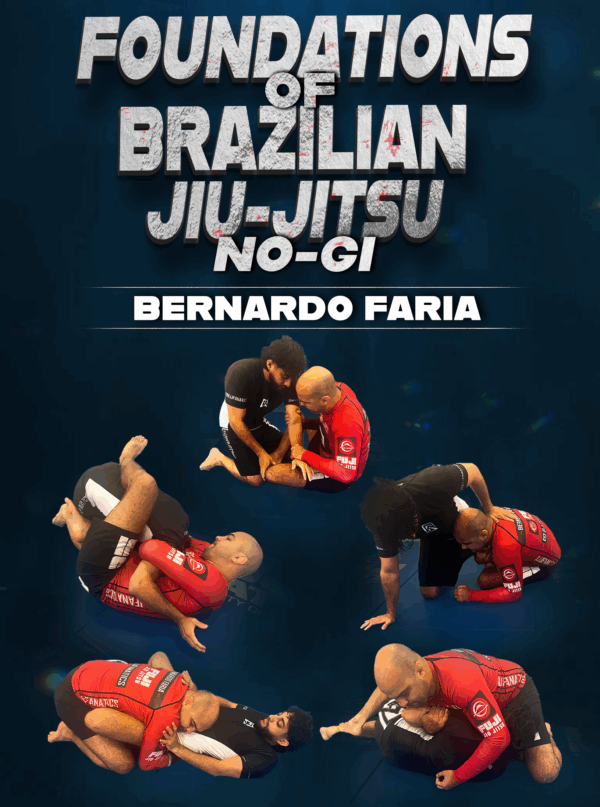
Bernardo FariaNew to no-gi, or coming over from the gi? This is the whole no-gi game in one set: standing, guard pulls, guard, passing, pins, the back, heel hooks and escapes, from a 5x black belt world champion whose moves need almost no strength or speed. Our full review →
What it covers
Volume 1 is standing: the double leg, arm drags, collar ties, the sprawl and the front headlock chokes (guillotine, anaconda, D’Arce). Volume 2 is pulling guard and butterfly guard against a kneeling opponent, Volume 3 butterfly and single leg X against a standing one, Volume 4 X guard and half guard (knee shield, single leg half guard, deep half). Volume 5 covers closed guard and passing (over-under, body lock, double unders), Volume 6 side control and mount attacks, Volume 7 the back and the turtle, and Volume 8 an intro to heel hooks plus the key escapes from side control, mount and the back.
Why it stands out
- The whole no-gi game in one set, for $99 list
- Moves that don’t need athleticism, which is why older grapplers like his game
- Gi players get the positions they know, with no-gi grips
Breadth over depth: each position gets a few chapters, so you get one or two answers where a set on that position gives you ten. Heel hooks get part of one volume. Once you know which part of your game needs work, pick a deeper set from the top ten.
White and blue belts who need the whole no-gi game in one set, and gi players switching over.
you already have solid no-gi basics: the top ten go much deeper.
The Unpassable Guard (#5), also built for white and blue belts, when getting passed is your biggest problem.
No-Gi Butterfly Guard Rediscovered
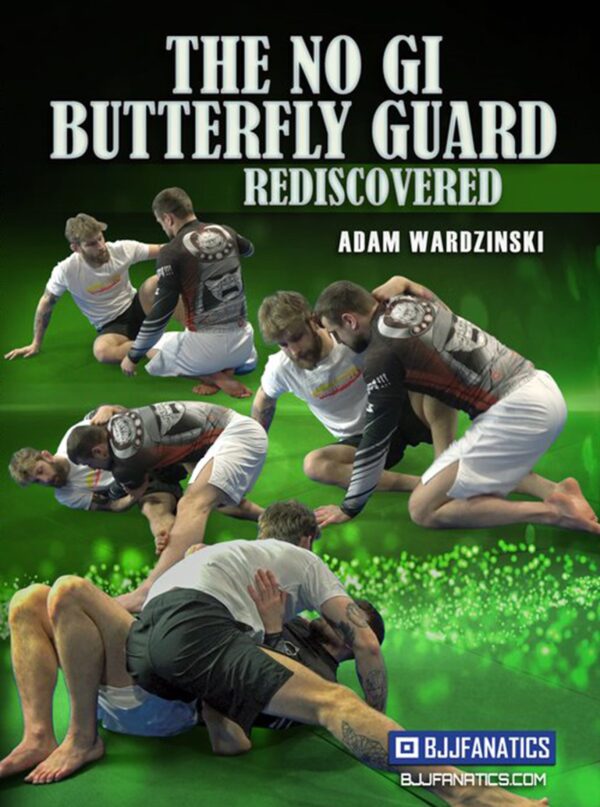
Adam WardzinskiThree volumes, $79 list, and a butterfly guard you can use: sweeps, the whizzer series, arm drags and back takes. Wardzinski used this guard to win the ADCC Trials in his first no-gi competition.
What it covers
Volume 1 is the steering wheel sweep, the basic butterfly sweep and its follow-ups, the near side armbar, the triangle and the back take. Volume 2 is speed: the quick switch steering wheel sweep, the whizzer sweep, the guillotine and shotgun armbar, the omoplata from the whizzer, and arm drags to the back and to the brabo choke. Volume 3 adds the dive under sweep, the far side arm lock, the tip over sweep, the John Wayne sweep, and double unders to the back, X guard and single leg X.
Why it stands out
- The cheapest set on this list
- One grip, many attacks: the whizzer gives you a sweep, a guillotine, the shotgun armbar and the omoplata
- Focused: three volumes on one guard
Butterfly guard only: no half guard, and the leg locks stop at a toe hold from single leg X. No live rolls either. For leg entries from butterfly, Lachlan’s Leg Lock Anthology: 50/50 (#14) goes much further.
White to purple belts who want a simple butterfly guard for no-gi without spending much.
you want a whole open guard system, not one guard done well.
Power Ride (#3) for holding top once your sweeps land.
All picks, side by side
Comparison tableSwipe sideways for details · the Check price links stay pinned →
| # | Instructional | Instructor | Length | Level | Best for | List price | Buy |
|---|---|---|---|---|---|---|---|
| 1 | They Shall Not Pass | Gordon Ryan | 11 h 48 min | Blue belt and up | Guard retention | $349 | Check price → |
| 2 | Systematically Attacking The Legs | Gordon Ryan | 8 h 21 min | Blue belt and up | Heel hooks | $349 | Check price → |
| 3 | Power Ride: A New Philosophy on Pinning | Craig Jones | 4 h 09 min | Blue belt and up | Top control | $197 | Check price → |
| 4 | Tripod Passing: Beating Inside Position | Jozef Chen | 2 h 50 min | Purple belt and up | Passing butterfly guards | $127 | Check price → |
| 5 | The Fastest Way To Develop An Unpassable Guard | John Danaher | 5 h 13 min | White to blue belt | Guard retention, short | $197 | Check price → |
| 6 | Systematically Attacking The Back | Gordon Ryan | 8 volumes | Blue belt and up | Back attacks | $349 | Check price → |
| 7 | The Anti-Wrestling Equation | Craig Jones | 7 h 00 min | Blue belt and up | Wrestlers, turtle, back | $197 | Check price → |
| 8 | Pillars of Defense: Pin Escapes | Gordon Ryan | 8 h 44 min | Blue belt and up | Pin escapes | $349 | Check price → |
| 9 | Make Z Guard Great Again | Craig Jones | 5 h 10 min | Blue belt and up | Half guard | $197 | Check price → |
| 10 | Master The Move: The Ankle Lock | John Danaher | 4 h 56 min | Blue belt and up | Straight ankle locks | $197 | Check price → |
| 11 | The Fastest Way: Effective Guard Passer | John Danaher | 7 h 31 min | White to purple belt | Guard passing, one plan | $197 | Check price → |
| 12 | Octopus Guard 2.0 | Craig Jones | 2 h 44 min | Blue belt and up | Side control bottom | $197 | Check price → |
| 13 | Systematically Attacking the Guard | Gordon Ryan | 10+ hours | Blue belt and up | Guard passing, deep dive | $349 | Check price → |
| 14 | Leg Lock Anthology: 50/50 | Lachlan Giles | 12 h 18 min | Purple belt and up | 50/50 leg locks | $149 | Check price → |
| 15 | Foundations of Brazilian Jiu-Jitsu No-Gi | Bernardo Faria | About 6 h | White and blue belts | First no-gi set | $99 | Check price → |
| 16 | No-Gi Butterfly Guard Rediscovered | Adam Wardzinski | 3 volumes | White to purple belt | Butterfly guard | $79 | Check price → |
How I ranked these
Every pick gets the same four questions as our overall ranking of the best instructionals: does it fix a problem you have on the mat, can you follow it, how much teaching do you get for the money, and does it hold up against people who fight back. Picks 1 to 14 sit in the same order as there. Picks 15 and 16 aren’t in that ranking; each one fills a gap: a first no-gi set, and the cheapest set on the list.
Updated November 2026: eleven sets joined the list, ten of them reviewed in full on this site, and the order now follows our overall ranking. Five older picks made room, one of them no longer sold on BJJ Fanatics. Prices are list prices from BJJ Fanatics on 3 November 2026.
Find your no-gi instructional
Start with the problem that costs you the most rounds.
Prices and deals
List prices on this page run from $79 (Wardzinski’s butterfly guard) to $349 (all five Gordon Ryan sets). Almost nobody pays list: BJJ Fanatics’ house codes stack on their daily deals, and on 28 October the code EXTRAXX58 took 58% off at checkout, so They Shall Not Pass came to $146.58 instead of $349. The codes change every month or so: check the price on the day you buy.
The code that works right now, and how the deals stack: our BJJ Fanatics discount guide. Black Friday is close: the Black Friday deals I’d actually buy.
No-Gi Glossary
No-Gi Glossary
- Ashi Garami: a leg entanglement that controls one of his legs for a heel hook, kneebar or ankle lock. The base of modern no-gi leg locking.
- Body Lock Pass: you lock your arms around his hips or waist and use chest-to-chest pressure to get past his legs.
- De La Riva (DLR): an open guard where your leg hooks around the outside of his lead leg.
- Front Headlock: you control his head and one arm from the front while he is on his knees or bent over: the start of the guillotine, anaconda and D’Arce.
- 50/50: a leg entanglement where you both hold each other’s leg the same way. The home of the inside heel hook.
- K Guard: an open guard Lachlan Giles made popular for getting to the legs; Volume 6 of his Leg Lock Anthology covers it.
- Kip: an escape from mount: bridge, knees to your chest, and you come out from under him in one move.
- Knee Shield: a half guard where your top knee frames across his chest or shoulder to keep him off you.
- Reverse De La Riva (RDLR): an open guard where your hook goes inside his lead leg instead of outside.
- Split Squat: Gordon Ryan’s staggered passing stance, used against half butterfly and other guards.
- Sumi Gaeshi: a sacrifice sweep: you pull him forward and over you with your hooks or a body grip.
- Toreando: a fast pass where you grip his legs, push them to one side and step around.
- Tripod: a passing stance with your weight on your head and high hips, so his hooks can’t lift you.
- Turk Ride: a wrestling ride where your leg hooks his ankle from behind while he is on all fours.
FAQ
What is the best no-gi instructional for beginners?
Bernardo Faria’s Foundations of Brazilian Jiu-Jitsu No-Gi (#15): the whole no-gi game in about 6 hours, $99 list. If getting passed is your biggest problem, Danaher’s The Fastest Way To Develop An Unpassable Guard (#5) is built for white and blue belts.
What is the best no-gi instructional overall?
Our #1 is Gordon Ryan’s They Shall Not Pass: it answers every way people pass you, each with its own counter. If people escape once you’re on top, Craig Jones’ Power Ride (#3) is the one I trained for three months.
Are BJJ Fanatics instructionals worth it for no-gi?
Yes, if you buy with a code. List prices on this page run from $79 to $349, but the house codes stack on the daily deals: on 28 October 2026 EXTRAXX58 took 58% off at checkout. Buy one set for the problem that costs you the most rounds, not a library.
What is the best no-gi guard passing instructional?
If butterfly or seated hooks keep lifting you, Jozef Chen’s Tripod Passing (#4). For one plan for every guard, Danaher’s The Fastest Way: Effective Guard Passer (#11). Gordon Ryan’s Systematically Attacking the Guard (#13) is the deep version: 10+ hours of his whole passing game.
They Shall Not Pass or Danaher’s Unpassable Guard?
Danaher’s Unpassable Guard (#5) is the short plan: 5 h 13 min, $197 list, built for white and blue belts. Gordon’s They Shall Not Pass (#1) is the deep system: 11 h 48 min, $349 list, with a volume on leg entanglements and live rolls with his commentary. New to guard retention: start with Danaher’s.
What is the best no-gi leg lock instructional?
If you get to the legs but people slip out, Gordon Ryan’s Systematically Attacking The Legs (#2): every finish from every entanglement, but no entries. If you live in 50/50, Lachlan Giles’ Leg Lock Anthology: 50/50 (#14). If heel hooks are banned where you train or compete, Danaher’s Master The Move: The Ankle Lock (#10): the one leg lock allowed at every belt. New to leg locks: our leg lock ranking starts with the courses that teach the entries.
What is the best no-gi instructional for back attacks?
Gordon Ryan’s Systematically Attacking The Back (#6): the back system he built with Danaher, with two whole volumes on the finish. It starts once you’re behind him, so for getting there, pair it with Craig Jones’ The Anti-Wrestling Equation (#7).
What should I buy if I’m stuck under side control?
Gordon Ryan’s Pillars of Defense: Pin Escapes (#8) gets you out from under side control, mount and north-south, and up on top. If it’s mostly side control and you’d rather come up and take the back, Craig Jones’ Octopus Guard 2.0 (#12) is 2 h 44 min on exactly that.
Should I buy individual instructionals or a Submeta subscription?
Individual BJJ Fanatics instructionals are yours to keep and go deeper on one topic. Submeta and similar subscriptions give you broader access, which can turn into browsing instead of drilling. To fix one problem, buy the one set for it.
Do I need the gi or no-gi version of an instructional?
If you train mostly no-gi, buy no-gi sets. Many passing and escaping ideas carry over, but grip-dependent techniques (spider guard, lasso, collar chokes) don’t. All sixteen picks on this list are no-gi sets.
Find your next no-gi instructional
Take the quiz above, or start with the problem that costs you the most rounds. If that’s getting passed, start with the #1.